 listicle
Affordable Sustainable Basics for 2026: Top Picks
Table of Contents
- Quick Comparison: Affordable Sustainable Basics for 2026
- How We Evaluated These Sustainable Basics
- 1. Pact: Best Overall for Affordable Organic Cotton
- 2. Boody: Best Budget-Friendly Bamboo Basics
- 3. Honest Basics: Best for Minimalist Wardrobe Staples
- 4. tentree: Best for Environmental Impact
- 5. Rapanui: Best for Circular Fashion
- 6. Alternative Apparel: Best for Vintage-Inspired Comfort
- How to Build a Capsule Wardrobe on a Budget
- Frequently Asked Questions
Last Updated: September 21, 2026
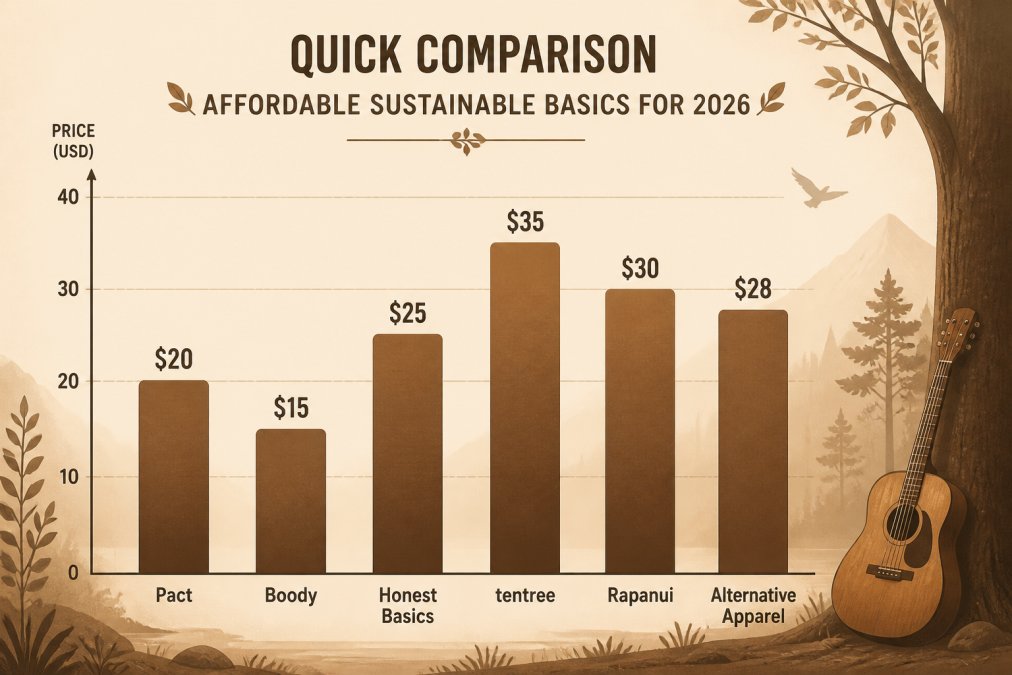
Quick Comparison: Affordable Sustainable Basics for 2026
Affordable sustainable basics for 2026 are wardrobe staples made with lower-impact materials and ethical labor, sold at prices that don't require a luxury budget. This guide compares six brands on price, materials, and certifications so you can shop without second-guessing every label.
The sustainable basics market has shifted in one important way: entry prices have dropped. That matters because cost remains the top reason shoppers avoid sustainable fashion.
Below, each brand gets a fair look at what it does well and where it falls short. Here's what most guides get wrong: they rank brands by environmental mission statements instead of by what actually lands in your closet and survives fifty washes.
| Brand | Starting Price | Material Focus | Certification | Best For |
|---|---|---|---|---|
| Pact | $20 | Organic cotton | GOTS, Fair Trade | Families, softness |
| Boody | $15 | Bamboo viscose | Organic bamboo | Budget comfort |
| Honest Basics | $25 | Organic cotton | GOTS | Minimalist staples |
| tentree | $35 | Recycled poly, cotton | B Corp | Environmental impact |
| Rapanui | $30 | Organic cotton | Circular design | Recycling old items |
| Alternative Apparel | $28 | Organic, recycled | Low-impact dyes | Vintage feel |
How We Evaluated These Sustainable Basics
Each brand was scored on four factors: material certification, price accessibility, size range, and garment longevity. Certification carried the most weight because it's the clearest defense against greenwashing.
Sustainable fashion certifications explained: a certification is third-party proof that a garment meets a defined standard for fiber sourcing, chemical use, or labor conditions. GOTS covers organic fiber and processing, while Fair Trade Certified verifies worker conditions in factories. B Corp status evaluates a company's overall social and environmental performance rather than a single garment. The key distinction: a fiber certification (like GOTS) says something about the material, while a labor certification says something about the people who made it. A brand can hold one without the other, so check which standard applies to the specific claim being made.
How to verify a certification instead of trusting the label. A common mistake is trusting a brand's own marketing page instead of checking the certifying body directly. Most certifiers publish searchable databases of certified companies and products. If a brand claims GOTS but doesn't appear in the certifier's lookup, treat the claim as unverified. The same logic applies to Fair Trade and B Corp: the certifying organization, not the brand, is the source of truth.
Material science beyond organic cotton. Most guides stop at "organic cotton vs. recycled," but the fiber choice affects how a basic wears, washes, and ages. A quick comparison of the eco-fabrics that show up most in affordable basics:
- Organic cotton, breathable, durable, and easy to wash. It softens with age and handles repeated laundering well. The trade-off is water use during growing, which is why certification matters.
- Bamboo viscose (and lyocell/Tencel), very soft and breathable, but the fiber is weaker when wet. Lyocell (often sold as Tencel) uses a closed-loop solvent process that recovers most of the chemicals, making it a lower-impact option than conventional viscose. Both need cold washing and air-drying to hold shape.
- Recycled polyester, made from post-consumer plastic, it resists wrinkles and dries fast, but it sheds microfibers in the wash and pills under high heat. It's best for outer layers and loungewear rather than next-to-skin basics.
- Hemp, strong, naturally pest-resistant, and gets softer with wear, but it's less common in budget basics and often blended with cotton to reduce cost.
Longevity and care as a scoring factor. A garment that survives fifty washes is more sustainable than one that pills after five, regardless of its fiber. We weighted longevity heavily because it's the factor shoppers control after purchase. Care instructions are part of the score: a fabric that requires delicate handling is a hidden cost in time and replacement.
The evaluation prioritized brands that publish supply chain transparency reports, since vague claims like "eco-friendly" mean little without documentation. Where a brand publishes its factory list or certification numbers, that transparency raised its score; where it relied on mission language alone, it didn't.
1. Pact: Best Overall for Affordable Organic Cotton
Pact wins on the combination most shoppers actually want: certified organic cotton at a price that doesn't sting. The fabric is genuinely soft, not the stiff texture that turns people off sustainable cotton.
Every cotton piece is GOTS-certified and made in Fair Trade Certified factories. The size range covers the whole family, which is rare among ethical basics brands. Frequent sales also soften the entry price further.
The honest limitation: styles stay casual and basic. If you want anything beyond tees, leggings, and lounge sets, Pact runs thin.
For building a capsule wardrobe foundation, that's usually fine. It's the everyday layer you reach for daily, not the statement piece.
2. Boody: Best Budget-Friendly Bamboo Basics
Boody takes the budget crown with basics built from organically grown bamboo viscose. The fabric is hypoallergenic, breathable, and noticeably softer than cotton at a similar price.
Seamless construction keeps underwear and tees comfortable for all-day wear. For anyone easing into sustainable basics without a big spend, this is the lowest-risk entry point.
One catch: bamboo viscose needs careful washing.
3. Honest Basics: Best for Minimalist Wardrobe Staples
Honest Basics targets the minimalist directly: plain, well-cut essentials with no seasonal noise. Its GOTS-certified organic cotton pieces are built to layer and repeat.
4. tentree: Best for Environmental Impact
tentree plants ten trees for every item purchased, and that reforestation angle is its core draw. It uses recycled polyester and organic cotton and holds Certified B Corporation status.
5. Rapanui: Best for Circular Fashion
Rapanui designs for a circular economy: items are meant to be returned and remade rather than thrown out. It runs on renewable energy and ships in plastic-free packaging.
6. Alternative Apparel: Best for Vintage-Inspired Comfort
Alternative Apparel delivers the lived-in feel that makes basics worth keeping. It uses organic cotton and recycled polyester finished with non-toxic, low-impact dyes.
How to Build a Capsule Wardrobe on a Budget
Building a capsule wardrobe on a budget starts with a short list of versatile basics and a cost-per-wear mindset. Pick pieces that pair with at least three other items you own, then buy only those. The difference between a capsule that saves money and one that quietly becomes clutter is maintenance: most guides stop at the buying list, but the real savings come from how long each piece stays in rotation.
A workable starter set:
-
Two plain tees in neutral colors
-
One long-sleeve layer
-
One pair of well-fitting bottoms
-
One soft knit or hoodie
-
One set of everyday underwear
-
Wash cold and less often. Heat and agitation break down fibers. Spot-clean and air between wears when you can.
-
Air-dry flat. A dryer is the single fastest way to shrink cotton and distort bamboo viscose. A flat rack preserves fit.
-
Mend early. A small hole or loose seam fixed in five minutes prevents a garment from becoming unwearable. A basic needle, thread, and a few straight stitches cover most repairs on tees and knits.
-
Rotate, don't retire. Move worn pieces to the back of the drawer so every item gets even wear instead of one favorite absorbing all of it.
- Repurpose, cut tees into cleaning rags or cloths before they hit the bin.
- Take-back programs, some brands accept their own worn items for recycling or remaking, closing the loop rather than opening a new one.
- Textile recycling drop-offs, many municipalities and charitable organizations accept worn textiles, including stained or torn items, for fiber recycling rather than resale.
- Donate only if wearable, donation is not recycling; if an item is unwearable, a recycler is the better destination.
Frequently Asked Questions
What are the best affordable sustainable basics for 2026?
For 2026, the best affordable sustainable basics come from brands like Pact, Boody, and Honest Basics. Pact offers GOTS-certified organic cotton at accessible prices, Boody provides bamboo-based essentials, and Honest Basics focuses on timeless designs. These brands combine ethical manufacturing with budget-friendly pricing, making sustainable fashion more attainable.
How do I know if a brand's sustainability certifications are legitimate?
Look for third-party certifications like GOTS (Global Organic Textile Standard), Fair Trade Certified, and B Corporation. These independent organizations verify claims about organic materials, fair labor, and environmental impact. Avoid vague terms like 'eco-friendly' without proof. You can check certification databases online to confirm a brand's status.
What is the 3-3-3 rule for building a capsule wardrobe?
The 3-3-3 rule suggests creating outfits using 3 tops, 3 bottoms, and 3 pairs of shoes, yielding 27 combinations. This approach helps you maximize a small wardrobe and identify versatile pieces. When choosing sustainable basics, prioritize timeless designs and neutral colors that mix easily.
Are there ethical alternatives to fast fashion retailers like Shein?
Yes, brands like Pact, Boody, and tentree offer ethical alternatives to fast fashion. They use sustainable materials like organic cotton and recycled polyester, ensure fair wages, and reduce environmental impact. While prices may be slightly higher, the cost-per-wear is lower due to better durability.
What materials should I look for in sustainable basics?
Seek out GOTS-certified organic cotton, Tencel (lyocell), recycled polyester, and bamboo viscose. These materials have lower environmental footprints and are often biodegradable. Avoid conventional cotton and synthetic fabrics unless recycled. Certifications like GOTS ensure organic and ethical production.