 listicle
Best Everywhere Apparel Alternatives for 2026
Table of Contents
- Quick Comparison: Top Everywhere Apparel Alternatives
- 1. Patagonia: Durability Meets Fair Trade Certification
- 2. Pact: Affordable Organic Cotton for Everyday Wear
- 3. Reformation: Trendy Styles with Carbon Footprint Tracking
- 4. Everlane: Radical Transparency in Pricing and Factories
- 5. Eileen Fisher: Circular Economy and Timeless Design
- 6. Sustainable Plus Size Clothing Brands: Finding Your Fit
- 7. Ethical Fashion Alternatives: Price-Per-Wear and Care Guide
- Frequently Asked Questions
Last Updated: September 25, 2026
Quick Comparison: Top Everywhere Apparel Alternatives
Shoppers searching for best everywhere apparel alternatives 2026 are usually chasing the same thing: basics that hold up, made without cutting ethical corners. Everywhere Apparel built its reputation on recycled cotton essentials and circular take-back programs, but it is far from the only option. This guide from Rasta Hippies compares six brands that compete on durability, certification, size range, and long-term value.
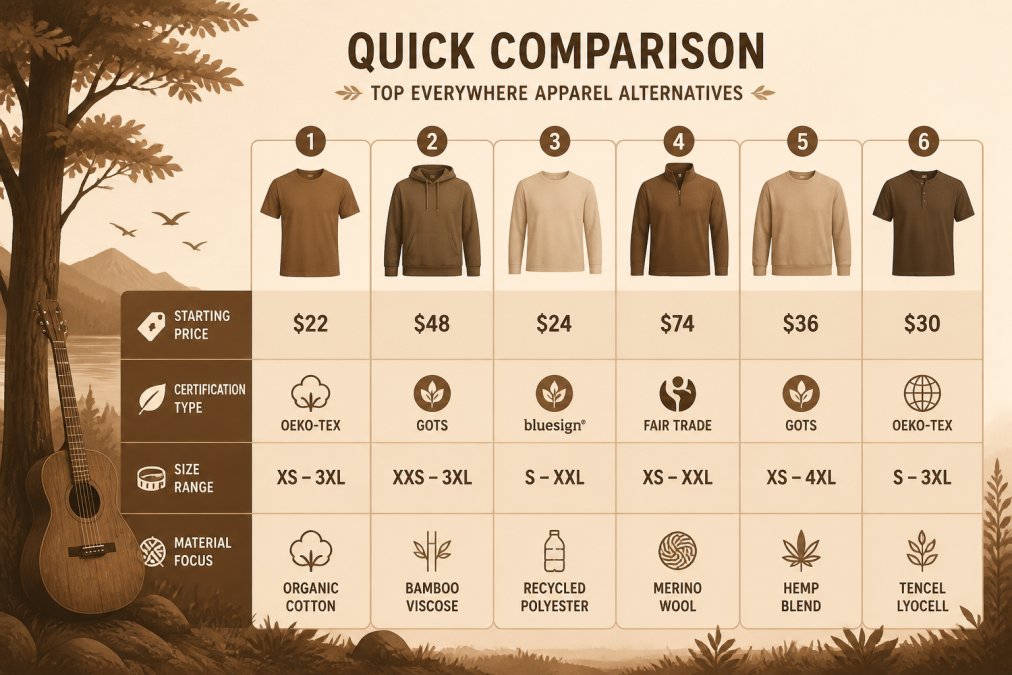
Below is a side-by-side look at how the leading alternatives stack up.
| Brand | Starting Price | Key Certification | Size Range | Best For |
|---|---|---|---|---|
| Patagonia | $45 | Fair Trade Certified sewing | XS-XXL | Outdoor durability |
| Pact | $20 | GOTS organic cotton | XS-3XL | Budget basics |
| Reformation | $48 | Carbon-neutral shipping | 0-24 | Trendy occasion wear |
| Everlane | $30 | Ethical factory audits | XXS-XXL | Minimalist staples |
| Eileen Fisher | $88 | Bluesign certified dyes | XXS-3XL | Timeless investment pieces |
| Boody | $15 | OEKO-TEX bamboo | XS-4XL | Soft base layers |
1. Patagonia: Durability Meets Fair Trade Certification
Patagonia earns its spot at the top of this list on the strength of its repair program alone. The brand's Ironclad Guarantee covers product repairs, which means a worn jacket gets fixed rather than replaced. That single policy shifts the math on garment longevity in a way most competitors cannot match.
The company uses recycled polyester and organic cotton across its line, and its sewing facilities carry Fair Trade Certified status. A common mistake shoppers make is assuming all "sustainable" labels mean the same thing. They do not.
2. Pact: Affordable Organic Cotton for Everyday Wear
Pact targets the shopper who wants organic cotton without the premium markup. Starting prices hover near $20, and the entire line carries GOTS certification, which traces the cotton from farm to finished garment. Fair Trade Factory certification covers the sewing side.
3. Reformation: Trendy Styles with Carbon Footprint Tracking
Reformation built its model around limited-run production, which reduces the deadstock waste that plagues traditional fashion. The brand's RefScale tool tracks the carbon footprint of individual garments, giving shoppers a concrete number rather than a vague green claim.
4. Everlane: Radical Transparency in Pricing and Factories
Everlane publishes a cost breakdown for every item, showing material, labor, transport, and markup. That level of transparency is rare, and it gives shoppers a way to judge whether a price is fair.
5. Eileen Fisher: Circular Economy and Timeless Design
Eileen Fisher operates one of the strongest circular economy programs in apparel. The Renew take-back initiative collects worn garments, cleans and resells them, and keeps textiles out of landfills. Pieces use organic linen and recycled cashmere, with Bluesign certified dyes.
6. Sustainable Plus Size Clothing Brands: Finding Your Fit
Sustainable plus size clothing brands have historically been an afterthought, with many ethical labels stopping at XL. That gap is closing, but sizing consistency still varies wildly between manufacturers, and the reason is structural, not cosmetic. Extended sizes are often graded from a straight-size block rather than drafted on a plus block, so the bust-to-waist-to-hip ratio drifts as sizes climb.
How to Measure for Sustainable Plus Size Clothing
Take these four measurements over lightweight clothing, keep the tape level and snug but not tight, and write them down before you shop:
- Bust: around the fullest part of the chest, tape parallel to the floor.
- Natural waist: the narrowest point of the torso, usually an inch or two above the navel.
- Hip: the widest point of the seat, typically 7-9 inches below the natural waist.
- Inseam: from the crotch seam to the hem of a pair of pants that already fit you well.
Fit Notes by Brand
| Brand | Max Size | Fabric Focus | Fit Note |
|---|---|---|---|
| Boody | 4XL | Bamboo viscose | Runs close to true; strong stretch recovery in base layers |
| Pact | 3XL | Organic cotton | Slightly fitted through the waist; size up for a relaxed drape |
| Eileen Fisher | 3XL | Linen, cashmere | Relaxed, boxy cut; the label's sizing runs generous |
| Patagonia | XXL | Recycled polyester | Athletic cut; check the garment measurement chart for outerwear |
A common pattern in this category: bamboo and viscose blends stretch more and recover less, so they can feel true to size on day one and looser by month three. Structured organic cotton and linen hold their shape better but offer less give, which is why reading the fabric column matters as much as the size column.
7. Ethical Fashion Alternatives: Price-Per-Wear and Care Guide
Ethical fashion alternatives are best judged by price-per-wear, not sticker price. Divide the cost of a garment by how many times it gets worn. A $90 linen shirt worn 90 times costs a dollar per wear; a $20 tee worn five times costs four times as much. The formula is simple; the discipline is in estimating wears honestly and then protecting them through care.
Price-Per-Wear in Practice
A common pattern is that shoppers compare the upfront cost of an ethical basic against a fast-fashion equivalent and stop there. Run the math instead:
| Garment | Upfront Cost | Realistic Wears | Cost Per Wear |
|---|---|---|---|
| Organic cotton tee | $20 | 50 | $0.40 |
| Fast-fashion tee | $8 | 8 | $1.00 |
| Linen button-down | $90 | 90 | $1.00 |
| Recycled polyester jacket | $150 | 150 | $1.00 |
| Fast-fashion jacket | $40 | 20 | $2.00 |
Care Extends the Math Further
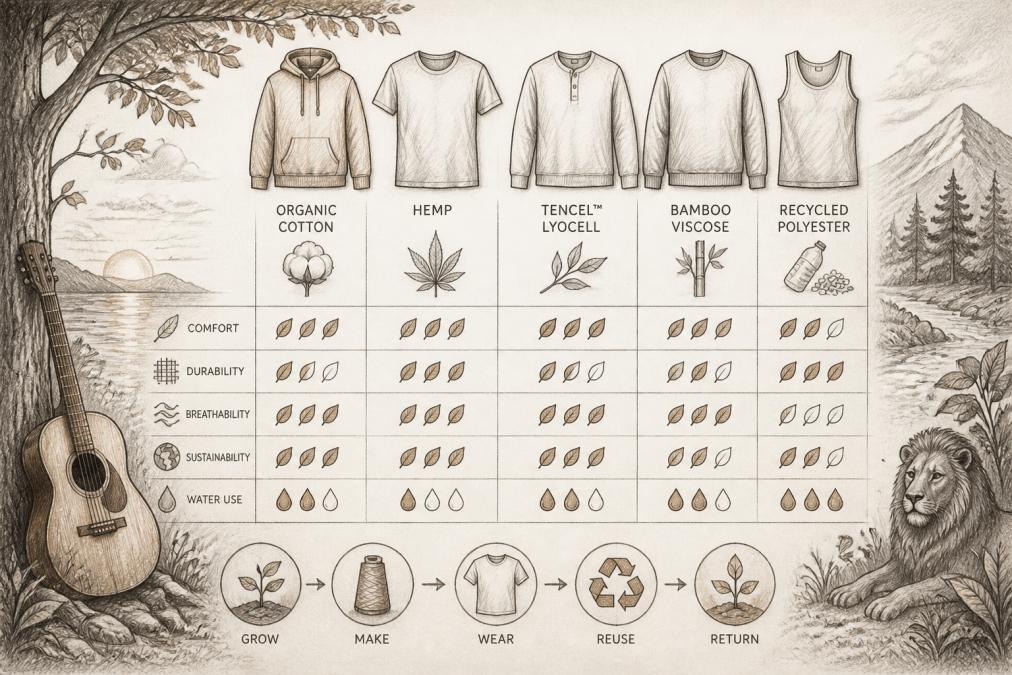
Organic cotton, linen, hemp, and recycled polyester each respond differently to washing, and mishandling any of them shortens garment longevity fast. The mechanism is consistent: heat and agitation break fibers, and broken fibers pill, thin, and tear. Cold water and air drying are the two highest-leverage habits in the entire care routine.
- Organic cotton: cold wash, low heat dry or air dry, no fabric softener. Softener coats the fiber and reduces absorbency over time.
- Linen: cold wash, hang dry, iron while slightly damp. Linen is strong when wet but creases sharply if dried flat.
- Hemp: gentle cycle, air dry, softens with each wash. Hemp is one of the most durable natural fibers and improves with age.
- Recycled polyester: cold wash, air dry, avoids microplastic shedding in hot water. A wash bag or filter catches what does shed.
- Bamboo viscose: hand wash or gentle cycle, lay flat to dry. Viscose loses strength when wet, so hanging it soaked can stretch it out of shape.
A Simple Care Routine That Pays Off
- Wash less often. Most garments do not need a full wash after one wear; airing them out between wears is often enough.
- Turn garments inside out before washing to reduce surface abrasion.
- Use cold water and a gentle cycle for everything except heavily soiled items.
- Air dry whenever possible. The dryer is the single biggest cause of shrinkage and fiber breakdown.
- Store knits folded, not hung, so they do not stretch on the shoulder.
For shoppers who want apparel that reflects conscious consumerism and values, Rasta Hippies.com offers original art and handcrafted merchandise rooted in peace, nature, and community.
Frequently Asked Questions
What is the best brand for high-quality plus-size clothing?
Eileen Fisher and Pact offer the strongest plus-size options among sustainable brands. Eileen Fisher carries up to 3X with a Renew take-back program for garment longevity, while Pact provides affordable GOTS-certified organic cotton basics in extended sizes. Both prioritize ethical labor and transparent supply chains, making them reliable choices for conscious shoppers seeking consistent fit and durable construction.
Which clothing brand is considered the most sustainable?
Patagonia leads in sustainability transparency with Fair Trade Certified sewing, recycled materials, and an Ironclad Guarantee for repairs. Eileen Fisher follows closely with its circular economy Renew program and Bluesign certified dyes. Both brands publish detailed supply chain reporting and prioritize garment longevity, setting the standard for ethical manufacturing and environmental responsibility in apparel.
How can I find ethical alternatives to mainstream apparel brands?
Start by checking certifications like GOTS for organic cotton, Fair Trade Certified for labor practices, and Bluesign for safe dyes. Brands like Reformation, Everlane, and Veja publish transparent supply chain data. Look for repair programs, take-back initiatives, and size inclusivity beyond XL. Price-per-wear analysis helps justify higher upfront costs when garments last years instead of months.
Are there affordable eco-friendly clothing options for 2026?
Pact and Boody offer the most accessible price points for sustainable basics, with GOTS-certified organic cotton and OEKO-TEX certified bamboo fabrics respectively. Both prioritize ethical manufacturing without premium markups. For footwear, Allbirds provides carbon-neutral certified options. These brands prove that conscious consumerism does not require luxury spending when you focus on quality over quantity.
What are the benefits of choosing fair trade clothing brands?
Fair Trade Certified brands like Patagonia and Pact ensure garment workers receive fair wages and safe conditions. This certification verifies ethical labor practices throughout the supply chain. Choosing fair trade supports social responsibility, reduces environmental impact from sustainable manufacturing, and aligns your purchases with conscious consumerism values. You also get higher quality garments built to last.