 listicle
Best Sustainable Clothing for Plus Sizes: 2026 Guide
Table of Contents
- Quick Comparison: Top Sustainable Plus Size Brands
- How We Evaluated These Brands
- 1. TomboyX: Best for Inclusive Underwear and Loungewear
- 2. Quince: Best Affordable Sustainable Plus Size Clothing
- 3. Warp + Weft: Best Sustainable Denim for Curvy Figures
- 4. EILEEN FISHER: Best for Investment Pieces and Circular Fashion
- 5. Reformation: Best for Trendy, Transparent Fashion
- 6. Known Supply: Best for Ethical Manufacturing Transparency
- Sustainable Fabrics for Plus Size Apparel: What to Look For
- How to Build a Sustainable Plus Size Wardrobe
- Frequently Asked Questions
Last Updated: September 24, 2026
Quick Comparison: Top Sustainable Plus Size Brands
Finding the best sustainable clothing for plus sizes means balancing size range, material integrity, and real cost-per-wear. This guide from RastaHippies.com covers six brands that get it right.
The sustainable fashion market has grown quickly, but plus-size shoppers still face a common problem: brands that claim inclusivity while capping sizes at XL.
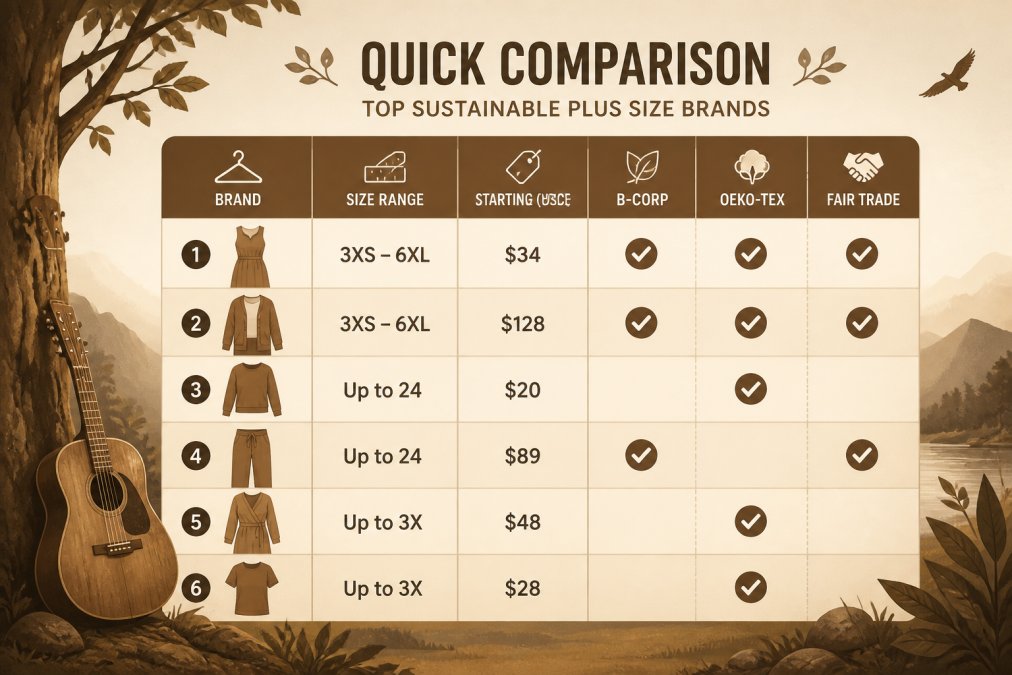
| Brand | Starting Price | Size Range | Best For | Key Certification |
|---|---|---|---|---|
| TomboyX | $20 | 3XS-6XL | Underwear, loungewear | B-Corp, OEKO-TEX |
| Quince | $30 | Varies by item | Affordable staples | Transparent factories |
| Warp + Weft | $78 | Up to 24 | Denim for curves | Water reduction |
| EILEEN FISHER | $128 | Up to 3X | Investment pieces | Circular fashion |
| Reformation | $48 | Extended sizes | Trendy dresses | Climate neutral |
| Known Supply | $35 | Inclusive options | Everyday basics | Fair-wage focus |
How We Evaluated These Brands
Each brand was scored on size range, material sourcing, labor transparency, and price-per-wear. Size inclusivity carried the most weight, since a sustainable brand that stops at XL fails the core audience.
1. TomboyX: Best for Inclusive Underwear and Loungewear
TomboyX earns the top spot for size range alone. The brand runs from 3XS to 6XL, one of the widest ranges available, and holds B-Corp certification for verified social and environmental standards.
Pros:
- Widest size range in this list
- Durable, certified fabrics
Cons:
- Limited to casual and intimate apparel
2. Quince: Best Affordable Sustainable Plus Size Clothing
Quince keeps prices low by selling direct to consumers. Organic cotton, linen, and washable silk appear across the line, and the brand publishes its factory partnerships.
Pros:
- Strong pricing for sustainable materials
- Versatile, timeless designs
Cons:
- Size range changes item to item
3. Warp + Weft: Best Sustainable Denim for Curvy Figures
Denim is where plus-size fit usually falls apart, and Warp + Weft solves it. Sizes go up to 24, and the proprietary stretch fabric holds its shape through repeated wear.
Pros:
- Excellent fit for curvy figures
- Serious water conservation
Cons:
- Inventory fluctuates often
4. EILEEN FISHER: Best for Investment Pieces and Circular Fashion
EILEEN FISHER built one of the first garment take-back programs in fashion. The Renew program resells worn pieces, keeping clothing out of landfills.
Pros:
- Industry-leading circularity
- High durability
Cons:
- Higher price point
5. Reformation: Best for Trendy, Transparent Fashion
Reformation publishes environmental data for every garment through its RefScale tool, tracking carbon and water impact per item.
Pros:
- Transparent impact data
- Modern aesthetic
Cons:
- Extended sizes sell out fast
6. Known Supply: Best for Ethical Manufacturing Transparency
Every Known Supply garment carries the signature of the person who made it. That single detail does more for supply chain transparency than most sustainability reports.
Pros:
- Direct connection to makers
- Genuine labor transparency
Cons:
- Few formal wear options
Sustainable Fabrics for Plus Size Apparel: What to Look For
Fabric choice decides how a garment feels, wears, and lasts. For plus-size apparel, stretch recovery matters as much as fiber content, since fabrics that lose shape create fit problems fast, bagging at the knees, rolling waistbands, and stretched necklines that never bounce back.
Look for these materials:
- Organic cotton: soft, breathable, GOTS-certified when verified. Look for a small percentage of elastane (2-5%) in knits so the fabric recovers instead of sagging.
- Linen: strong, temperature-regulating, improves with washing. Blends with cotton or Tencel reduce the crumple factor.
- Hemp: durable and low-water, blends well with cotton. Hemp-cotton canvas holds structure in structured pieces like jackets and wide-leg trousers.
- Tencel (lyocell): smooth drape, made from responsibly sourced wood pulp. Excellent for flowy dresses and wide-leg pants because it resists cling.
- Recycled polyester: gives plastic waste a second life, best in activewear. Pair with spandex for compression pieces; avoid 100% recycled poly in everyday knits because it pills.
- Modal and bamboo lyocell: soft, drapey, and often used in plus-size loungewear. Check for closed-loop processing to avoid the viscose supply-chain problems.
Why stretch recovery matters more in plus sizes
A fabric that stretches to fit but doesn't snap back will fail within a season. Two tests you can run before buying:
- The tug test. Gently pull the fabric across the hip or thigh area. If it stays stretched after you let go, it will bag out.
- The light test. Hold the fabric up to a window. If you can see your hand clearly through it, the garment will likely be sheer at stress points like the seat and bust.
How to measure yourself for sustainable plus-size brands
You need four numbers:
- Bust: around the fullest part, tape parallel to the floor
- Waist: at the natural crease when you bend sideways
- Hip: around the fullest part, usually 7-9 inches below the waist
- Inseam: from crotch seam to ankle bone on a pair of pants that fit
How to Build a Sustainable Plus Size Wardrobe
Building a sustainable plus size wardrobe starts with a capsule approach: fewer pieces, better quality, and a color palette that mixes easily. Most people need roughly 30 to 40 core items to cover a full year of wear, but plus-size capsules need a slightly different structure because fit variance between brands is wider.
Start with these steps:
- Audit what you own. Pull everything out and note what actually gets worn. Track it for two weeks if you can, most people wear 20% of their closet 80% of the time.
- Identify gaps. List missing basics like a good pair of jeans, a neutral layer, and one structured piece that fits at the shoulder.
- Set a budget per piece. Price-per-wear beats sticker price every time. See the math below.
- Buy secondhand first. Resale platforms carry extended sizes at lower cost, and plus-size inventory is often under-priced because demand outstrips supply.
- Measure before ordering. Plus-size fit varies by brand, so keep a tape measure handy and compare to each brand's chart.
- Add slowly. One quality piece per month builds a wardrobe without overspending.
Price-per-wear: the math that justifies ethical fashion
Price-per-wear is the honest measure of value. Divide the cost of a garment by the number of times you realistically wear it.
- A $20 fast-fashion top worn five times costs $4.00 per wear.
- A $90 organic cotton top worn 90 times costs $1.00 per wear.
- A $128 pair of well-made jeans worn 200 times costs $0.64 per wear.
How to care for sustainable fabrics so they last
Most guides stop at shopping. Extending a garment's life is the single highest-impact thing you can do, it delays the need for a replacement and keeps fibers out of landfills.
- Wash cold. Heat breaks down elastane and causes cotton to shrink unevenly, which is worse in plus-size garments where fit tolerance is tighter.
- Turn knits inside out. Reduces pilling on the surface that shows.
- Air dry when possible. Dryer heat is the top cause of stretched-out necklines and waistbands.
- Use mesh bags for delicates. Protects Tencel, modal, and anything with lace or thin straps.
- Rest garments between wears. Elastic needs 24 hours to recover. Rotating two pairs of jeans doubles the life of both.
- Store knits folded, not hung. Hangers stretch shoulders on heavier fabrics.
- De-pill with a fabric shaver, not a razor. A shaver removes pills without cutting into the knit.
- Repair before replacing. A $10 tailor visit to fix a hem or seam is almost always cheaper than a new garment, and it keeps the piece in rotation.
Frequently Asked Questions
What is the best brand for high-quality plus-size clothing?
The best brand depends on your needs. TomboyX offers durable underwear and loungewear up to 6XL, while EILEEN FISHER provides high-end investment pieces up to 3X. For denim, Warp + Weft offers extended sizes with a focus on fit and durability. Consider what you wear most and prioritize brands that match your style and size range.
How can I tell if a plus-size clothing brand is truly sustainable?
Look for third-party certifications like B-Corp, OEKO-TEX, GOTS, or Fair Trade. Check if the brand publishes supply chain details, such as factory names and locations. Transparent brands often share environmental impact data, like Reformation's RefScale tool. Avoid vague claims like 'eco-friendly' without proof. Also, see if they offer circularity programs, like EILEEN FISHER's Renew take-back program, which shows a commitment to reducing waste.
Are there affordable ethical alternatives to fast fashion for plus sizes?
Yes, several brands offer affordable sustainable plus size clothing. Quince provides organic cotton and linen pieces starting at around $30. Known Supply focuses on fair-wage employment and sells casual tees from $35. These brands keep prices low by using direct-to-consumer models and efficient supply chains, making ethical fashion more accessible without compromising on quality or values.
What materials should I look for in sustainable plus-size clothing?
Prioritize organic cotton, linen, hemp, Tencel, and recycled polyester. Organic cotton uses less water and no toxic pesticides. Linen and hemp are durable and breathable. Tencel is soft and made from sustainably sourced wood pulp. Recycled polyester reduces waste. Also, check for non-toxic dyes and OEKO-TEX certification, which ensures fabrics are free from harmful substances. These materials often last longer, giving you better value over time.
Do sustainable brands offer extended sizing beyond 3X?
Some do. TomboyX goes up to 6XL. Warp + Weft offers denim up to size 24. However, many sustainable brands still cap at 3X, so it's important to check each brand's size chart. If you're beyond 3X, look for specialized plus-size ethical brands or those with custom sizing options to ensure a proper fit.