 blog
blog
Best Ways to Support Ocean Conservation
Table of Contents
- Why Ocean Conservation Matters Now
- Practical Ways to Help Save the Ocean
- Ocean-Friendly Clothing and Conscious Shopping
- Supporting Credible Ocean Conservation Organizations
- Community Beach Cleanup and Local Action
- Protecting Marine Wildlife and Habitat
- Frequently Asked Questions
Last Updated: October 5, 2026
Why Ocean Conservation Matters Now
Ocean conservation is critical for the survival of marine ecosystems and human communities alike. The health of our oceans affects everything from the air we breathe to the food we eat. Coastal communities depend on healthy marine environments for their livelihoods, while the ocean absorbs carbon dioxide and produces oxygen that sustains all life on Earth.
Yet ocean health faces unprecedented pressure. Pollution, overfishing, climate change, and habitat destruction threaten marine wildlife and the ecosystems they depend on. The good news is that individuals can take concrete action. Supporting ocean conservation doesn't require becoming an environmental scientist, it means making informed choices in daily life and backing organizations doing the hard work of protection.
This guide from RastaHippies.com explores practical, accessible ways to support ocean conservation. Whether you're interested in reducing your carbon footprint, making sustainable seafood choices, or joining community cleanups, these actions create measurable impact when multiplied across many people.
Practical Ways to Help Save the Ocean
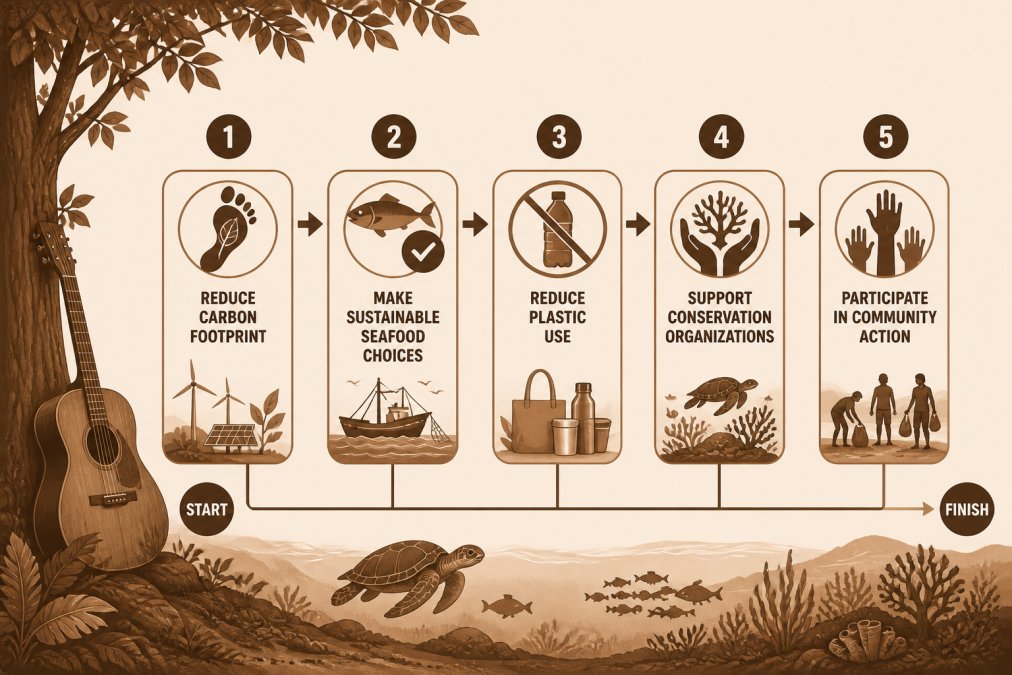
Ocean conservation starts with understanding where your choices have the most influence. The five main action categories that drive real change are reducing carbon emissions, choosing sustainable seafood, cutting plastic waste, supporting credible organizations, and participating in local habitat protection.
Reduce Your Carbon Footprint
Fossil fuels drive climate change, which warms the ocean, acidifies it, and disrupts marine ecosystems. Reducing your energy use directly supports ocean health.
Start with transportation. Drive less when possible, carpool, use public transit, or walk. If you drive regularly, consider an electric vehicle. At home, switch to LED bulbs, improve insulation, and adjust your thermostat. These changes lower your household carbon footprint.
Consider your energy source. Many utilities now offer renewable energy options. Choosing wind or solar power reduces fossil fuel consumption. Even small switches compound when thousands of households make them.
Make Sustainable Seafood Choices
Overfishing depletes fish populations and damages ocean habitats. Sustainable fishing practices protect marine wildlife and allow fish stocks to recover.
Check seafood sources before buying. Look for certifications from the Marine Stewardship Council (MSC) or similar organizations that verify sustainable practices. Ask your fishmonger or restaurant where seafood comes from and how it was caught.
Eat lower on the food chain when possible. Fish like sardines and anchovies require fewer resources than large predatory fish. Reducing overall seafood consumption also helps, you don't need to eliminate it, just choose quality over quantity and source responsibly.
Avoid species at risk. Sea turtles, certain sharks, and some tuna populations face overfishing pressure. Choosing abundant species supports ecosystem balance.
Cut Plastic from Your Daily Life
Marine pollution, especially plastic, suffocates wildlife and breaks down into microplastics that enter the food chain. Reducing plastic use prevents it from reaching the ocean.
Start with single-use plastics. Bring reusable bags to stores, use a refillable water bottle, and skip plastic straws and utensils. These small swaps prevent thousands of pieces of plastic from entering landfills and waterways each year.
Choose products with minimal packaging. Buy in bulk when possible. Use bar soap instead of liquid soap in plastic bottles. Refuse plastic bags for produce, bring mesh bags instead.
When you do use plastic, recycle it properly. Contaminated recycling (food-covered items, non-recyclables mixed in) ends up in landfills. Clean items before recycling and check local guidelines.
Consider your clothing. Synthetic fabrics shed microplastics when washed. Choose natural fibers like cotton, linen, or wool when possible. Wash clothes less frequently and use cold water to reduce shedding.
Ocean-Friendly Clothing and Conscious Shopping
What you wear affects the ocean. Fast fashion creates pollution through chemical dyes and synthetic fibers. Conscious shopping means choosing quality over quantity and supporting brands committed to environmental stewardship.
Look for certifications. Organic cotton, recycled materials, and natural dyes indicate lower environmental impact. Brands that disclose their supply chain and labor practices tend to prioritize sustainability more broadly.
Buy less, choose well. One quality piece worn many times beats ten cheap pieces worn once. Thrift stores and secondhand platforms extend clothing life and reduce waste.
Support brands aligned with your values. RastaHippies.com offers handcrafted merchandise and original art rooted in positive energy, with a commitment to supporting charitable foundations dedicated to ocean and environmental conservation. Choosing brands that actively donate to conservation organizations multiplies your impact, your purchase directly funds protection efforts.
Supporting Credible Ocean Conservation Organizations
Individual actions matter, but systemic change requires funding research, protecting marine habitats, and influencing policy. Supporting credible organizations amplifies your impact, provided the money reaches effective work.
Hundreds of organizations work on ocean conservation. Some focus on marine protected areas, others on reducing plastic pollution or protecting specific species. Before you donate, run a short due-diligence process.
A Five-Step Donation Due Diligence Checklist
- Mission specificity. Can the organization state its goal in one measurable sentence? "Establish 50,000 acres of marine protected areas by 2030" is trackable. "Protect the ocean" is not.
- Financial transparency. Look for published annual reports, IRS Form 990 filings, and a clear breakdown of program versus administrative spending. Charity Navigator and Candid (formerly GuideStar) provide independent ratings and financial data.
- Evidence of effectiveness. Ask what changed because of the organization's work. Strong groups publish impact reports with numbers: acres protected, bycatch reduced, pollution prevented, species recovered.
- Local leadership and consent. Conservation that ignores the people living in affected areas often fails. Look for organizations that partner with local and Indigenous communities, obtain free, prior, and informed consent, and share benefits equitably.
- Accountability to feedback. Does the organization publish evaluations, respond to criticism, and adjust strategy when evidence changes? Groups that never report failure are usually not measuring honestly.
What to Look for in Trustworthy Organizations
Credible ocean conservation organizations share common traits. They employ marine scientists and researchers. They work with local communities and respect Indigenous rights, because conservation that ignores people living in affected areas often fails.
Look for organizations with specific, measurable goals. Transparency matters: they should publish detailed annual reports, financial statements, and impact assessments, and explain their strategy and results.
Partner organizations matter too. If an organization partners with universities, government agencies, or other respected groups, that is a credibility signal. Isolated organizations have less leverage for change.
Evidence of Impact: What to Actually Measure
Donations are most useful when you can see what they produced. Ask organizations for indicators such as:
- Habitat protected: acres or square miles of marine protected areas established or restored.
- Bycatch reduced: changes in unintended catch of dolphins, sea turtles, seabirds, or non-target fish.
- Pollution prevented: pounds of plastic or debris removed, or policy changes that reduce runoff.
- Species recovery: population trends for the species the organization targets.
- Policy outcomes: laws, regulations, or protections adopted as a result of advocacy.
If an organization cannot provide at least one of these, treat the donation as general support rather than a measurable conservation investment.
Prioritize Your Giving
You do not need to spread donations across many groups. A common pattern among effective donors is to pick one or two organizations whose mission matches your priority, verify them against the checklist above, and give consistently. Recurring support helps organizations plan multi-year work such as habitat restoration or policy campaigns, which rarely succeed on one-time gifts.
If you want to support both large-scale policy work and local, place-based conservation, split your giving between a national or international group with published impact data and a regional organization working in a watershed or coastline you care about.
Charity Navigator nonprofit ratings Candid nonprofit profiles and financial data
Community Beach Cleanup and Local Action
Local action creates visible impact and builds community. Beach cleanups remove plastic and debris that harm marine wildlife. They also raise awareness, people who participate become ocean advocates.
Organize or join a cleanup in your area. Many communities have regular beach or waterway cleanups. If none exist, start one. Coordinate with local environmental groups or schools for participation and supplies.
Go beyond cleanup. Advocate for policies protecting local waterways. Attend city council meetings about stormwater management, pollution regulations, or marine protection. Rivers and watersheds feed into the ocean, protecting them upstream protects ocean health downstream.
Support local restoration projects. Kelp forests, seagrass meadows, and coral reefs are critical habitats. Some organizations restore these ecosystems. Volunteering or donating to local restoration work creates measurable habitat protection.
Protecting Marine Wildlife and Habitat
Marine wildlife faces threats from pollution, overfishing, climate change, and habitat loss. Protecting specific species and habitats requires focused effort.
Support marine protected areas. These zones restrict fishing and development, allowing ecosystems to recover. Many organizations work to expand protected areas. Advocating for stronger marine protection policies, through voting, petitions, or direct contact with elected officials, drives policy change.
Reduce bycatch. Choose sustainable seafood that avoids fishing methods harming dolphins, sea turtles, and other wildlife. Support policies requiring bycatch reduction technology in fishing fleets.
Protect nesting beaches. Sea turtles and shorebirds rely on undisturbed beaches. If you live near nesting areas, respect closures during breeding season. Report illegal activity to wildlife authorities.
Support research on climate change and ocean health. Funding marine science reveals how climate change affects ecosystems and informs conservation strategy. Donations to research institutions accelerate solutions.
Ocean conservation requires action at every level, individual choices, community engagement, and organizational support. Each action compounds. When thousands of people reduce plastic, choose sustainable seafood, lower their carbon footprint, and back credible organizations, the cumulative effect protects marine ecosystems and the communities that depend on them.
Start with one action that fits your life. Reduce plastic, make a seafood swap, or research an organization to support. Then add another. Ocean conservation isn't about perfection, it's about consistent choices that align with your values. Brands that commit to supporting ocean and environmental conservation through charitable donations show that business and environmental stewardship can align.
Frequently Asked Questions
What are the most effective ways to support ocean conservation?
The most effective approaches combine personal action with organizational support. Reduce your carbon footprint through energy choices and transportation, make sustainable seafood selections, eliminate single-use plastics, participate in community beach cleanups, and donate to credible ocean conservation organizations. Impact multiplies when you combine these, your personal choices reduce direct harm while donations fund research, policy work, and habitat protection that scale beyond individual efforts.
How can I tell if an ocean conservation organization is trustworthy?
Check for transparency: credible organizations publish annual reports, clearly state their funding sources, and explain how donations are used. Look for third-party certifications from evaluators like Charity Navigator. Verify that the organization works with local communities and respects indigenous rights in conservation efforts. Avoid organizations that make vague promises or use high-pressure fundraising tactics. Legitimate groups welcome questions about their impact and can cite specific conservation outcomes.
What does ocean-friendly clothing actually mean?
Ocean-friendly clothing is made from sustainable materials like organic cotton or recycled fibers that reduce water pollution and chemical runoff. Responsible manufacturers minimize waste during production and often support ocean conservation through donations or partnerships. The term differs from 'eco-friendly' because it specifically addresses how production and materials protect marine ecosystems. Authentic ocean-friendly brands are transparent about certifications, material sourcing, and conservation contributions.
How does participating in community beach cleanup help ocean conservation?
Beach cleanups directly remove plastic and debris that harm marine wildlife and degrade coastal habitats. They also build public awareness, participants become advocates who understand pollution's impact firsthand. Regular cleanups provide data on pollution patterns that inform policy decisions. Beyond the immediate environmental benefit, community action strengthens local stewardship and creates networks of people committed to ocean health, multiplying conservation impact through collective engagement.