 listicle
Comfortable Ethical Streetwear for Men: 2026 Guide
Table of Contents
- What Makes Streetwear Ethical? Key Criteria for Men
- Ethical Fashion Certifications Explained: What Labels Actually Mean
- 7 Comfortable Ethical Streetwear Brands for Men in 2026
- tentree: Tree-Planting Comfort for Everyday Wear
- WAWWA: Heavyweight Streetwear with Circular Design
- Taylor Stitch: Durable Staples Built to Last
- WAMA Underwear: Hemp-Based Base Layers for Breathability
- Patagonia: Repair-First Philosophy and Fair Trade Sewing
- Mud Jeans: Lease-a-Jeans Model for Circular Denim
- Boody: Affordable Bamboo Basics for Layering
- Sustainable Men's Clothing Brands: How to Compare and Choose
- Cost-Per-Wear: Why Ethical Streetwear Saves Money Over Time
- Care and Repair: Making Your Ethical Streetwear Last
- Building a Sustainable Capsule Wardrobe for Men
- Conclusion: Wear Your Values with RastaHippies.com
- Frequently Asked Questions
Last Updated: September 29, 2026
What Makes Streetwear Ethical? Key Criteria for Men
Ethical streetwear is clothing produced with verified respect for garment workers, low environmental impact, and honest claims about materials. For men in 2026, "comfortable ethical streetwear for men" means pieces that feel good and hold up under scrutiny.
- Who made it, and were they paid and protected fairly?
- What is it made from, and how much water and energy went into it?
- Will it last more than one season, or end up in a landfill?
Most brands answer one. Strong ones answer all three.
Materials That Matter: Organic Cotton, Hemp, and Recycled Fibers
Fabric choice drives most of a garment's environmental impact. Organic cotton avoids synthetic pesticides, hemp needs far less water and returns nutrients to the soil, recycled polyester diverts plastic waste, and Tencel lyocell comes from wood pulp in a closed-loop process that recaptures solvents.
Labor Standards and Supply Chain Transparency
Transparency means a brand publishes which factories it uses and lets third parties audit them. Sweatshop-free production requires named facilities, published audit results, and wages that meet local living standards, not just a website statement.
Ethical Fashion Certifications Explained: What Labels Actually Mean
Ethical fashion certifications are third-party programs that verify specific claims, from organic farming to fair wages, rather than trusting a brand's marketing. The key word is specific: a certification covers one link in the supply chain, not the whole garment. Understanding scope separates a real label from a logo.
| Certification | What It Verifies | Scope Limit | Watch For |
|---|---|---|---|
| USDA Organic | Fiber grown without synthetic pesticides | Fiber only | Does not cover sewing or dyeing |
| Fair Trade Certified | Worker wages, safety, community premium | Sewing and processing | Does not cover raw material |
| B Corporation | Overall social and environmental score | Company-wide | Broad, not product-specific |
| OEKO-TEX | Toxic-free finished textile | Finished fabric | Does not cover labor |
| Global Organic Textile Standard (GOTS) | Organic fiber plus processing and social criteria | Fiber through finished garment | Requires chain-of-custody records |
| Recycled Claim Standard (RCS) | Recycled content percentage | Material only | Does not verify working conditions |
How Verification Actually Works
A credible certification relies on three mechanisms: a third-party standard, an accredited auditor who inspects the facility, and a chain-of-custody record tracking material from raw fiber to finished product. A claimed certificate number should be traceable through the certifying body's public database; if a brand cannot produce one, the claim is unverified.
How to Spot Greenwashing
Greenwashing hides behind vague words like "eco-friendly" or "natural" with no certificate attached. A real label names the certifying body and the certificate number. Watch for these patterns:
- A leaf icon with no certifying body named
- A claim like "sustainable cotton" with no standard behind it
- A single certification used to imply the whole garment is verified
- A brand that publishes a sustainability report but no factory list
Why This Matters for Comfort
Certification is not just an ethical checkbox. OEKO-TEX and GOTS both restrict the chemical finishes that cause skin irritation, which matters for men wearing base layers and heavyweight streetwear all day. A certified fabric is often a more comfortable fabric.
7 Comfortable Ethical Streetwear Brands for Men in 2026
The best comfortable ethical streetwear for men balances verified materials, fair labor, and everyday comfort.
| Brand | Starting Price | Best For | Standout Feature |
|---|---|---|---|
| tentree | $35 | Everyday comfort | Plants ten trees per item |
| WAWWA | $50 | Heavyweight streetwear | Circular design focus |
| Taylor Stitch | $68 | Durable staples | Timeless construction |
| WAMA Underwear | $24 | Base layers | Hemp, antimicrobial fabric |
| Patagonia | $45 | Repair-first buying | Fair Trade Certified sewing |
| Mud Jeans | $119 | Circular denim | Lease-a-Jeans model |
| Boody | $20 | Affordable layering | Organic bamboo viscose |
tentree: Tree-Planting Comfort for Everyday Wear
tentree builds loungewear and streetwear from organic cotton and recycled polyester, and plants ten trees for every item sold. It holds B Corporation status, signaling a verified social and environmental score. The cuts lean casual rather than high-fashion, best for men who want soft, low-key pieces with a measurable environmental add-on.
WAWWA: Heavyweight Streetwear with Circular Design
WAWWA manufactures in-house and designs for circularity, so garments are built to be repaired and eventually recycled. The heavyweight fabrics suit urban wear and hold their shape. Best for streetwear fans who want real silhouette and durability over trend-chasing.
Taylor Stitch: Durable Staples Built to Last
Taylor Stitch sells direct to consumer, cutting middlemen and waste, and uses recycled and organic fibers across its line. Construction quality is the draw; these pieces are meant to survive years of wear. The styling is classic rather than trend-led, best for men building a long-term wardrobe.
WAMA Underwear: Hemp-Based Base Layers for Breathability
WAMA specializes in hemp fabric, naturally antimicrobial and highly breathable, and manufactures in fair-trade certified factories. The range stays focused on underwear and base layers, best as the foundation layer beneath heavier streetwear.
Patagonia: Repair-First Philosophy and Fair Trade Sewing
Patagonia uses recycled materials extensively, sews under Fair Trade Certified conditions, and backs products with a repair guarantee that keeps garments in use. Best for men who want performance-grade durability and a company that will fix what it sells.
Mud Jeans: Lease-a-Jeans Model for Circular Denim
Mud Jeans pioneered a lease model that lets customers rent denim and return it for recycling, closing the loop on one of fashion's most polluting categories. It uses organic and recycled cotton and publishes production details. Best for men who want high-quality denim without owning waste.
Boody: Affordable Bamboo Basics for Layering
Boody makes soft, breathable basics from organically grown bamboo viscose at accessible prices. The range covers layering pieces rather than heavy-duty streetwear, best for budget-conscious shoppers who still want sustainable fabric next to the skin.
Sustainable Men's Clothing Brands: How to Compare and Choose
Comparing sustainable men's clothing brands comes down to four checks: certification, transparency, material, and durability.
- Certification: Does a named third party verify the claim?
- Transparency: Are factories and audits published?
- Material: Organic, recycled, or low-impact fibers?
- Durability: Is it built to last, or replaced yearly?
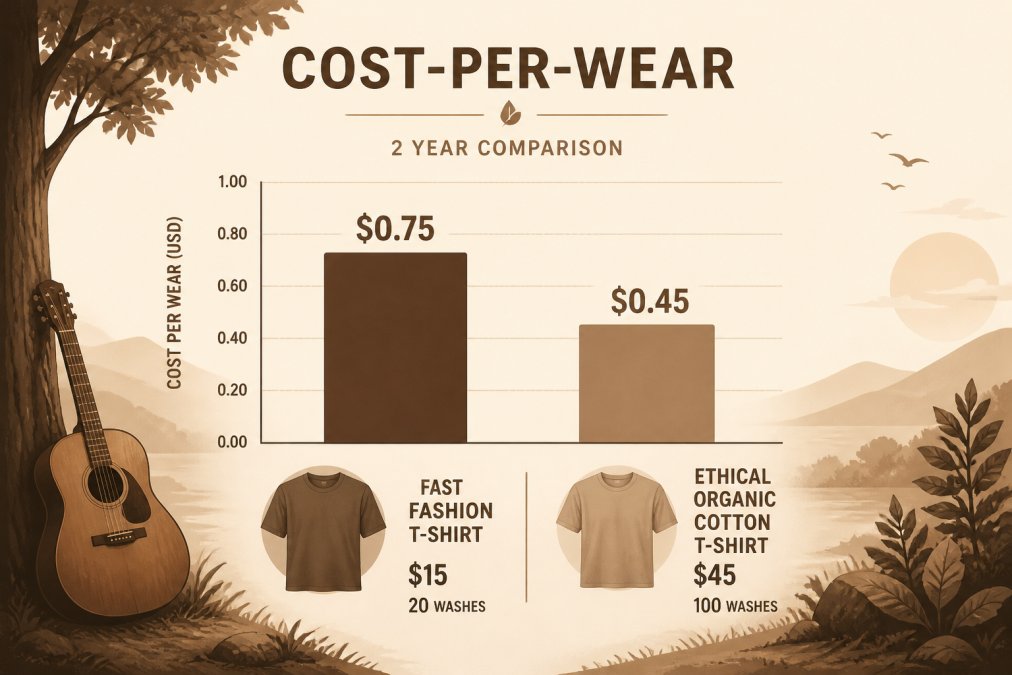
Cost-Per-Wear: Why Ethical Streetwear Saves Money Over Time
Cost-per-wear is the purchase price divided by the number of times a garment is worn. It exposes fast fashion's real expense.
Care and Repair: Making Your Ethical Streetwear Last
Washing less often, in cold water, and air-drying stretches the life of any garment. Care is where cost-per-wear is won or lost.
- Wash inside out in cold water to protect dye and fiber
- Air-dry instead of machine-drying to prevent shrinkage
- Repair loose seams and small holes early, before they spread
- Use a mesh bag for delicates and base layers
- Store folded knits rather than hanging them
Building a Sustainable Capsule Wardrobe for Men
A capsule wardrobe is a small set of versatile pieces that mix and match, reducing both spending and environmental impact. For men, ten to fifteen items can cover most of the week, fewer, better garments worn more often.
Sizing and Fit Inclusivity: A Gap Most Guides Skip
Most ethical streetwear guides ignore sizing, but it is where the category struggles. Many sustainable brands launch with a narrow size run and expand slowly, leaving larger men with fewer verified options. When comparing brands, check three things:
- Does the size chart list actual garment measurements, not just S/M/L labels?
- Do extended sizes stay in stock, or sell out permanently after launch?
- Is the return policy the same for all sizes, or restricted for larger ones?
Second-Hand and Resale: The Fastest Route to a Capsule
The resale market is the most underused tool for building an ethical wardrobe. Buying used extends a garment's life, avoids new production, and often costs less than retail. Platforms include general marketplaces, dedicated streetwear resale sites, and brand-run trade-in programs.
A practical sequence for building a capsule:
- List what you already own and wear weekly.
- Fill gaps with second-hand pieces first.
- Buy new only for items that are hard to find used, like base layers.
- Sell or donate what you replace, keeping the loop closed.
A Sample Ten-Piece Capsule
- Two neutral base layers (organic cotton or hemp)
- Two heavyweight tees
- One hoodie or crewneck
- Two bottoms (one denim, one relaxed)
- One jacket built for layering
- One pair of durable sneakers or boots
- One accessory that ties the set together
This set covers most weeks without repeating an outfit. Each piece should work with at least three others, the test that keeps a capsule from becoming a collection.
A capsule works best when you buy used first, check measurements instead of tags, and replace only what wears out. Sizing and resale are the two steps most guides leave out, and they are the two that make the wardrobe last.
Conclusion: Wear Your Values with RastaHippies.com
Building a wardrobe that respects workers and the planet takes intention, and the payoff is clothing that feels good and lasts. RastaHippies.com unifies Reggae Rasta and Hippie cultures through original art and handcrafted merchandise, with designs rooted in positive energy and a love for nature.
Frequently Asked Questions
What makes streetwear considered ethical?
Ethical streetwear meets three main criteria: materials, labor, and transparency. Look for organic cotton, recycled polyester, or hemp fabric instead of conventional cotton. Check for Fair Trade Certified or B Corp status, which verify ethical labor practices and worker welfare. Finally, brands should disclose their supply chain, including where fabrics come from and who sews the garments. Without traceability, claims of sustainability are hard to verify.
Are there affordable sustainable men's clothing brands?
Yes. While upfront costs are often higher than fast fashion, cost-per-wear often makes ethical options cheaper over time. For example, a durable organic cotton tee worn 100 times costs less per wear than a cheaper shirt worn only 20 times.
How can I tell if a clothing brand is truly ethical?
Check for third-party certifications like Fair Trade Certified, B Corp, or GOTS (Global Organic Textile Standard). These require audits and verify claims. Look for specific supply chain details: factory names, locations, and material origins. Be wary of vague terms like 'eco-friendly' without proof. If a brand cannot answer where its clothes are made, that is a red flag.
What materials are best for comfortable, eco-friendly streetwear?
Organic cotton is soft and breathable, ideal for tees and hoodies. Hemp fabric resists odor and gets softer with each wash, perfect for base layers. Tencel lyocell is moisture-wicking and smooth, great for activewear. Recycled polyester reduces waste and adds durability. For denim, look for organic or recycled cotton. Avoid conventional cotton and virgin polyester, which use more water and energy. Blends like organic cotton and recycled polyester offer both comfort and longevity.
Does ethical streetwear sacrifice style for comfort?
No. Many ethical streetwear brands design durable, street-appropriate silhouettes that rival mainstream labels. Comfort comes from material choices, not cut. Organic cotton and hemp feel soft against the skin and breathe well. You get urban style without compromising on ethics or comfort. The key is finding brands that prioritize both design and responsible manufacturing.