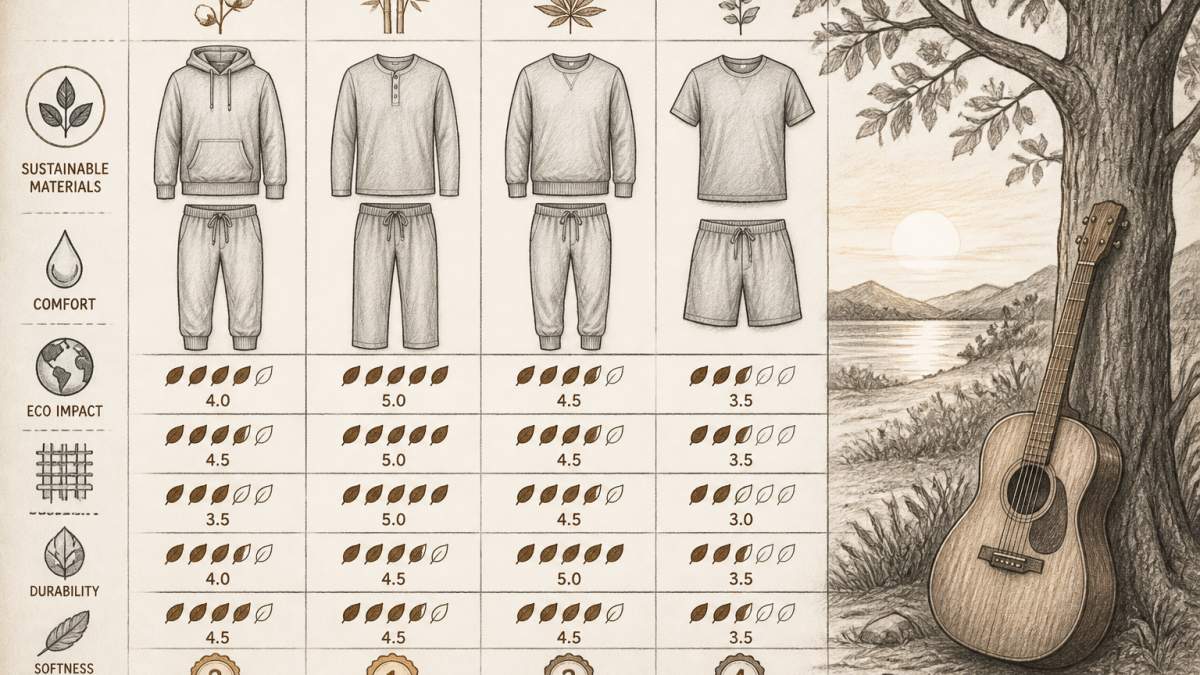
 listicle
Comfortable Sustainable Loungewear for Men: 2026 Guide
Table of Contents
- Why Sustainable Loungewear for Men Is Worth the Switch
- Quick Comparison: Top Sustainable Loungewear Brands
- 1. Pact: GOTS-Certified Organic Cotton on a Budget
- 2. Boody: Bamboo Viscose Softness for Everyday Wear
- 3. Toad&Co: Versatile TENCEL Lyocell and Hemp Blends
- 4. Harvest & Mill: Fully Domestic Supply Chain Transparency
- 5. Vuori: Performance Loungewear That Transitions to the Gym
- 6. Cozy Earth: Temperature-Regulating Bamboo for Hot Sleepers
- How to Spot Greenwashing in Sustainable Loungewear
- Building a Capsule Loungewear Wardrobe
- End-of-Life: What Happens When Loungewear Wears Out
- Sustainable Loungewear Care Guide
- Frequently Asked Questions
Last Updated: September 28, 2026
Why Sustainable Loungewear for Men Is Worth the Switch
Comfortable sustainable loungewear for men is clothing made from certified organic or plant-based fibers, produced under fair labor standards, and built to last through repeated washing. This guide breaks down six brands worth your attention, the certifications that actually mean something, and how to spot greenwashing before you spend.
The case for switching is straightforward. Conventional cotton farming relies heavily on synthetic pesticides, while USDA organic certification standards require growers to avoid most synthetic chemicals and use methods that protect soil health. Loungewear sits against your skin for hours at a time, so fabric quality matters more here than almost anywhere else in your wardrobe.
The Real Cost of Fast Fashion Loungewear
Fast fashion loungewear looks cheap at checkout but rarely stays comfortable. Thin cotton pills, elastic waistbands stretch out, and seams split within months, so replacing those pieces two or three times a year often costs more than one well-made garment.
Cheap synthetic fabrics shed microplastics in the wash, and low-quality dyes can irritate sensitive skin. A common mistake is assuming "cotton" means clean, conventional cotton can carry chemical residue from growing and processing. Look for GOTS-certified organic cotton when the label makes a sustainability claim.
Quick Comparison: Top Sustainable Loungewear Brands
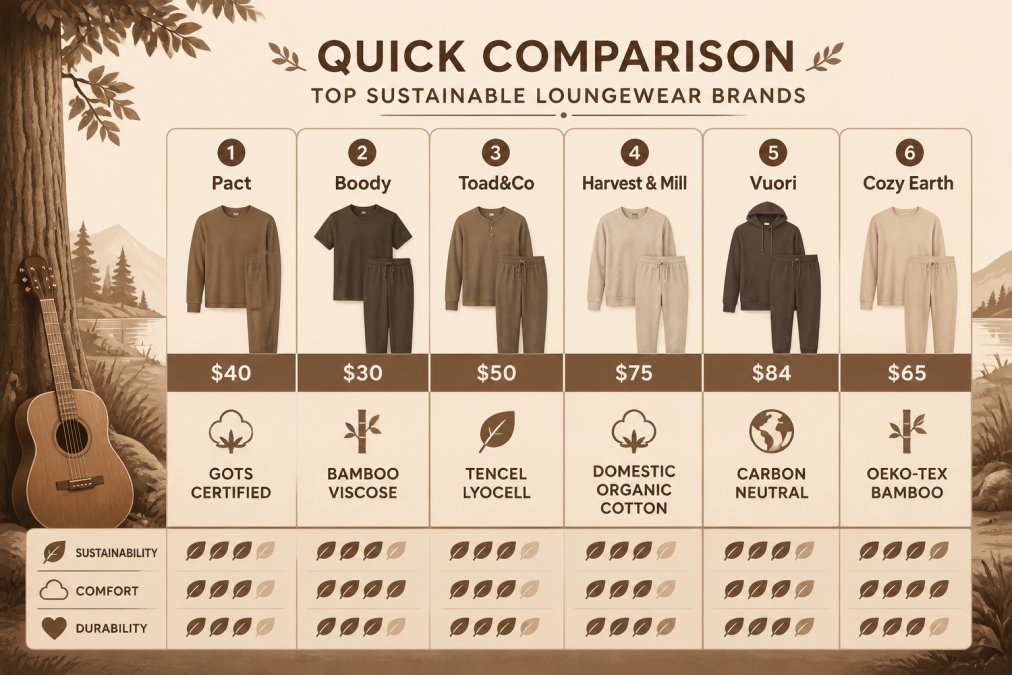
The table below compares six brands across price, primary material, certification, and best use case.
| Brand | Starting Price | Primary Material | Key Certification | Best For |
|---|---|---|---|---|
| Pact | $40 | Organic cotton | GOTS, Fair Trade | Budget organic basics |
| Boody | $30 | Bamboo viscose | Eco-certified bamboo | Everyday softness |
| Toad&Co | $50 | TENCEL Lyocell, hemp | Bluesign, Fair Trade | Versatile wear |
| Harvest & Mill | $75 | Organic cotton | Domestic supply chain | Transparency seekers |
| Vuori | $84 | Performance blends | Carbon neutral | Gym-to-lounge |
| Cozy Earth | $65 | Bamboo viscose | OEKO-TEX | Hot sleepers |
1. Pact: GOTS-Certified Organic Cotton on a Budget
The tradeoff is color choice: Pact runs a limited palette of neutrals and earth tones. If you want soft, non-toxic cotton sweatpants and sleepwear that won't break the bank, this is the entry point.
2. Boody: Bamboo Viscose Softness for Everyday Wear
Boody's bamboo viscose basics feel noticeably softer than standard cotton, and the seamless construction reduces chafing. Bamboo grows quickly and needs less water than conventional cotton, which is why it's popular in sustainable fashion circles.
The catch: the fabric runs thin, great for warm sleepwear and layering, less ideal for a heavyweight lounge pant. Sizing skews true, and the price makes it easy to test a single piece before committing.
3. Toad&Co: Versatile TENCEL Lyocell and Hemp Blends
Toad&Co blends TENCEL Lyocell, hemp, and recycled polyester into loungewear that works at home or on a quick errand. TENCEL Lyocell comes from sustainably sourced wood pulp and uses a closed-loop process that recaptures most of the solvent.
Hemp adds durability that pure cotton lacks, but Toad&Co rotates seasonal collections, so a style you like may sell out and not return. Buy the fit you want when you see it.
4. Harvest & Mill: Fully Domestic Supply Chain Transparency
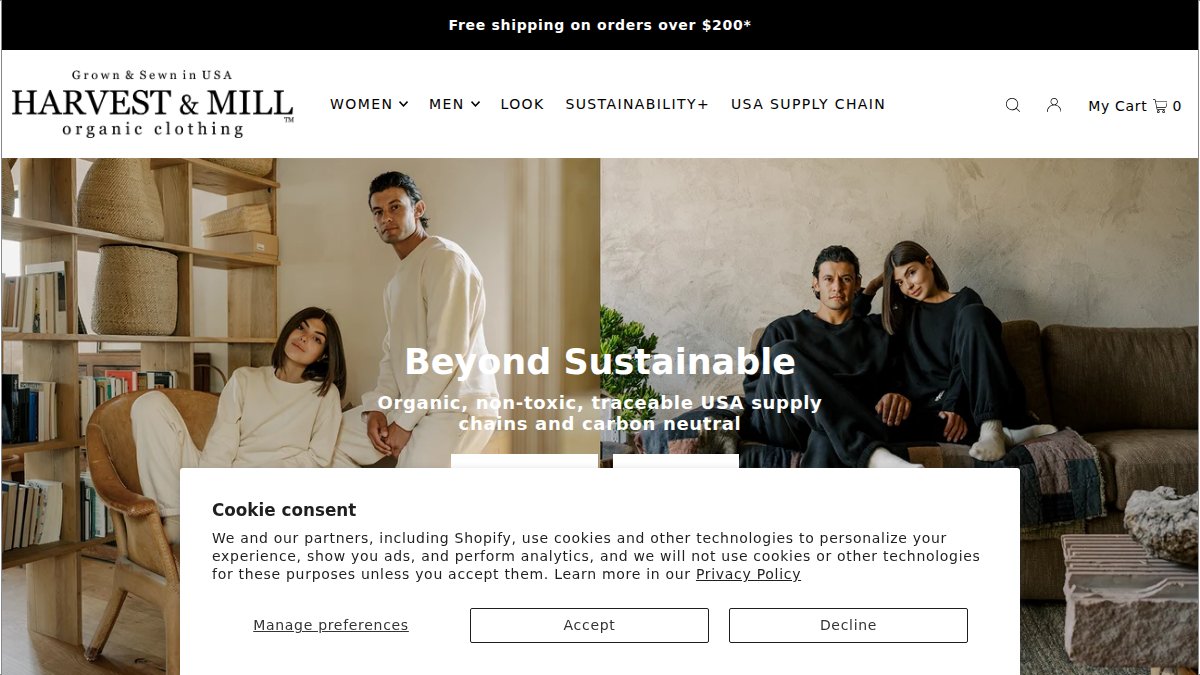
Harvest & Mill grows, mills, and sews its organic cotton entirely within the United States and ships in plastic-free packaging, a rare domestic supply chain in an industry where most garments cross multiple borders.
Premium pricing reflects local labor costs.
5. Vuori: Performance Loungewear That Transitions to the Gym
Vuori builds moisture-wicking, four-way stretch fabrics into lounge gear that handles a workout and a couch session in the same day. The brand holds carbon-neutral certification and the durability is genuinely strong.
6. Cozy Earth: Temperature-Regulating Bamboo for Hot Sleepers
Cozy Earth's bamboo viscose sleep and lounge sets breathe well and wick moisture, which helps if you run hot at night. The fabric feels softer than traditional cotton and holds up to repeated washing.
How to Spot Greenwashing in Sustainable Loungewear
Greenwashing is a sustainability claim that sounds meaningful but lacks third-party verification. Most guides stop at "look for certifications," but a brand can hold a valid certificate on one product line while the rest of its catalog is conventional. The real skill is knowing which questions to ask.
A "100% cotton" tag says nothing about how the cotton was grown or dyed. Without a named third-party certification and a stated scope, the claim is unverified. Check the certification body and the label grade, not the marketing copy.
Building a Capsule Loungewear Wardrobe
A capsule approach means buying fewer, better pieces that mix and match. Most men need four to six items: two lounge pants, two to three tops, and one warmer layer for cold mornings. A neutral palette makes every piece work together.
End-of-Life: What Happens When Loungewear Wears Out
Most loungewear ends up in a landfill, and how long it stays there depends almost entirely on fiber content. Synthetic fabrics like polyester and nylon can persist for decades, while untreated natural fibers such as cotton, hemp, and linen break down far faster, but only under the right conditions and only if separated from the synthetic components stitched into them.
Fiber-by-fiber end-of-life reality:
- Organic cotton and hemp: Biodegrade readily in industrial composting, slower in home compost. Remove elastic, drawstrings, and synthetic labels first. Hemp is denser and takes longer than cotton.
- TENCEL Lyocell and bamboo viscose: Derived from wood pulp or bamboo, these biodegrade in industrial composting conditions. Home compost is less reliable because the fiber has been chemically regenerated. Check whether the brand uses a closed-loop process, which affects both production and end-of-life.
- Recycled polyester and performance blends: Do not biodegrade in any practical timeframe. These belong in textile recycling, not compost. Mechanical recycling can turn them into insulation, carpet padding, or new yarn, but only if collected separately.
- Blends (cotton-polyester, hemp-recycled poly): The hardest category. Mixed-fiber garments are difficult to recycle mechanically because the fibers can't be easily separated. Most end up in landfill or incineration. If end-of-life matters to you, avoid blends.
Where to actually send worn-out loungewear:
- Brand take-back programs. Some brands run their own collection. Check the brand's site for a take-back or recycling page before you toss anything. Programs vary, some accept only their own products, some accept any textile.
- Textile recycling drop-offs. Many municipalities and retailers host textile collection bins. These accept worn, stained, or torn garments that charities won't take. The fibers get sorted for reuse or downcycling into wiping cloths, insulation, or padding.
- Composting (natural fibers only). If you have access to industrial composting, 100% cotton or hemp garments with all synthetic components removed can go in. Home compost is possible for untreated cotton but slow and inconsistent.
- Repair before you recycle. A hole at a seam or a stretched waistband is often fixable. A tailor can replace elastic, and simple seam repairs extend life by years. Repair is almost always the lowest-impact option.
What to do with the components you remove:
Before buying, check whether the brand offers a take-back program and whether the garment is a single fiber or a blend. A 100% organic cotton piece with a replaceable elastic waistband is far easier to keep in circulation than a cotton-polyester blend with a fused waistband. Design choices made at purchase determine what's possible at end of life.
Sustainable Loungewear Care Guide
Proper care extends garment life and reduces how often you replace items.
- Wash in cold water to protect fibers and dyes
- Turn garments inside out to reduce surface wear
- Skip fabric softener, which coats fibers and reduces breathability
- Air dry when possible; use low heat if you must use a dryer
- Wash full loads to cut water and energy use per garment
- Repair small holes and loose seams before they spread
Frequently Asked Questions
What materials make loungewear sustainable?
Sustainable loungewear uses plant-based fibers like GOTS-certified organic cotton, TENCEL Lyocell, bamboo viscose, and recycled polyester. These materials reduce environmental footprint through lower water use and non-toxic dyes. Look for certifications like GOTS, Fair Trade Certified, or carbon neutral claims to verify ethical manufacturing.
Is organic cotton better for loungewear than synthetic fabrics?
Organic cotton offers breathability and hypoallergenic properties that synthetic fabrics lack. It uses no toxic pesticides, making it safer for skin sensitivity. However, synthetic blends like recycled polyester can provide moisture-wicking performance for active use. For everyday comfort, GOTS-certified organic cotton delivers softness without chemical residue. The best choice depends on whether you prioritize breathable natural fibers or performance features.
How do I know if a clothing brand is truly sustainable?
Check for third-party certifications: GOTS for organic textiles, Fair Trade Certified for ethical labor, and carbon neutral verification. Avoid vague claims like 'eco-friendly' without proof. Look for specific metrics on water use, chemical restrictions, and factory audits. If a brand cannot show certification documents, treat sustainability claims with skepticism.
Are there affordable sustainable loungewear options for men?
Yes. While prices are higher than fast fashion, the durability and non-toxic materials mean fewer replacements over time.
How should I care for sustainable loungewear to make it last longer?
Wash in cold water on a gentle cycle to prevent fiber breakdown and color fading. Use mild, non-toxic detergent without bleach or fabric softeners, which coat natural fibers. Air dry when possible; if using a dryer, choose low heat. TENCEL Lyocell and bamboo viscose benefit from line drying to maintain shape. Store folded rather than hung to avoid stretching. Following this sustainable loungewear care guide extends garment life and reduces textile waste.