 ultimate-guide
OEKO-TEX Certified Apparel for Sensitive Skin: 2026 Guide
Table of Contents
- What OEKO-TEX Standard 100 Certification Actually Means
- Harmful Substances Tested: Formaldehyde, Heavy Metals, and More
- Benefits of OEKO-TEX Certified Clothing for Sensitive Skin
- How to Identify OEKO-TEX Certified Apparel Before You Buy
- OEKO-TEX vs Organic Cotton: What Label Transparency Really Tells You
- Non-Toxic Fashion Brands for Sensitive Skin: What to Look For
- Caring for Certified Fabrics and the Lifecycle of the Certification
- Frequently Asked Questions
Last Updated: September 20, 2026
What OEKO-TEX Standard 100 Certification Actually Means
OEKO-TEX Standard 100 is an independent testing and certification system that verifies textiles are free from harmful substances at levels that could affect human health. It is the most widely recognized textile safety certification for sensitive skin.
This guide breaks down what that label guarantees, which substances get tested, and how to confirm oeko-tex certified apparel is real.
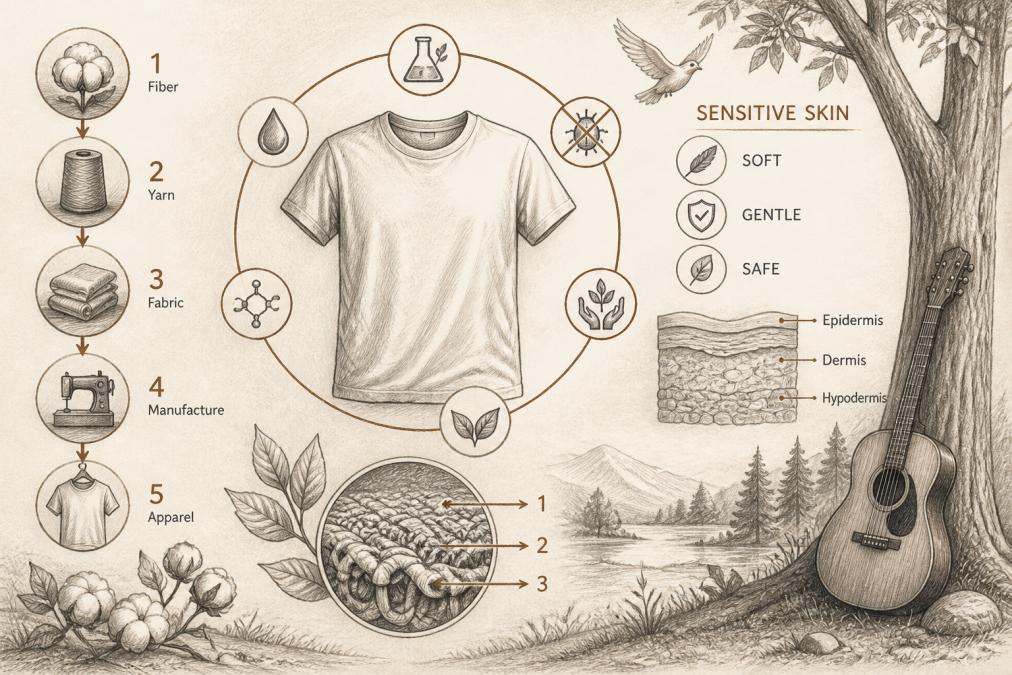
The certification covers every component of a finished garment, threads, zippers, buttons, linings, and prints. A soft organic cotton tee can still trigger irritation if the dye or zipper pull contains something the skin reacts to.
The Four Product Classes and What They Cover
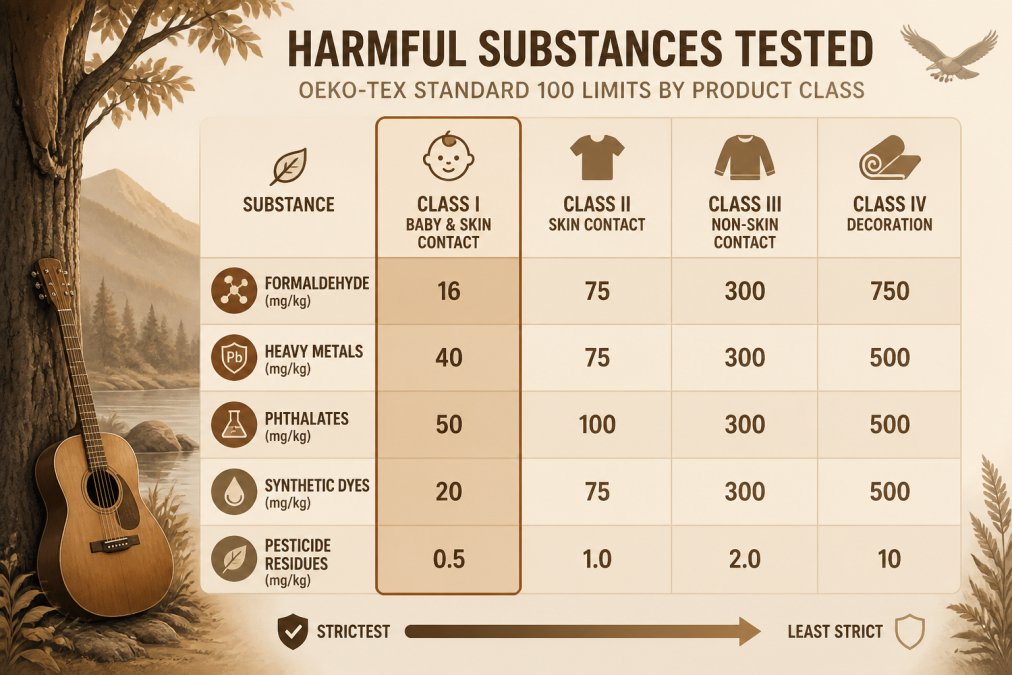
The standard splits products into four classes based on skin contact. Class I covers baby and toddler items with the strictest limits. Class II covers items worn close to the skin, like underwear, t-shirts, and leggings. Class III covers outerwear worn away from skin. Class IV covers home textiles and decoration.
Harmful Substances Tested: Formaldehyde, Heavy Metals, and More
The standard tests over 100 parameters: formaldehyde, heavy metals such as lead and cadmium, phthalates, synthetic dyes, pesticide residues, and chlorinated phenols.
How Independent Laboratory Testing Works
Testing is carried out by independent OEKO-TEX institutes, not the brand selling the shirt. A manufacturer submits samples, the lab runs the full panel, and certification is issued for that specific product and production site.
Benefits of OEKO-TEX Certified Clothing for Sensitive Skin
The main benefit is risk reduction: certified apparel removes a large category of potential irritants, narrowing down what might be causing a reaction.
A Dermatological View on Contact Dermatitis and Chemical Residues
Textile contact dermatitis is a recognized clinical category that splits into two mechanisms shoppers with sensitive skin should understand.
Why the Product Class Matters More Than the Logo
A garment can carry the OEKO-TEX logo and still be certified at Class III or IV, which allows higher residue limits than Class I or II. For skin-contact items, the class determines whether the certification actually helps a reactive wearer, a Class IV throw pillow and a Class II t-shirt are not equivalent safety claims, even with the same logo.
How to Identify OEKO-TEX Certified Apparel Before You Buy
Check the label for the OEKO-TEX logo plus a certificate number, then verify that number on the official OEKO-TEX label check tool. No match means the claim is unverified. Most shoppers stop at the hangtag, exactly where greenwashing lives, since a logo printed on a tag costs nothing to add. The number follows this format: a two-letter institute code, a four-digit institute number, and a six-digit certificate number, usually printed near the logo on the care label or hangtag.
How to Verify a Certification Number in Three Steps
- Locate the certificate number on the product label or hangtag.
- Enter it into the label check tool on the official OEKO-TEX site.
- Confirm the returned product description, product class, and expiry date match what you are buying.
If the tool returns nothing, or the description does not match the item in your hand, treat the claim as unproven. This takes about a minute and is the single most useful habit for avoiding greenwashed labels.
OEKO-TEX vs Organic Cotton: What Label Transparency Really Tells You
These two labels answer different questions, and conflating them is the most common confusion in non-toxic fashion.
| Label | What It Certifies | What It Does Not Cover | Best For |
|---|---|---|---|
| OEKO-TEX Standard 100 | Finished product is free from harmful substance residues above set limits | How the fiber was grown | Sensitive skin, chemical exposure concerns |
| Organic cotton certification | Fiber grown without synthetic pesticides and GMOs | Dyes, finishes, and processing chemicals | Environmental and farming concerns |
| Both together | Fiber origin plus finished product safety | Nothing relevant to the buyer is left out | Shoppers who want both angles covered |
Non-Toxic Fashion Brands for Sensitive Skin: What to Look For
Prioritize brands that publish certificate numbers, name their product class, and keep certification current. Transparency beats the word "natural" on a tag.
A short screening checklist:
- Certificate number printed on the label or product page
- Product class stated (Class I or II for skin-contact items)
- Expiry date within the current year
- Fiber content listed, with organic claims backed by a separate certification
- Care instructions that do not rely on heavy chemical treatment
Caring for Certified Fabrics and the Lifecycle of the Certification
Certification covers the product as sold. What happens after depends on how you wash and wear it, and how the brand maintains its certificate.
How Washing Habits Affect a Certified Garment
The residues a certification limits are mostly on the surface and in the fiber. Washing removes some, but the wrong routine can add new ones back.
The Lifecycle of the Certification
For sensitive skin, the practical routine is simple: verify the number, wash before wearing with a fragrance-free detergent, skip softeners, and use warm or cool water rather than hot. That combination removes most of the textile-related irritants that trigger reactions in the first place, and it keeps the certified garment doing the job it was tested to do.
Frequently Asked Questions
What does OEKO-TEX Standard 100 certification actually mean?
It means every component of a finished garment, including fabric, thread, buttons, and zippers, has been tested by an independent laboratory for harmful substances. The testing covers formaldehyde, heavy metals, phthalates, synthetic dyes, and pesticide residues against strict limit values. Products are sorted into four product classes, with Class I for baby items carrying the tightest limits. If a garment carries the Standard 100 label, it has passed human-ecological safety checks at every stage of textile processing, not just the raw fiber.
Why is OEKO-TEX certified apparel recommended for people with sensitive skin?
Sensitive skin reacts to chemical residues left in fabric after dyeing, finishing, and shipping. OEKO-TEX certified apparel limits those residues to levels set for human-ecological safety, which reduces the chance of contact dermatitis, itching, and redness. A dermatological perspective matters here: dermal absorption of formaldehyde and heavy metals through clothing is low but continuous, and for people with existing skin sensitivity, even small exposures can trigger flare-ups. Choosing certified pieces removes one variable you cannot see or wash out.
How can I verify an OEKO-TEX certification number on a garment?
Every certified product carries a label with a certificate number and the testing institute's name. Go to the OEKO-TEX website, enter that number in the label check tool, and confirm the company, product type, and certification status match what you are holding. If the number does not return a result, the claim is not verified. This step takes under a minute and is the fastest way to separate genuine certification verification from vague eco-friendly practices claims.
Does OEKO-TEX certification test for formaldehyde?
Yes. Formaldehyde is one of the substances OEKO-TEX Standard 100 tests for, with limits that vary by product class. Class I items for babies and toddlers have the strictest limits, while Class IV decorative materials have looser ones. Formaldehyde is used in some wrinkle-resistant and easy-care finishes, so it appears most often in treated fabrics rather than untreated cotton or linen. Certified apparel keeps formaldehyde exposure within limits considered safe for human-ecological safety.
Is OEKO-TEX better than organic cotton certification?
They measure different things, so neither replaces the other. Organic cotton certification, such as GOTS, focuses on how the fiber is grown, including no genetically modified organisms and restricted pesticide use. OEKO-TEX Standard 100 focuses on the finished product and whether harmful substances remain after textile processing. A garment can be organic cotton but still finished with synthetic dyes that bother sensitive skin. For skin sensitivity, look for OEKO-TEX certification, and treat organic as a separate environmental benefit.
What should I look for on a clothing label to confirm OEKO-TEX certification?
Check three things: the OEKO-TEX Standard 100 logo, the certificate number, and the name of the independent testing institute. The certificate number is the key detail because it can be verified online. Some brands print the logo without a number, which makes verification impossible. If you are shopping online, look for the certificate number in the product description or a linked certificate. Brands that publish this information are practicing label transparency rather than treating certification as decoration.
Can OEKO-TEX certified clothing help reduce contact dermatitis?
It can reduce one common trigger, but it is not a treatment. Contact dermatitis from clothing usually comes from dye residues, formaldehyde finishes, or metal hardware touching the skin. Certified apparel limits those substances, which removes a frequent irritant for people with skin sensitivity. If your dermatitis continues after switching to certified fabrics, the cause may be a detergent, fabric softener, or another allergen. Certified clothing is a practical step, not a medical solution.