 ultimate-guide
Why Sustainable Fashion Costs More: A 2026 Guide
Table of Contents
- Why Sustainable Fashion Costs More: The Real Drivers
- The Hidden Costs of Fast Fashion
- Cost-Per-Wear: Why Sustainable Fashion Is Actually Cheaper Long-Term
- Fast Fashion vs. Sustainable Fashion Cost Comparison
- How to Identify Sustainable Clothing Brands
- Benefits of Sustainable Fashion Beyond Price
- Building a Sustainable Wardrobe on a Budget
- Frequently Asked Questions
Last Updated: October 1, 2026
Why Sustainable Fashion Costs More: The Real Drivers
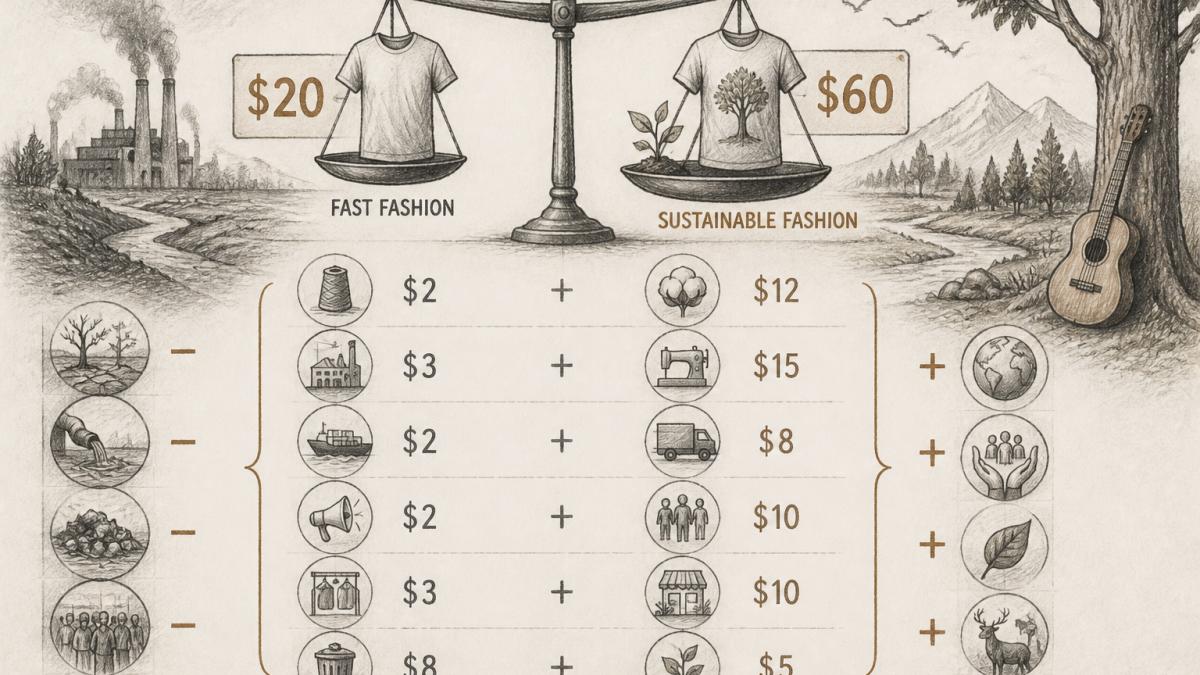
Sustainable fashion typically carries a higher price tag than fast fashion, but the reasons run far deeper than simple markup. Understanding why sustainable fashion costs more reveals the true cost of ethical production, quality materials, and supply chain transparency. The price difference reflects genuine investments in fair labor practices, environmentally responsible sourcing, and craftsmanship that mass-produced garments simply cannot match.
Ethical Labor and Fair Wages
Fair wages for garment workers form the foundation of sustainable fashion pricing. When brands commit to ethical production, they pay workers living wages rather than the poverty-level salaries common in fast fashion supply chains. This means factory workers earn enough to support their families, access healthcare, and build savings, luxuries unavailable in conventional manufacturing.
A living wage in garment production typically ranges significantly higher than the minimum paid in countries where fast fashion outsources labor. Beyond base wages, ethical brands invest in safe working conditions, reasonable hours, and employee benefits. These commitments increase production costs substantially, but they represent the actual value of human labor that fast fashion artificially suppresses.
Organic Cotton and Biodegradable Fabrics
Organic cotton and other biodegradable materials require different cultivation and processing methods than conventional textiles. Organic cotton is grown without synthetic pesticides or fertilizers, which demands more labor-intensive farming practices and typically yields lower quantities per acre. This scarcity drives up raw material costs.
Processing these materials into finished fabrics also costs more. Biodegradable fabrics often require specialized equipment and techniques to maintain their environmental properties. Conventional synthetic fibers, by contrast, are petroleum-based products manufactured through highly optimized, high-volume industrial processes that benefit from economies of scale.
The difference extends beyond production. Organic and biodegradable materials must be certified, tested, and verified to meet environmental standards. These certification processes add transparency but also increase costs that sustainable brands cannot avoid without compromising their core values.
The Hidden Costs of Fast Fashion
Fast fashion's artificially low prices mask enormous environmental and social externalities that consumers don't pay at checkout but society absorbs. The true cost of a $15 shirt becomes visible only when examining the full supply chain impact.
Fast fashion relies on rapid turnover and disposability. Garments are engineered to fall apart after a few seasons, driving repeat purchases and continuous consumption. This model generates massive textile waste, the average person discards roughly 81 pounds of clothing annually. Most of this ends up in landfills where synthetic fibers persist for decades, leaching chemicals into soil and water.
Labor exploitation remains systemic in fast fashion production. Workers in factories producing low-cost garments often earn less than $3 per day, work 12+ hour shifts, and face unsafe conditions. Supply chains are deliberately obscured to distance brands from responsibility. Sustainable brands, by contrast, maintain transparency and accountability throughout their operations.
Environmental degradation from conventional textile production includes water pollution from dyes and chemicals, massive water consumption for cotton irrigation, and carbon emissions from global shipping.
Cost-Per-Wear: Why Sustainable Fashion Is Actually Cheaper Long-Term
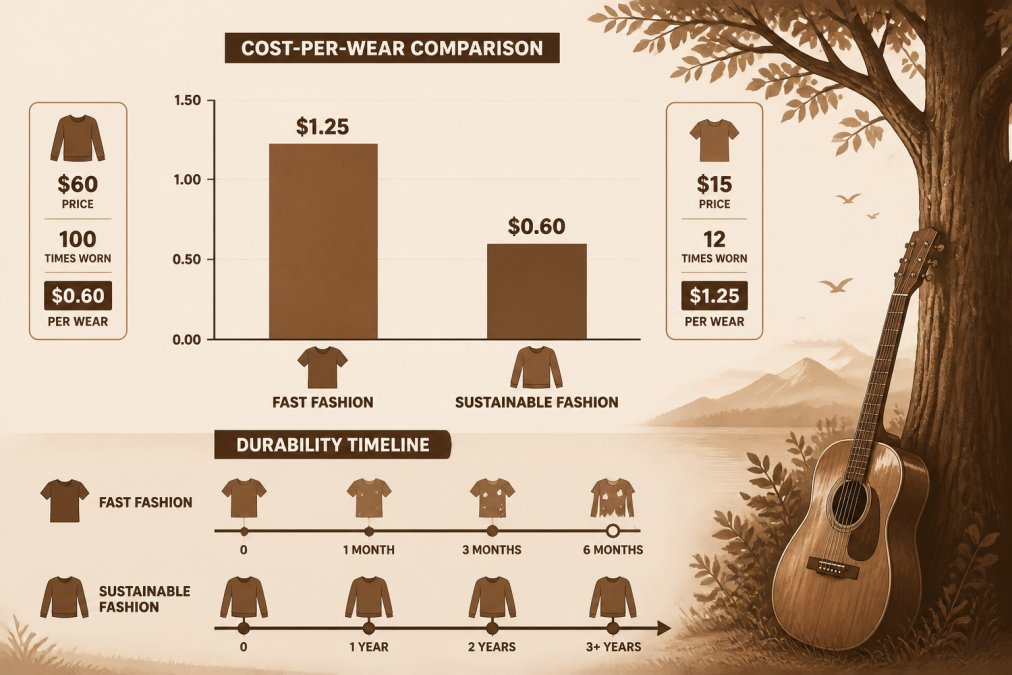
Cost-per-wear is a calculation that reveals sustainable fashion's true economic advantage. This metric divides the purchase price by the number of times the garment is worn before it becomes unwearable.
Fast Fashion vs. Sustainable Fashion Cost Comparison
The comparison between these two approaches reveals why sustainable fashion costs more upfront but delivers better long-term value.
| Aspect | Fast Fashion | Sustainable Fashion |
|---|---|---|
| Price per garment | $15-30 | $40-80 |
| Expected lifespan | 1-2 seasons (10-15 wears) | 3-7 years (100+ wears) |
| Cost per wear | $1.50-3.00 | $0.40-0.80 |
| Labor conditions | Exploitative wages, unsafe conditions | Fair wages, safe working conditions |
| Material sourcing | Synthetic fibers, conventional cotton | Organic cotton, biodegradable fabrics |
| Environmental impact | High waste, pollution, carbon emissions | Minimal waste, reduced pollution |
| Supply chain transparency | Deliberately obscured | Fully disclosed |
How to Identify Sustainable Clothing Brands
Distinguishing genuinely sustainable brands from those using greenwashing requires understanding what to look for and where to look.
Look for Third-Party Certifications
Legitimate certifications provide independent verification of sustainability claims. Organizations like Fair Trade Certified, Global Organic Textile Standard (GOTS), and Cradle to Cradle verify that brands meet specific environmental and labor standards. These certifications cost money and require ongoing compliance audits, so brands that maintain them are serious about their commitments.
Check Supply Chain Transparency
Sustainable brands disclose factory locations, worker compensation, and production methods. Websites should clearly identify where garments are manufactured and provide information about labor practices. Transparency reflects confidence in ethical operations; secrecy suggests something to hide.
Verify Fair Labor Practices
Look for explicit commitments to living wages, reasonable working hours, and safe conditions. Brands should publish regular transparency reports documenting compliance with these standards. Some brands partner with third-party auditors who verify labor practices independently.
Benefits of Sustainable Fashion Beyond Price
Economic arguments for sustainable fashion extend beyond cost-per-wear calculations. Environmental and social benefits create value that transcends financial metrics.
Building a Sustainable Wardrobe on a Budget
Sustainability doesn't require unlimited spending. The affordability barrier, the perception that ethical fashion is inaccessible, dissolves when consumers understand that second-hand and resale markets offer a legitimate, scalable pathway to building a sustainable wardrobe without compromising on quality or values.
Second-Hand and Resale as the Primary Entry Point
Strategic Resale Shopping
Start with Basics and Quality Staples
Buy Less, Choose Well
The Resale Cycle and Circular Fashion
Frequently Asked Questions
Why are sustainable products more expensive than fast fashion?
Sustainable fashion costs more because brands invest in ethical labor practices, organic and recycled materials, supply chain transparency, and quality craftsmanship. Fast fashion cuts corners by using synthetic fibers, mass production, and minimal labor standards. These cost savings come at the expense of worker welfare, environmental impact, and garment durability. When you buy sustainable fashion, you're paying for practices that protect people and the planet, not just a lower price tag.
How do fair wages and ethical labor impact clothing prices?
Fair wages significantly increase production costs because sustainable brands pay garment workers living wages instead of poverty-level wages common in fast fashion. Ethical labor practices also include safe working conditions, reasonable hours, and benefits. While this raises the price per garment, it ensures workers can support their families and work in dignified conditions. The cost difference reflects the true value of labor, not inflated pricing.
What is cost-per-wear and how does it change the sustainability equation?
Cost-per-wear divides the garment's price by the number of times you'll wear it before it wears out. A $100 sustainable shirt worn 200 times costs 50 cents per wear; a $20 fast fashion shirt worn 20 times costs $1 per wear. Sustainable fashion uses durable fabrics and quality craftsmanship, meaning garments last years instead of months. Over time, sustainable pieces become significantly cheaper than constantly replacing worn-out fast fashion items, while also reducing textile waste.
How can I build a sustainable wardrobe without spending a fortune?
Start by calculating cost-per-wear and investing in quality basics that work across outfits. Explore second-hand and resale platforms, which offer sustainable pieces at lower prices while supporting circular economy practices. Buy less overall but choose well, focusing on timeless pieces over trends. Mix affordable sustainable basics with occasional investment pieces. Many sustainable brands offer sales or discount codes. Prioritize items you'll wear frequently, and avoid impulse purchases that end up unused.
What certifications should I look for to avoid greenwashing?
Look for third-party certifications like Fair Trade Certified, Global Organic Textile Standard (GOTS), and B Corp certification. These require independent audits and ongoing compliance. Avoid vague claims like 'eco-friendly' or 'sustainable' without backing certification. Check if brands publish supply chain information, including factory locations and labor practices. Legitimate sustainable brands are transparent about their processes and willing to answer questions about their sourcing and production methods.
Is it true that a significant percentage of textiles end up in landfills annually?
Yes. The fashion industry generates substantial textile waste each year, with the majority ending up in landfills where synthetic fibers take decades to decompose. This waste represents both environmental damage and wasted resources. Sustainable fashion addresses this through durable design, recycled materials, and circular economy practices like resale and repurposing. Buying fewer, longer-lasting garments directly reduces your contribution to textile waste and the environmental impact of fast fashion.
How does sustainable fashion align with values like peace, nature, and spiritual expression?
Sustainable fashion reflects values of respect for people, the planet, and future generations. Choosing ethical production supports communities and fair labor practices. Using organic and recycled materials protects ecosystems and reduces resource extraction. The conscious choice to wear less and buy better aligns with minimalism and intentional living, core values in spiritual and nature-centered cultures. Sustainable fashion allows you to express your individual truth while supporting causes like ocean conservation and environmental protection.
What's the difference between organic cotton and synthetic fibers in terms of cost and impact?
Organic cotton is grown without synthetic pesticides or fertilizers, protecting soil health and water systems, but costs more to produce and certify. Synthetic fibers like polyester are petroleum-based, cheap to produce, but shed microplastics and take centuries to decompose. Organic cotton biodegrades naturally and supports sustainable farming, justifying its higher cost. Many sustainable brands now blend organic cotton with recycled synthetics to balance affordability with environmental impact, offering a middle ground between pure organic and virgin synthetics.