 listicle
Best Everyday Sustainable Hoodies 2026: Top Picks
Table of Contents
- Quick Comparison: Best Sustainable Hoodies 2026
- How We Evaluated These Sustainable Hoodies
- 1. Patagonia: Best for Long-Term Durability
- 2. Pact: Best Budget-Friendly Organic Cotton
- 3. Everlane: Best for Minimalist Style
- 4. Tentree: Best for Impact Tracking
- 5. Kotn: Best Fabric Quality
- 6. Cotopaxi: Best Bold Designs
- How to Wash Sustainable Clothing for Longevity
- Ethical Clothing Brand Certifications Explained
- Frequently Asked Questions
Last Updated: September 17, 2026
Quick Comparison: Best Sustainable Hoodies 2026
Finding the best everyday sustainable hoodies 2026 means matching material, certification, and construction to how you wear the garment. This guide covers six brands, from recycled polyester blends to GOTS certified organic cotton.
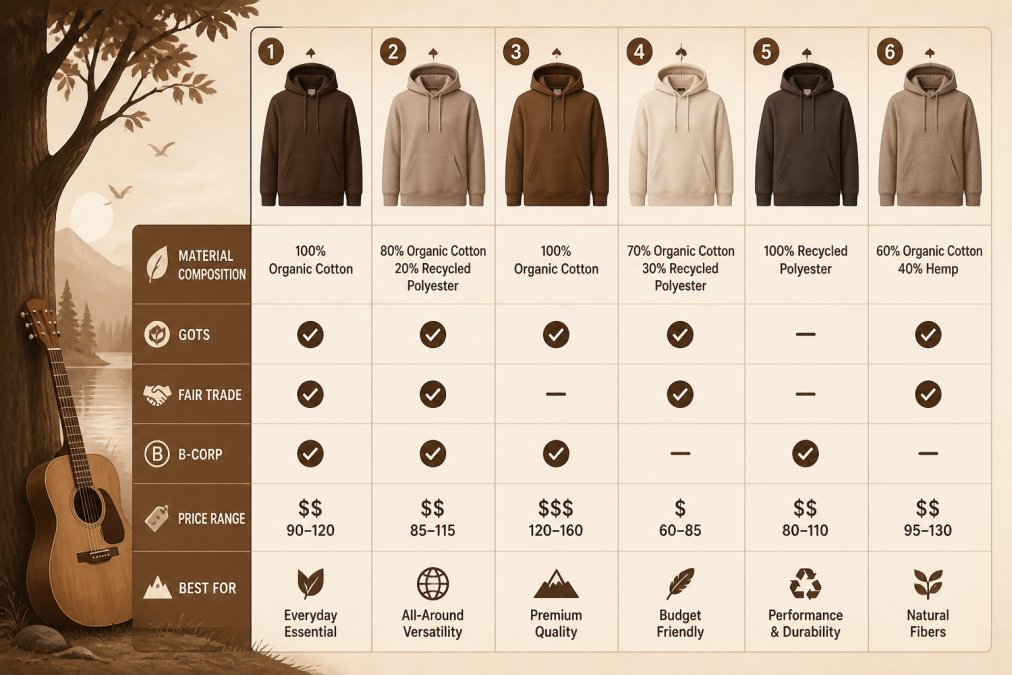
| Brand | Starting Price | Material Focus | Certification | Best For |
|---|---|---|---|---|
| Patagonia | $89 | Recycled polyester, organic cotton | Fair Trade Certified | Long-term durability |
| Pact | $65 | GOTS-certified organic cotton | GOTS, Fair Trade | Budget-friendly basics |
| Everlane | $75 | Organic and recycled blends | Transparent wage reporting | Minimalist style |
| Tentree | $78 | Tencel, organic cotton, recycled polyester | B-Corp | Impact tracking |
| Kotn | $85 | Direct-trade Egyptian cotton | Traceable supply chain | Fabric quality |
| Cotopaxi | $90 | Repurposed and sustainable materials | B-Corp | Bold designs |
How We Evaluated These Sustainable Hoodies
Evaluation focused on four factors: material sourcing, third-party certification, construction durability, and cost-per-wear. A hoodie that costs more upfront but survives three winters beats a cheap one that pills after five washes.
1. Patagonia: Best for Long-Term Durability
Patagonia leads this list because its hoodies outlast nearly everything else in the category, using recycled polyester and organic cotton blends with Fair Trade Certified construction.
2. Pact: Best Budget-Friendly Organic Cotton
Pact keeps prices accessible without cutting corners on certification. Every hoodie uses 100% GOTS-certified organic cotton, and the brand partners with Fair Trade factories. Carbon-offset shipping is available at checkout.
3. Everlane: Best for Minimalist Style
Everlane built its reputation on radical transparency, publishing factory wage data and material sourcing details for most products. The hoodies reflect that approach with clean, timeless designs that work in casual and semi-professional settings.
4. Tentree: Best for Impact Tracking
Tentree plants ten trees for every item purchased, and each product page shows the specific impact tied to that garment, detailed tracking that appeals to buyers who want proof rather than vague sustainability claims.
5. Kotn: Best Fabric Quality
Kotn works directly with cotton farmers, cutting out middlemen and paying fairly for premium fiber. That direct-trade relationship shows up in the finished hoodie: the fabric feels noticeably softer and denser than most organic cotton alternatives.
6. Cotopaxi: Best Bold Designs
Cotopaxi stands out for color and pattern, using repurposed and sustainable materials in a recognizable aesthetic that separates it from the neutral palettes most sustainable brands favor.
How to Wash Sustainable Clothing for Longevity
Care is where a sustainable hoodie's environmental math is won or lost: a hoodie worn for years and washed carefully can have a lower lifetime footprint than a cheaper one replaced every season. The variables that matter most are water temperature, mechanical agitation, detergent chemistry, and drying method, in that order.
The mechanics of fabric degradation
Cotton fibers break down when heat and agitation cause cellulose chains to swell, abrade, and fray, showing up as pilling and thinning at cuffs and hems. Recycled polyester doesn't pill the same way but sheds microfibers when friction pulls filaments loose. Loopback fleece, the standard knit for everyday hoodies, sheds more than tightly knit French terry because the loops expose more surface area to abrasion.
A wash routine that actually extends life
- Turn the hoodie inside out to protect the outer face from pilling against other garments and zippers.
- Wash in cold water. Most home water heaters run 120-140°F while cold tap water is 60-80°F; heat accelerates fiber swelling and dye loss, so cold is the single biggest lever.
- Use a gentle or delicate cycle with low spin, since high spin speeds drive more fiber-to-fiber friction.
- Choose a pH-neutral liquid detergent. Powder detergents can leave residue in fleece loops that traps odor and stiffens fabric.
- Skip fabric softener and dryer sheets, which coat fibers with a waxy film that reduces breathability and traps odor-causing bacteria.
- Air dry on a line or rack. If you must use a dryer, low heat only, and pull the hoodie out slightly damp.
- Wash less often and spot-clean between wears. A hoodie worn over a t-shirt can go five to seven wears before a full wash.
Microplastic shedding: what the research shows
Recycled polyester is often marketed as the greener choice, but it sheds microfibers in the wash just like virgin polyester, sometimes more, because recycled feedstock can have shorter polymer chains. Those fibers, typically under 5 millimeters, pass through municipal wastewater treatment; research has documented microfibers in rivers, estuaries, and ocean sediment, with laundry one of the largest identified sources.
Drying and storage
Heat is the enemy of longevity: a dryer on high heat can shrink cotton hoodies a full size over repeated cycles and accelerates pilling on fleece, while air drying preserves fit and surface texture. Store hoodies folded rather than hung, since hanging stretches shoulders and distorts the neckline. Cedar blocks or lavender sachets deter moths without mothballs' chemical load.
When to repair instead of replace
A blown seam, worn cuff, or small hole doesn't mean the hoodie is finished: a basic sewing kit and ten minutes can add a season or more of wear, and many brands, including several on this list, offer repair services or replacement parts. A ladder stitch for seams and a whip stitch for cuffs handle most everyday damage.
Ethical Clothing Brand Certifications Explained
Certifications are the difference between a sustainability claim and a verified one, but not all cover the same thing, and a hoodie can carry one without meeting another's standards. Understanding what each audit checks, and what it doesn't, is the fastest way to cut through greenwashing.
GOTS (Global Organic Textile Standard)
GOTS is the most rigorous certification for organic fiber content, covering the entire textile supply chain from raw fiber through processing, manufacturing, and finishing. To carry the label, a garment must contain at least 70% certified organic fibers (the "made with organic" tier) or at least 95% (the "organic" tier). The standard also restricts a long list of chemicals, sets wastewater treatment requirements, and requires social criteria for workers.
Fair Trade Certified
Fair Trade certification focuses on labor and community outcomes at the factory or farm level, requiring independent audits of working conditions, wage floors, and worker representation, plus a community development premium workers decide how to spend. In apparel, the label is most often applied at the sewing-factory stage, where most garment-worker exploitation occurs.
B-Corp Certification
B-Corp is a whole-company certification, not a product certification. Administered by B Lab, it scores a company across governance, workers, community, environment, and customers; to certify, a company must hit a minimum verified score and commit to a legal framework considering stakeholder interests, not just shareholder returns. Recertification happens every three years.
Other labels worth knowing
- OEKO-TEX Standard 100 tests finished textiles for harmful substances like heavy metals and formaldehyde. It's a product-safety certification, not an environmental one.
- bluesign certifies that textile manufacturing processes meet environmental and worker-safety criteria, common in performance fabrics.
- Cradle to Cradle Certified assesses material health, recyclability, and renewable energy use across five levels, the closest thing to a circularity certification on the market.
- Textile Exchange standards (like RCS and GRS) verify recycled content claims; GRS is stricter and covers the full supply chain.
How to verify a claim in five minutes
Most certification bodies maintain public databases: GOTS publishes a certified suppliers list, Fair Trade USA lists certified factories, B Lab has a searchable directory, and OEKO-TEX and bluesign offer similar lookup tools. Cross-referencing a brand's claim against the certifier's own database takes a few minutes and eliminates most greenwashing risk.
The circularity gap
Most certifications stop at the point of sale: none currently require a brand to take back a worn-out hoodie, recycle the fiber, or disclose what happens after the consumer is done with it. That's the frontier of sustainable apparel and where the most meaningful differences between brands are starting to show up.
Frequently Asked Questions
What materials make a hoodie truly sustainable?
Look for organic cotton, recycled polyester, hemp fiber, or bamboo viscose. Organic cotton uses less water and no pesticides. Recycled polyester diverts plastic waste. Hemp requires minimal water and returns nutrients to soil. GOTS-certified organic cotton ensures no toxic dyes. Avoid conventional cotton blends unless they include recycled content. The most sustainable hoodies combine durable natural fibers with ethical manufacturing and transparent supply chains.
Are sustainable hoodies worth the higher price point?
Calculate cost-per-wear instead of upfront price. A $90 hoodie worn 200 times costs $0.45 per wear. A $30 fast-fashion hoodie that pills after 20 washes costs $1.50 per wear. Sustainable hoodies typically last 3-5 times longer due to higher fabric weight (300+ GSM) and durable construction. They also avoid the environmental cost of microplastic shedding and landfill waste. The real value shows in year two when cheap hoodies fall apart.
How do I identify greenwashing in hoodie brands?
Check for third-party certifications like GOTS, Fair Trade Certified, or B-Corp status. Vague terms like 'eco-friendly' or 'natural' mean nothing without proof. Look for specific supply chain transparency: named factories, published wage reports, or traceable cotton sources. Brands that plant trees or donate percentages should show impact reports. If a company claims sustainability but won't disclose where fabric comes from, treat it as marketing until verified.
How should I care for my sustainable hoodie to make it last longer?
Wash in cold water on a gentle cycle to prevent fiber breakdown and reduce energy use. Turn inside out to protect the outer surface. Use mild, non-toxic detergent without bleach or fabric softeners, which coat fibers and reduce breathability. Air dry when possible; if using a dryer, choose low heat. Wash less often, spot clean between wears. Store folded rather than hung to maintain shape. These habits extend garment longevity by years.
What are the most durable eco-friendly fabrics for sweatshirts?
Hemp fiber and organic cotton blends rank highest for durability. Hemp resists pilling and holds shape through repeated washing. Recycled polyester adds strength and moisture-wicking without virgin plastic. Look for fabric weight of 300 GSM or higher for everyday hoodies. Tencel (lyocell) offers softness but may pill faster. Avoid thin bamboo viscose unless blended with cotton or hemp. Durable construction includes reinforced seams and double-stitched hems.