 listicle
Best Ocean Conservation Apparel Brands
Last Updated: October 23, 2026
Quick Summary
Ocean conservation apparel brands embed marine protection into their business model through donation commitments, recycled materials sourced from ocean plastic, and conservation-themed designs. Leading brands like Waterlust donate 5% of sales to marine research partners, while Patagonia uses 98% recycled materials across its entire clothing line, allowing consumers to support ocean advocacy through everyday purchases.
- Waterlust donates 5% of every purchase to marine research and nonprofit partners with direct conservation links
- Patagonia integrates 98% recycled materials across its entire clothing line, setting an industry benchmark
- Shark Life Apparel was named Best Ocean Conservation Apparel Brand in 2024 by Best of Best Review
- Transparent impact accounting with specific percentages and named organizations distinguishes genuine conservation brands from greenwashing
- Product durability, UPF protection, and water-resistant treatments ensure ocean apparel performs in harsh marine environments
Table of Contents
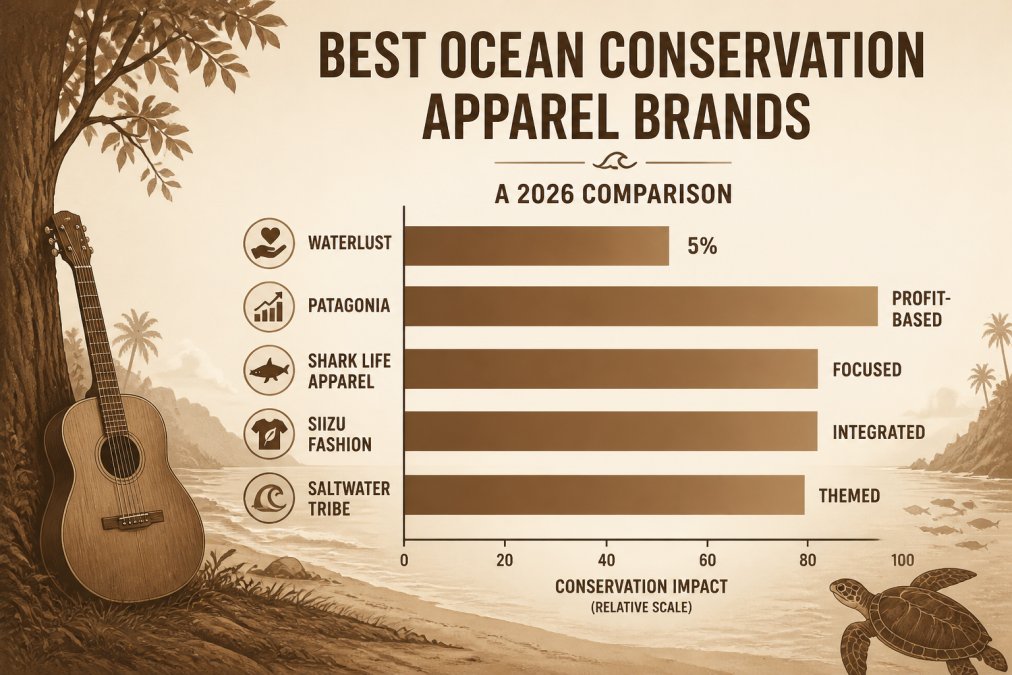
- Best Ocean Conservation Apparel Brands: A 2026 Comparison
- 1. Waterlust: Ocean-Inspired Swimwear and Activewear
- 2. Patagonia: Durable Outdoor Apparel with Recycled Materials
- Clothing Brands That Support Ocean Conservation Through Donations
- Ocean Conservation Clothing Brands: What Sets Them Apart
- Transparent Impact Accounting and Verification
- Sustainable Materials and Supply Chain Integrity
- Which Brand Should You Choose?
- Frequently Asked Questions
Best Ocean Conservation Apparel Brands: A 2026 Comparison
Ocean conservation apparel brands are reshaping how consumers support marine protection through everyday clothing choices.
The challenge isn't finding a brand that claims to care about the ocean. It's finding one that backs those claims with verifiable action, transparent accounting, and apparel that actually lasts beyond a season or two.
This guide compares the best ocean conservation apparel brands on donation commitments, material sourcing, product quality, and real-world impact, evaluated against measurable criteria: percentage of sales donated, specificity of conservation partnerships, material durability, and independent verification.
Quick Comparison Table
| Brand | Donation Model | Primary Materials | Best For | Standout Feature |
|---|---|---|---|---|
| Waterlust | 5% of sales to marine partners | Recycled nylon, recycled polyester | Swimmers and beach lifestyle | Ocean-inspired design with direct conservation link |
| Patagonia | Profit donations to environmental causes | 98% recycled materials in clothing line | Outdoor enthusiasts and durability seekers | Industry-leading recycled content percentage |
| Shark Life Apparel | Conservation-focused model | Not specified in available data | Ocean advocacy supporters | 2024 recognition as Best Ocean Conservation Apparel Brand |
| SiiZu Fashion | Sustainability-integrated approach | Affordable sustainable options | Budget-conscious ocean advocates | Affordable entry point to ocean-friendly apparel |
| Saltwater Tribe | Conservation-themed collections | Not specified in available data | Coastal lifestyle enthusiasts | Conservation Coral collection positioning |
How We Evaluated These Brands
Comparing ocean conservation apparel brands requires looking beyond marketing claims. We examined five core criteria:
Donation Transparency. Brands that specify exactly what percentage of sales goes to conservation, which organizations receive those funds, and how those partnerships function ranked highest. Vague claims like "supports ocean causes" scored lower than specific commitments like "5% of every purchase funds marine research partners."
Material Sourcing Verification. According to The Good Trade's 2026 sustainability analysis, 98% of Patagonia's clothing line uses recycled materials, setting a benchmark for the industry.
Product Durability and Performance. Ocean-focused apparel must withstand salt water, sun exposure, and repeated washing. Brands offering UPF protection, water-resistant treatments, and proven longevity scored higher.
Independent Verification. Third-party certifications, published impact reports, and recognition from reputable sustainability organizations add credibility. Brands with B Corp certification or featured recognition in sustainability roundups demonstrated accountability beyond self-reporting.
Product Range and Accessibility. Brands offering multiple categories, swimwear, activewear, outdoor gear, accessories, and size inclusivity scored higher than limited offerings.
1. Waterlust: Ocean-Inspired Swimwear and Activewear
Waterlust positions itself as the direct intersection of ocean lifestyle and marine conservation advocacy.
The standout feature is the directness of the connection. Purchases fund specific marine research initiatives, not a vague "ocean fund," removing the guesswork about whether a purchase actually supports conservation.
Waterlust's collections emphasize ocean-inspired design and underwater photography, positioning apparel as a way to learn about marine conservation.
What works: The donation commitment is specific and verifiable, with named marine research and nonprofit partners creating accountability. The ocean-inspired design philosophy aligns the aesthetic with the mission.
What doesn't: The supplied research does not provide a complete product range or detailed material specifications beyond the ocean-inspired positioning.
2. Patagonia: Durable Outdoor Apparel with Recycled Materials
Patagonia stands as the industry benchmark for recycled material integration. According to The Good Trade's 2026 eco-conscious clothing brands report, 98% of Patagonia's clothing line uses recycled materials.
Patagonia's approach differs from direct-donation models: the company donates profits to environmental causes, including marine protection. While less specific than a stated percentage, this profit-based model aligns financial incentives with environmental outcomes.
What works: The recycled material percentage is industry-leading and verified. The product range spans multiple activity types and seasons. The brand's profit-donation model creates ongoing conservation funding tied to business performance.
What doesn't: The supplied research does not detail specific current donation amounts or itemize which marine organizations receive Patagonia's conservation funding. Specific product pricing and size availability are not documented in the research provided.
Clothing Brands That Support Ocean Conservation Through Donations
Beyond swimwear and outdoor gear, several brands integrate ocean advocacy into their core identity, featuring conservation-themed designs alongside donation commitments. Learn about best ways to support ocean conservation to understand the broader context of how to support marine protection beyond just buying apparel.
Shark Life Apparel
Shark Life Apparel positions itself as an ocean conservation apparel brand with a focus on marine protection advocacy.
The brand emphasizes the connection between apparel and shark conservation, likely featuring shark-themed designs and conservation messaging, though the supplied research does not detail product categories, materials, or current donation percentages.
Best for: Consumers specifically interested in shark conservation and willing to support a brand built around that mission.
What to verify: The supplied research does not provide independent verification of material sourcing, durability testing, or third-party sustainability certifications. Before purchasing, review the brand's current donation documentation to confirm where funds are directed.
SiiZu Fashion
SiiZu Fashion appears in Ocean Blue Project's roundup of ocean-friendly brands, described as offering affordable, stylish clothing within the ocean-friendly apparel category. The brand's positioning emphasizes accessibility, bringing sustainable ocean-conscious apparel to budget-conscious consumers.
The supplied research characterizes SiiZu Fashion's clothing as affordable and stylish but provides no material breakdowns or documented conservation partnerships. Affordability without verified sustainability claims risks becoming greenwashing.
Best for: Shoppers seeking entry-level ocean-friendly apparel without premium pricing.
What to verify: Review SiiZu Fashion's current material sourcing and conservation commitments directly. The brand's inclusion in an ocean-friendly roundup suggests alignment with sustainability principles, but independent verification of claims is essential.
Saltwater Tribe
Saltwater Tribe is referenced in ocean conservation roundups, with its Conservation Coral collection positioning it as a conservation-themed apparel brand. The supplied research does not detail current product offerings, materials, or donation structures.
The brand emphasizes conservation-themed design as its primary differentiator, appealing to consumers who want apparel that communicates coastal values through design.
Best for: Consumers seeking conservation-themed apparel and coastal lifestyle positioning.
What to verify: Confirm current product availability, material sourcing, and conservation partnership details directly with the brand. The supplied research dates this reference to 2018, so current offerings may have evolved.
Ocean Conservation Clothing Brands: What Sets Them Apart
The best ocean conservation apparel brands share specific characteristics that distinguish them from generic sustainable fashion or greenwashing attempts.
Direct Conservation Links. Leading brands name the marine organizations, research institutions, and conservation initiatives that receive funding, allowing buyers to research where their money goes.
Recycled Material Integration. Brands using recycled ocean plastic, recovered nylon, or other post-consumer materials demonstrate commitment to circular economy principles.
Product Performance Specifications. Ocean apparel must perform in harsh environments. Leading brands specify UPF protection levels, water-resistance treatments, material durability, and care instructions.
Diverse Product Categories. Brands offering swimwear, activewear, outdoor gear, and accessories create more opportunities for consumers to support conservation through everyday purchases.
Transparent Impact Accounting and Verification
The difference between genuine ocean conservation apparel and greenwashing often comes down to impact transparency. Specific, verifiable claims about donations, material sourcing, and conservation outcomes demonstrate accountability; vague statements like "supports ocean protection" raise questions.
What Transparent Impact Looks Like:
- "5% of sales donated to marine research partners" (specific percentage and use)
- "98% recycled materials in our clothing line" (measurable material percentage)
- "$2.3 million donated to ocean conservation in 2025" (annual total with year)
- "Partnerships with The Ocean Conservancy, Sea Shepherd, and local marine nonprofits" (named organizations)
What Vague Impact Looks Like:
- "Supports ocean causes"
- "Eco-friendly apparel"
- "Committed to the environment"
- "Some profits donated to conservation"
To verify impact claims, look for published impact reports, third-party certifications, or independent coverage in sustainability publications. Brands offering only marketing language warrant skepticism. Consider reviewing how to identify authentic sustainable clothing to develop your evaluation framework for verifying sustainability claims before purchasing.
Consider reviewing guides on identifying authentic sustainable clothing to develop your evaluation framework for verifying sustainability claims before purchasing.
Sustainable Materials and Supply Chain Integrity
The apparel industry's environmental impact extends far beyond the finished product. Material sourcing, manufacturing processes, and supply chain transparency all factor into genuine ocean conservation commitment.
Recycled Content Verification. Brands claiming recycled materials should specify the percentage, the material type (recycled ocean plastic, recovered nylon, post-consumer polyester), and the sourcing process.
Supply Chain Transparency. Brands committed to ocean conservation typically extend that commitment to human welfare throughout their supply chain.
Environmental Trade-offs. Even recycled materials require water, energy, and processing. Honest brands acknowledge these trade-offs rather than claiming their products are impact-free.
For deeper guidance on evaluating material sourcing and supply chain practices, explore information on comfortable recycled fabric clothing brands and sustainable materials.
Which Brand Should You Choose?
Choose Waterlust if: You prioritize direct, transparent donation commitments and want ocean-inspired swimwear or activewear.
Choose Patagonia if: You value durability, recycled material integration at scale, and a proven track record.
Choose Shark Life Apparel if: You're specifically interested in shark conservation and want apparel that communicates that mission through design.
Choose SiiZu Fashion if: Budget is a primary consideration and you want entry-level ocean-friendly apparel.
Choose Saltwater Tribe if: You're drawn to conservation-themed design and coastal lifestyle positioning.
Before purchasing from any brand, verify current donation percentages, material sourcing details, and conservation partnerships directly.
Ocean conservation apparel brands offer a tangible way to align your wardrobe with your values.
Frequently Asked Questions
What makes an apparel brand truly ocean-conservation focused?
Authentic ocean conservation apparel brands combine three elements: use of sustainable or recycled materials that reduce ocean plastic and pollution, documented donations or profits directed to marine conservation organizations, and transparent reporting of their environmental impact. Research from 1ocean.org analyzing more than 180 sustainability reports shows that credible brands publicly disclose their donation percentages, material sourcing, and partner organizations. Look for brands that specify which marine ecosystems or species they support, rather than making vague environmental claims.
How do recycled ocean plastic clothing brands actually work?
Recycled ocean plastic clothing starts with recovered plastic collected from oceans or coastal areas, which is then processed into fiber and woven into fabric. Brands like Patagonia use this approach extensively, The Good Trade reports that 98% of Patagonia's clothing line uses recycled materials. This process diverts waste from marine ecosystems while reducing demand for virgin plastic production. However, not all recycled-content apparel uses ocean-recovered plastic; some uses post-consumer recycled materials from landfills or manufacturing waste. Always check the brand's specification to confirm the source of recycled content.
Can I verify that a brand's ocean conservation donations are real?
Yes. Credible ocean conservation clothing brands publish annual impact reports showing donation amounts, partner organizations, and conservation outcomes. Waterlust, for example, publicly states that 5% of every purchase is donated to research and nonprofit partners, making the commitment specific and measurable. Request a brand's latest sustainability or impact report before purchasing. Cross-reference their listed partner organizations, visit those nonprofits' websites to confirm the brand is listed as a donor. Be cautious of brands that mention conservation support without naming specific organizations or providing donation percentages.
Why do ocean-friendly apparel brands cost more than fast fashion?
Ocean conservation apparel typically costs more because of higher-quality materials, ethical production practices, and conservation commitments. Recycled materials require specialized processing; Fair Trade and B Corp certifications add verification costs; and sustainable supply chains often pay workers fairly rather than relying on exploitative labor. Additionally, brands that donate a percentage of profits to marine conservation organizations build that commitment into pricing. The durability of these garments often offsets higher upfront costs, quality apparel lasts longer, reducing the need for frequent replacement and overall consumption.