 listicle
Best Sustainable Streetwear Brands 2026
Table of Contents
- How We Evaluated the Best Sustainable Streetwear Brands
- Quick Comparison: Top 10 Sustainable Streetwear Brands at a Glance
- 1. NOAH: Preppy Ethics Meets Street-Ready Durability
- 2. Outerknown: Surf-Rooted Supply Chain Transparency
- 3. Plant Faced Clothing: 100% Vegan Streetwear With a Message
- 4. Nudie Jeans Co.: Free Repairs and Circular Denim Done Right
- 5. CHNGE: Fairtrade Basics That Donate Half Their Profits
- 6. UNLESS Collective: Fully Biodegradable, Zero Plastic Streetwear
- How to Build a Sustainable Streetwear Wardrobe From Scratch
- Frequently Asked Questions
Last Updated: September 2, 2026
Sustainable streetwear is no longer niche, it's where culturally relevant brands are planting their flags. At Rasta Hippies, we've watched this space closely, and the brands doing it right share a common thread: they treat materials, labor, and end-of-life as equally important as aesthetics.
The problem is that "sustainable" has become one of the most abused words in fashion. Greenwashing is rampant, and brands slap an "eco-friendly" label on products made in unaudited factories. According to the Federal Trade Commission's Green Guides on environmental marketing claims, vague environmental claims are deceptive, yet they're everywhere. Knowing what separates a genuinely responsible brand from one playing marketing games is the difference between conscious consumption and getting played.
Below, we've built this guide around brands that hold up under scrutiny: verified certifications, traceable supply chains, and garments built to outlast fast fashion by years.
Quick Picks:
- Best Overall: NOAH, ethical manufacturing, timeless streetwear, transparent pricing
- Best for Circular Denim: Nudie Jeans Co., free repairs for life, 100% organic cotton
- Best Fully Biodegradable: UNLESS Collective, zero plastic, plant-based everything
- Best for Activism: CHNGE, donates approximately half its profits to social and environmental causes
- Best Budget Entry: Plant Faced Clothing, GOTS organic cotton, fair trade, lower price point
How We Evaluated the Best Sustainable Streetwear Brands
Choosing the best sustainable streetwear brands requires a framework that goes beyond surface-level claims. We assessed each brand across five dimensions: material integrity, labor ethics, supply chain transparency, garment longevity, and circularity. A brand with beautiful organic cotton but failed labor audits isn't sustainable, it's a half-measure. All five dimensions had to show meaningful commitment to make this list.
| Criteria | What We Looked For |
|---|---|
| Material integrity | Organic cotton, recycled polyester, hemp textiles, plant-based alternatives |
| Labor ethics | Fair trade certified, Fair Wear Foundation audits, fair wages documentation |
| Supply chain transparency | Published supplier lists, traceability, carbon footprint data |
| Garment longevity | Durability testing, heavyweight construction, timeless design |
| Circularity | Repair programs, textile recycling, biodegradable or upcycled materials |
Certifications matter because they shift accountability from marketing copy to third-party verification. We prioritized brands holding GOTS (Global Organic Textile Standard), Fair Trade USA, B-Corp, Bluesign, and Fair Wear Foundation certifications, all of which require ongoing audits. We also weighted streetwear-specific durability, a hoodie that pills after six washes isn't sustainable regardless of fiber content. Garment longevity is the most underrated dimension of responsible consumption.
Quick Comparison: Top 10 Sustainable Streetwear Brands at a Glance
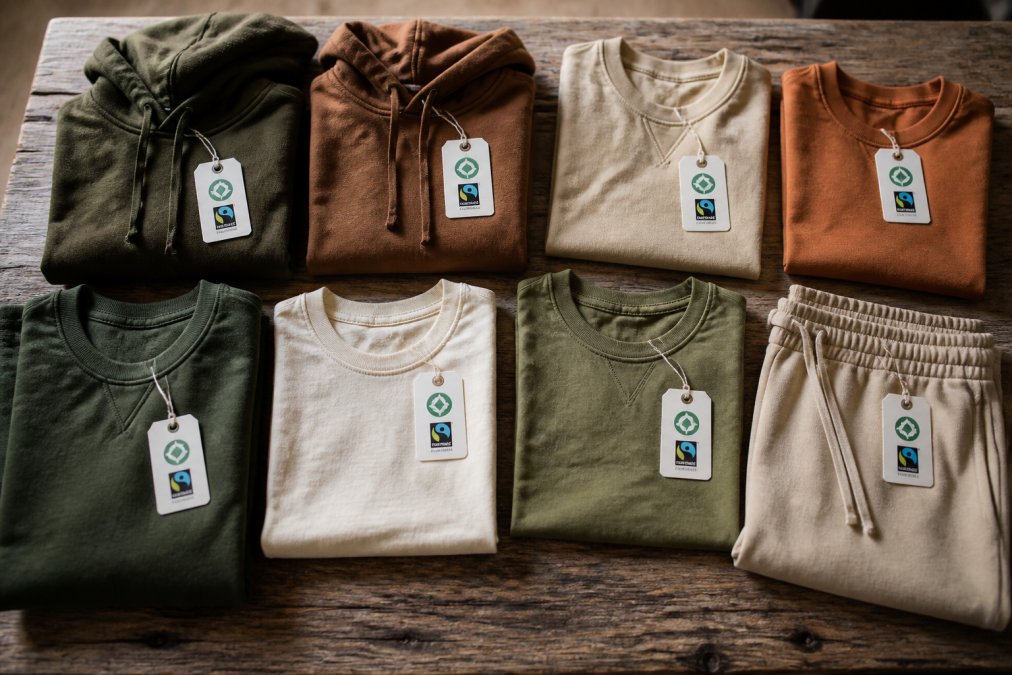
Sustainable streetwear brands vary widely in approach, price point, and certification depth. This comparison gives you the at-a-glance picture before we go deep on each brand.
| Brand | Key Certification | Material Focus | Best For | Circularity Feature |
|---|---|---|---|---|
| NOAH | Ethical sourcing | Organic, natural dyes | Preppy-street crossover | Responsible sourcing ethos |
| Outerknown | Bluesign, Fair Labor Association | Recycled cotton, hemp | Surf-inspired streetwear | Post-consumer textile use |
| Plant Faced Clothing | GOTS, Fair Trade | Organic cotton, recycled fabrics | Vegan streetwear | Eco-friendly packaging |
| Nudie Jeans Co. | B-Corp, Fair Wear Foundation | 100% organic cotton denim | Denim-focused wardrobes | Free lifetime repairs |
| CHNGE | GOTS, Fair Trade | Organic cotton | Activist consumers | Profit donation model |
| UNLESS Collective | Plant-based certification | 100% plant-based | Zero-plastic priority | Fully biodegradable |
| Kotn | Direct trade | Egyptian cotton | Traceable basics | Community investment |
| Colorful Standard | Organic cotton | GOTS organic | Color-forward basics | Longevity-focused design |
| Pangaia | Materials science | Bio-based, recycled | Innovation-first buyers | Seaweed fiber, bio-synthetics |
| MEXESS | Organic cotton | Heavyweight organic | Minimalist daily wear | Longevity-first construction |
The slow fashion movement underlying these brands operates on one core principle: buy less, buy better. A capsule wardrobe built from three or four of these brands will outlast a closet full of fast fashion by years.
1. NOAH: Preppy Ethics Meets Street-Ready Durability
NOAH proves sustainable streetwear doesn't have to look like it's trying too hard. The New York label has built its identity around the intersection of preppy aesthetics and genuine social responsibility.

What separates NOAH from brands treating ethics as a marketing add-on is the depth of commitment. Natural dyes, organic materials, and hand-finished construction aren't footnotes, they're central to production. The brand is unusually transparent about pricing, reflecting the real cost of ethical manufacturing rather than hiding it behind aspirational branding.
NOAH's construction quality is built for streetwear's physical demands. These aren't delicate pieces you're afraid to wear; they're made to be worn hard and often, which is exactly what garment longevity requires.
What works: Timeless designs that don't date, strong ethical labor commitment, hand-finished details that survive repeated washing.
What to watch: Higher price points reflect actual production costs. Limited physical retail outside the US means most buyers order online.
2. Outerknown: Surf-Rooted Supply Chain Transparency
Supply chain transparency is where most brands talk and few walk. Outerknown walks.
Founded by surf champion Kelly Slater, Outerknown built its model around minimizing environmental impact at every production stage. The brand holds Bluesign certification, one of the most rigorous standards for sustainable textile production, and is a Fair Labor Association member, requiring independent factory audits.
The material palette is diverse: post-consumer textile waste, recycled cotton, alpaca wool, and hemp textiles. Hemp is particularly significant for streetwear durability, it softens with wear while maintaining structural integrity longer than conventional cotton, making it practical for daily-wear pieces.
According to the Bluesign system's textile production standards, certified manufacturers must meet strict thresholds for resource productivity and consumer safety, filtering out most of the industry's worst practices.
What works: Exceptional supply chain transparency, durable garments designed to last, strong recycled and post-consumer material use.
What to watch: Price points reflect certification overhead and material quality. This is a considered purchase, not an impulse buy.
3. Plant Faced Clothing: 100% Vegan Streetwear With a Message
Plant Faced Clothing leads with activism and backs it with materials. Every product is 100% vegan and cruelty-free, using GOTS-certified organic cotton and recycled fabrics. The GOTS standard, as defined by the Global Organic Textile Standard organization, covers the entire textile supply chain from harvesting through manufacturing and labeling, one of the most comprehensive certifications in the industry.
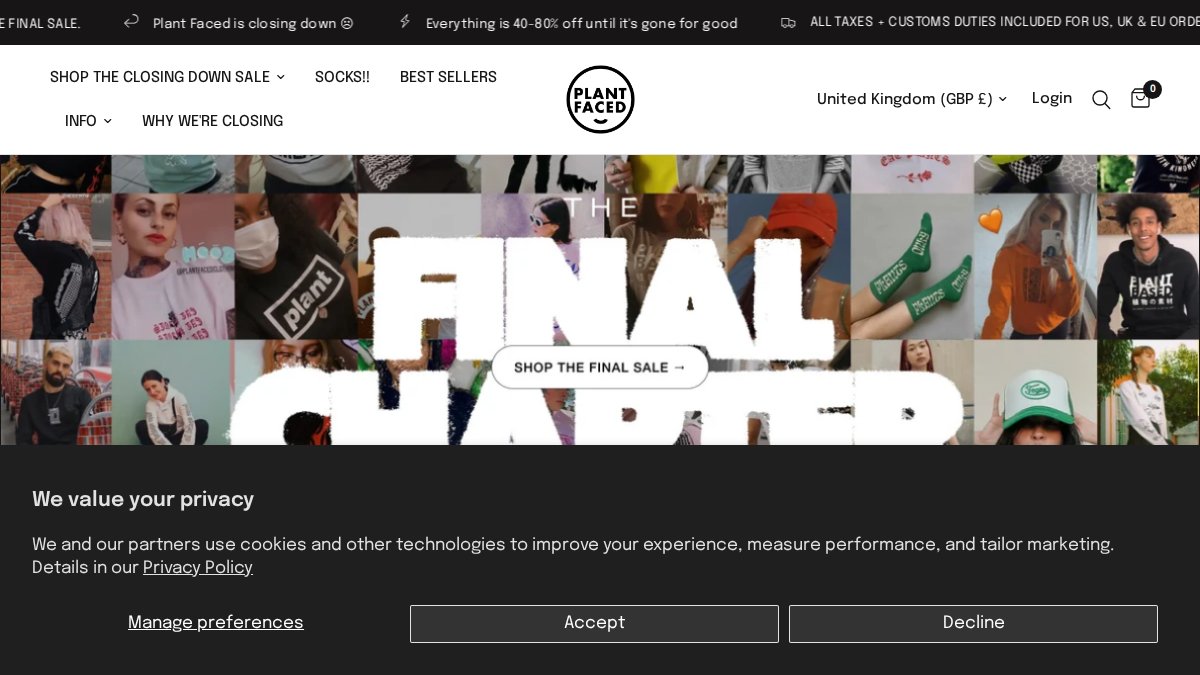
The brand ships in eco-friendly packaging, which matters more than it sounds. Conventional e-commerce packaging generates significant plastic waste per order; eliminating it is a genuine reduction in environmental footprint.
Designs raise awareness of fashion's environmental impact, meaning the aesthetic skews message-forward. That's a feature for some buyers and a limitation for others. If you want your clothing to start conversations about responsible consumption, it's exactly right.
What works: Full vegan supply chain, GOTS certification, fair trade manufacturing, eco-friendly packaging throughout.
What to watch: Graphic-forward design language won't suit every wardrobe. Range is focused rather than broad.
4. Nudie Jeans Co.: Free Repairs and Circular Denim Done Right
Circularity in fashion is easy to claim and hard to execute. Nudie Jeans Co. has built a genuine circular model with its free repair program as proof.
The Swedish brand manufactures all denim in Fair Wear Foundation-audited factories, uses 100% organic cotton, and holds B-Corp certification, evaluating social and environmental performance, accountability, and transparency across the entire business.

The free lifetime repair service is the standout feature for anyone thinking seriously about garment longevity. Nudie will repair your jeans at any repair shop or via mail, indefinitely. A pair repaired three times instead of replaced three times represents dramatic reduction in textile waste and carbon footprint. This is the circular economy in practice.
A pair of Nudie jeans lasting a decade with free repairs costs less per year than two or three pairs of cheaper denim that wear out and get discarded.
What works: Free lifetime repairs, B-Corp certified, 100% organic cotton denim, Fair Wear Foundation audits.
What to watch: The brand focuses on denim and denim-adjacent pieces. You'll supplement with other brands for a full streetwear wardrobe.
5. CHNGE: Fairtrade Basics That Donate Half Their Profits
Most brands donate a small percentage of revenue to causes. CHNGE donates approximately 50% of profits to social and environmental initiatives. That's a structural commitment, not a marketing line.

Every garment is made from GOTS-certified organic cotton in a Fairtrade-certified factory. Fairtrade certification ensures fair wages, safe working conditions, and community investment for workers, verified by Fair Trade USA's certification standards.
Designs reflect the brand's social mission, streetwear that functions as wearable advocacy. Price points are accessible relative to certification depth. CHNGE has managed to keep basics affordable while maintaining GOTS and Fairtrade standards, which is genuinely difficult.
What works: Significant profit donation, GOTS organic cotton, Fairtrade certification, accessible pricing for the certification level.
What to watch: Style range is narrower than larger brands. Catalog is limited if you want variety in silhouettes or fits.
6. UNLESS Collective: Fully Biodegradable, Zero Plastic Streetwear
UNLESS Collective solves a problem most sustainable brands don't acknowledge: what happens to the garment at the end of its life.
The brand uses 100% plant-based materials across its entire line, with every product designed to be fully biodegradable and leave zero plastic waste. This addresses one of sustainable fashion's most persistent failures, brands using recycled polyester (better than virgin, but still sheds microplastics and doesn't biodegrade) while calling themselves eco-friendly.

UNLESS restricts itself to plant-based materials only, accepting limitations in material palette for genuine end-of-life circularity. A garment that returns to the earth without microplastic contamination is fundamentally different environmentally.
The aesthetic is clean streetwear essentials: hoodies, tees, and core pieces. The minimalist approach suits the brand's zero-waste philosophy.
What works: Fully biodegradable, zero plastic waste, plant-based materials throughout, genuine end-of-life circularity.
What to watch: Plant-based-only constraint limits material options. Don't expect technical performance fabrics or synthetic blends.
How to Build a Sustainable Streetwear Wardrobe From Scratch
Building a sustainable streetwear wardrobe means applying capsule wardrobe logic to street-ready pieces: fewer items, higher quality, chosen deliberately.
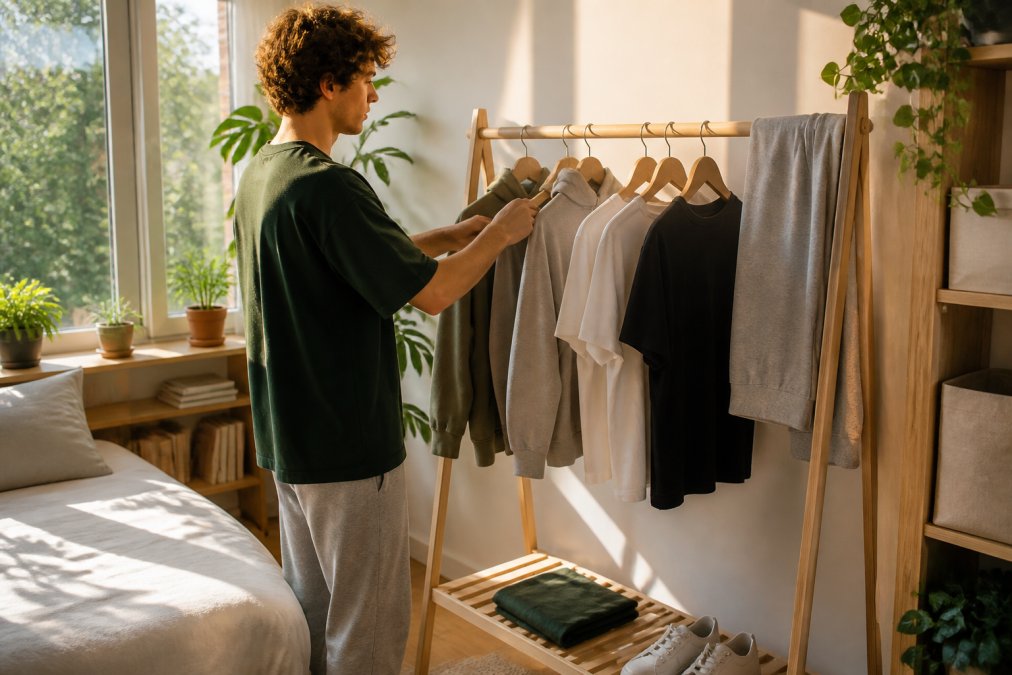
Start with the foundation: two or three heavyweight organic cotton tees, one or two well-constructed hoodies, and a pair of durable denim or organic cotton pants. From this list, CHNGE or Plant Faced Clothing cover tees and hoodies at accessible price points; Nudie handles denim with free repairs.
Wardrobe-building checklist:
- Prioritize certifications over claims, GOTS, Fair Trade, B-Corp, and Bluesign are verified; "eco-friendly" without a cert is not
- Choose neutral or versatile colorways that work across multiple outfits to maximize wear-per-item
- Buy one size up if between sizes; sustainable garments are built to last, and relaxed fit ages better
- Factor in repairability; brands like Nudie that offer free repairs extend garment life dramatically
- Avoid buying duplicates; each piece must earn its place in a capsule wardrobe
Recycled materials in streetwear have improved significantly. Recycled polyester from post-consumer plastic bottles now performs comparably to virgin polyester, and recycled cotton blends have closed the softness gap with conventional cotton. The practical difference in daily wear is minimal; the environmental difference is substantial.
Affordable sustainable streetwear is more accessible than five years ago. Plant Faced Clothing and CHNGE both offer entry points that make the transition from fast fashion financially realistic without sacrificing certification standards. One well-made piece worn 200 times costs less per wear than three cheap pieces worn 30 times each.
Rasta Hippies shares this commitment to conscious consumption, channeling it through Reggae Rasta and Hippie culture into original designs that support ocean and environmental conservation.
The brands on this list represent the clearest intersection of streetwear culture and genuine sustainability in 2026. Fast fashion's environmental footprint is well-documented, and the slow fashion alternative is now mature enough to compete on aesthetics, quality, and price-per-wear. If you're ready to build a wardrobe that reflects your values, start with one piece from this list, and wear it until it earns its place.
Frequently Asked Questions
How do I know a sustainable streetwear brand isn't just greenwashing?
Look for third-party certifications that require independent audits: GOTS (Global Organic Textile Standard) for organic fibers, Fair Trade Certified or Fair Wear Foundation for labor practices, and Bluesign for responsible textile production. Brands that publish actual supply chain data, naming factories, audit results, or carbon footprint figures, are far less likely to be greenwashing than those using vague terms like 'eco-friendly' with no backup. When a brand's sustainability page links to real reports, that's a meaningful signal.
Are recycled materials common in 2026 streetwear?
Yes, recycled polyester made from post-consumer plastic bottles and recycled cotton from deadstock fabric or textile waste are now standard offerings across ethical streetwear brands. What's newer in 2026 is the push toward plant-based alternatives, seaweed fiber, hemp textiles, and bio-based synthetics, that address microplastic shedding, a known drawback of recycled polyester. Check whether a brand uses low-impact dyes alongside recycled materials, since the dyeing process carries its own environmental footprint.
Is affordable sustainable streetwear actually possible, or is it always expensive?
Affordable sustainable streetwear exists, though the price floor is higher than fast fashion because ethical labor and certified organic or recycled materials cost more to produce. Brands like Plant Faced Clothing and Colorful Standard offer tees starting around $35, which is competitive once you factor in garment longevity. Buying fewer, better pieces, the core idea behind slow fashion and a capsule wardrobe, typically costs less over two to three years than replacing cheap items every season.
Which sustainable streetwear brands are best for circularity and resale?
Nudie Jeans Co. stands out with a lifetime free repair program and a global recycling scheme that keeps denim in circulation. Outerknown's durable construction makes its pieces strong performers on resale platforms. UNLESS Collective takes a different angle: fully biodegradable garments designed so that end-of-life disposal creates zero plastic waste. For resale value, prioritize brands with timeless minimalist aesthetics and documented durability testing, those pieces hold their value longest on the secondhand market.
What sustainable fashion trends define 2026 streetwear?
The clearest 2026 trends are supply chain carbon footprint transparency, circularity integration (repair programs, take-back schemes, and resale partnerships), and plant-based material innovation beyond organic cotton. Streetwear-specific durability testing, brands publishing wash-cycle and abrasion data, is also emerging as a differentiator. Conscious consumerism is pushing shoppers toward brands that donate a portion of profits to environmental causes, blending social responsibility with style rather than treating them as separate concerns.
This article was written using GrandRanker
Frequently Asked Questions
How do I know a sustainable streetwear brand isn't just greenwashing?
Look for third-party certifications that require independent audits: GOTS (Global Organic Textile Standard) for organic fibers, Fair Trade Certified or Fair Wear Foundation for labor practices, and Bluesign for responsible textile production. Brands that publish actual supply chain data — naming factories, audit results, or carbon footprint figures — are far less likely to be greenwashing than those using vague terms like 'eco-friendly' with no backup. When a brand's sustainability page links to real reports, that's a meaningful signal.
Are recycled materials common in 2026 streetwear?
Yes, recycled polyester made from post-consumer plastic bottles and recycled cotton from deadstock fabric or textile waste are now standard offerings across ethical streetwear brands. What's newer in 2026 is the push toward plant-based alternatives — seaweed fiber, hemp textiles, and bio-based synthetics — that address microplastic shedding, a known drawback of recycled polyester. Check whether a brand uses low-impact dyes alongside recycled materials, since the dyeing process carries its own environmental footprint.
Is affordable sustainable streetwear actually possible, or is it always expensive?
Affordable sustainable streetwear exists, though the price floor is higher than fast fashion because ethical labor and certified organic or recycled materials cost more to produce. Brands like Plant Faced Clothing and Colorful Standard offer tees starting around $35, which is competitive once you factor in garment longevity. Buying fewer, better pieces — the core idea behind slow fashion and a capsule wardrobe — typically costs less over two to three years than replacing cheap items every season.
Which sustainable streetwear brands are best for circularity and resale?
Nudie Jeans Co. stands out with a lifetime free repair program and a global recycling scheme that keeps denim in circulation. Outerknown's durable construction makes its pieces strong performers on resale platforms. UNLESS Collective takes a different angle: fully biodegradable garments designed so that end-of-life disposal creates zero plastic waste. For resale value, prioritize brands with timeless minimalist aesthetics and documented durability testing — those pieces hold their value longest on the secondhand market.
What sustainable fashion trends define 2026 streetwear?
The clearest 2026 trends are supply chain carbon footprint transparency, circularity integration (repair programs, take-back schemes, and resale partnerships), and plant-based material innovation beyond organic cotton. Streetwear-specific durability testing — brands publishing wash-cycle and abrasion data — is also emerging as a differentiator. Conscious consumerism is pushing shoppers toward brands that donate a portion of profits to environmental causes, blending social responsibility with style rather than treating them as separate concerns.