 listicle
Eco Friendly Hippie Festival Gear: 5 Brands
Table of Contents
- What Makes Eco Friendly Hippie Festival Gear Different
- Quick Comparison: Top 5 Sustainable Festival Brands
- 1. Warrior Within Designs: Locally Crafted Festival Statement Pieces
- 2. Soul Flower: Organic Cotton Boho Essentials
- 3. Freedom Rave Wear: Recycled Fabrics for High-Energy Festivals
- 4. Love Khaos: Artisanal Luxury Festival Fashion
- 5. WAWWA: Fair Trade and Vegan-Friendly Festival Basics
- How to Build Sustainable Festival Outfits on Any Budget
- Frequently Asked Questions
Last Updated: October 4, 2026
What Makes Eco Friendly Hippie Festival Gear Different
Eco friendly hippie festival gear prioritizes sustainable materials, ethical manufacturing, and longevity over fast-fashion alternatives. It's about conscious consumerism and reducing environmental impact through every purchase.
Material Science: Why Fabric Choice Matters
The core distinction lies in material sourcing and the production mechanisms behind each fabric type. Brands committed to eco friendly hippie festival gear use organic cotton, recycled polyester (rPET), hemp blends, and bamboo fabrics instead of virgin synthetics. Each material delivers measurable environmental advantages:
Organic Cotton vs. Conventional Cotton Organic cotton eliminates synthetic pesticides and reduces water consumption by approximately 91% compared to conventional cotton. It prevents soil degradation and protects groundwater from contamination.
Hemp Blends and Durability Hemp requires minimal water, no pesticides, and regenerates soil nitrogen naturally. Hemp fabric strengthens when wet and can outlast three conventional cotton alternatives across multiple festival seasons, directly reducing replacement cycles.
Recycled Polyester (rPET) and Circular Principles Recycled polyester transforms post-consumer plastic bottles into new garments, requiring 30-40% less energy than virgin polyester and generating 32% fewer greenhouse gas emissions. It delivers environmental benefits without sacrificing stretch, breathability, or color vibrancy.
Bamboo Fabrics and Regeneration Bamboo grows without pesticides or fertilizers and regenerates after harvest. Bamboo fabric offers exceptional breathability and moisture-wicking. Lyocell production recovers 99% of solvents, minimizing chemical pollution.
Ethical Manufacturing and Transparency
Ethical manufacturing ensures fair wages and safe working conditions. Fair Trade Certified labels guarantee living wages and grievance mechanisms. Many sustainable brands publish manufacturing location information for supply chain transparency.
Durability and Cost-Per-Wear Economics
Quality construction means garments withstand repeated wear and multi-day events. Many sustainable brands offer repair services or take-back programs for end-of-life disposal.
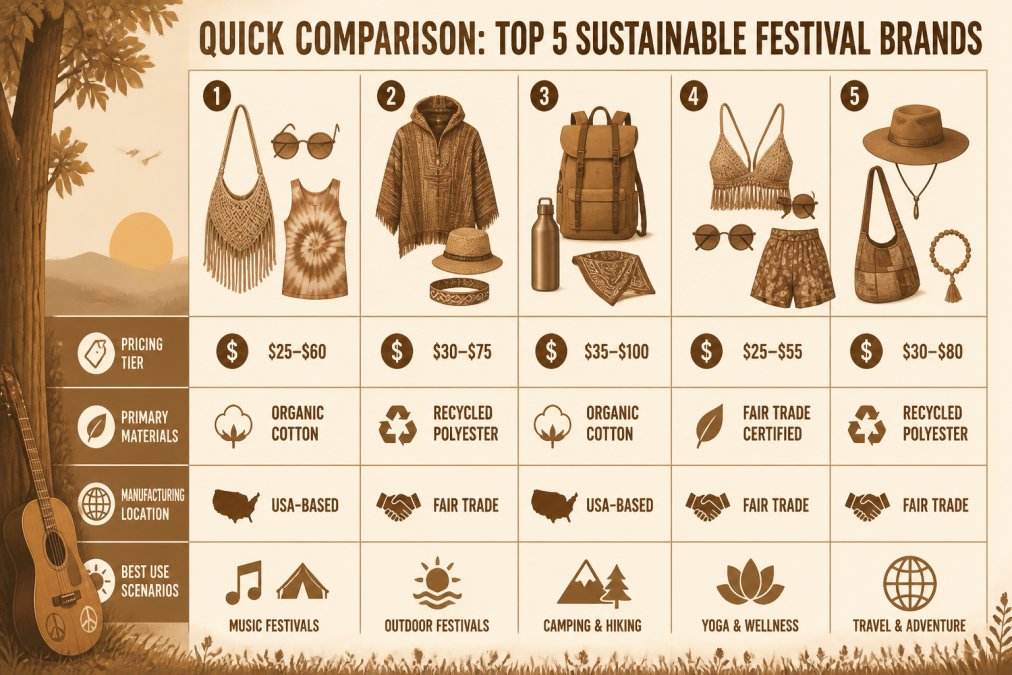
Quick Comparison: Top 5 Sustainable Festival Brands
| Brand | Starting Price | Primary Materials | Manufacturing | Best For |
|---|---|---|---|---|
| Warrior Within Designs | $74.80 | Eco-friendly blends | Locally crafted (USA) | Statement pieces, durability |
| Soul Flower | $25.00 | Organic cotton | Sustainable production | Budget-conscious boho lovers |
| Freedom Rave Wear | $40.00 | Recycled polyester (rPET) | Local, ethical | High-energy festivals, modern style |
| Love Khaos | $100.00 | Artisanal natural fibers | Ethical craftsmanship | Luxury festival fashion, uniqueness |
| WAWWA | $50.00 | Organic, fair trade certified | Fair trade production | Versatile basics, vegan-friendly |
1. Warrior Within Designs: Locally Crafted Festival Statement Pieces
What doesn't: Higher price points reflect quality and domestic production costs.
2. Soul Flower: Organic Cotton Boho Essentials
What doesn't: Seasonal inventory fluctuations may cause sellouts. Focus on classic boho means fewer modern rave aesthetics.
3. Freedom Rave Wear: Recycled Fabrics for High-Energy Festivals
What doesn't: High-energy aesthetic may not suit traditional boho enthusiasts. Recycled polyester requires care across multiple washes.
4. Love Khaos: Artisanal Luxury Festival Fashion
What doesn't: Premium pricing ($100+ starting point) positions Love Khaos as luxury festival wear rather than accessible basics. Limited inventory means popular designs sell quickly.
5. WAWWA: Fair Trade and Vegan-Friendly Festival Basics
What doesn't: Limited range of traditional hippie patterns means fewer boho-specific designs. Focus on basics may feel less distinctive than statement pieces from other brands.
How to Build Sustainable Festival Outfits on Any Budget
Creating eco friendly hippie festival gear outfits doesn't require choosing between sustainability and affordability. Strategic layering, versatile pieces, and intentional shopping build complete festival wardrobes across various price points.
Start with foundational basics: organic cotton t-shirts, hemp blend pants, and bamboo blend undergarments. These pieces layer beneath statement items and mix across multiple outfits. Investing in quality basics creates a capsule wardrobe foundation that supports numerous outfit combinations.
Add 2-3 statement pieces that reflect personal style: a hand-dyed boho dress, patterned rave wear top, or artisanal vest. These pieces anchor outfits and express individual truth through fashion. Statement pieces justify higher investment through versatility and durability.
Accessorize with sustainable options: organic cotton scarves, hemp jewelry, or upcycled bags. Accessories complete looks without requiring premium investment. Many sustainable brands offer affordable accessory options that elevate basic pieces into complete festival outfits.
Cost-Per-Wear Analysis: Why Quality Matters
Cost-per-wear analysis reveals the true value of eco friendly hippie festival gear. This calculation divides purchase price by the number of times worn, revealing actual cost efficiency.
A sustainable piece worn across multiple festivals can offer better value over time. Over a festival-going career, sustainable investment pieces can cost significantly less than repeatedly replacing damaged fast-fashion items.
Calculate your own cost-per-wear: divide purchase price by anticipated wears. This framework justifies premium pricing for quality materials and ethical manufacturing, they deliver superior economics alongside environmental benefits.
DIY Upcycling: Extend Your Festival Wardrobe
DIY upcycling transforms existing pieces into fresh festival looks while reducing consumption. This practice aligns with circular fashion principles and allows creative expression through garment modification.
Basic upcycling techniques:
-
Hand-dyeing: Use natural dyes (turmeric, indigo, beet juice) to refresh faded pieces or create ombre effects. Organic cotton absorbs dyes effectively, creating unique, one-of-a-kind results.
-
Patchwork additions: Sew fabric patches onto worn areas, creating intentional design elements. This technique extends garment life while adding visual interest.
-
Fringe and hemming: Cut strategic slits or fray edges for boho aesthetic. Cropped lengths or asymmetrical hems modernize dated pieces.
-
Appliqué embellishment: Add fabric shapes, embroidery, or beading to basic pieces. This transforms plain t-shirts into statement tops without purchasing new items.
-
Tie-dye techniques: Create patterns through folding, binding, or rubber-banding before dyeing. Each piece becomes unique and festival-appropriate.
Start with pieces you already own but no longer wear. Practice techniques on less valuable items before modifying favorites. Document your process through photos, DIY upcycling creates shareable content celebrating sustainable fashion practices.
Caring for Festival Gear: Washing, Storage, and Longevity
Proper care extends the lifespan of eco friendly hippie festival gear, maximizing cost-per-wear and reducing replacement cycles.
Washing and Drying Wash festival wear in cold water using plant-based detergents free of synthetic chemicals and microplastics. Cold water preserves fabric integrity and reduces energy consumption compared to hot water washing. Air-dry pieces whenever possible, machine drying degrades elastic fibers and accelerates wear. For delicate items like hand-dyed or embellished pieces, hand-wash gently and lay flat to dry. Washing less frequently (spot-clean stains, air out between wears) preserves color vibrancy and extends garment life by months or years.
Storage Between Festivals Store clean, dry pieces in breathable cotton bags or open shelving away from direct sunlight, which fades natural dyes and weakens fibers. Avoid plastic storage containers, which trap moisture and promote mildew growth. Fold rather than hang heavy pieces to prevent stretching. For seasonal storage spanning months, cedar blocks or lavender sachets naturally repel insects without synthetic chemicals.
Repair and Maintenance Address damage immediately, small holes become large tears without intervention. Hand-sewing small rips takes minutes and prevents garment loss. Replace elastic in waistbands or straps rather than discarding otherwise functional pieces. Many sustainable brands offer repair services or sell replacement components (zippers, buttons, straps) at minimal cost. This repair-first mindset embodies circular fashion principles and dramatically extends garment life.
End-of-Life Options: Resale, Donation, and Recycling When pieces no longer fit or suit your style, resale extends their life and recovers some investment. Online platforms specializing in secondhand festival wear connect buyers and sellers, giving pieces a second life. Pieces in good condition but no longer wanted can be donated to thrift stores, costume shops, or community organizations, many festival communities maintain clothing swap groups where members exchange pieces seasonally.
For garments too damaged for resale or donation, textile recycling programs accept natural fiber pieces (cotton, hemp, bamboo) for processing into insulation, industrial rags, or fiber for new textiles. Check local recycling facilities or contact sustainable brands directly, many operate take-back programs where customers mail worn pieces for proper recycling. This closes the loop, ensuring festival gear doesn't end up in landfills but instead becomes raw material for new products.
Frequently Asked Questions
What defines eco-friendly hippie festival gear?
Eco-friendly festival gear combines sustainable materials like organic cotton, hemp, and recycled polyester with ethical manufacturing practices. It prioritizes environmental impact reduction, fair trade certifications, and durability so garments survive multiple festival seasons. The hippie aesthetic emphasizes natural fibers, artisanal craftsmanship, and conscious consumerism, choosing quality pieces that reflect your values rather than fast fashion trends.
How do I know if a brand's sustainability certifications are legitimate?
Look for third-party certifications like Fair Trade Certified, GOTS (Global Organic Textile Standard), or B Corp status rather than unverified claims. Check the brand's website for transparency reports showing manufacturing locations, material sourcing, and charitable donations. Legitimate brands clearly explain their supply chain and are willing to answer questions about labor practices, environmental impact, and where profits go.
What materials are best for sustainable festival outfits that actually last?
Organic cotton breathes well and feels soft against skin without pesticide residue. Hemp fabric is incredibly durable and improves with washing. Recycled polyester (rPET) offers stretch and quick-dry properties ideal for active festival environments. Bamboo blends provide softness and sustainability. Blend these materials strategically: organic cotton for comfort, hemp for durability, recycled synthetics for performance wear. Quality construction matters as much as material choice, check seams and stitching before purchasing.
Why should I pay more for sustainable festival gear when fast fashion costs less?
Cost-per-wear reveals the real value. Sustainable gear uses durable materials and construction that withstands repeated festival seasons, washing, and active use. You're also supporting fair wages, environmental protection, and artisanal craftsmanship rather than exploitative labor and textile waste.
How can I extend my sustainable festival wardrobe through upcycling?
Transform worn pieces through simple DIY techniques: add patches or embroidery to cover stains, dye faded items with natural dyes, cut and hem oversized pieces into crop tops or shorts, or sew together scraps into patchwork accessories. These projects align with the hippie ethos of personal expression and waste reduction while refreshing your festival rotation without buying new items.