 listicle
Is Recycled Polyester Fabric Actually Soft? An Honest Review
Table of Contents
- What Recycled Polyester Fabric Actually Feels Like
- Recycled Polyester vs Virgin Polyester Texture: The Real Difference
- Is Recycled Polyester Breathable? What You Need to Know
- How to Wash Recycled Polyester for Maximum Softness
- Pros and Cons of Recycled Polyester Softness
- Blends vs. 100% Recycled Content: Which Feels Softer?
- Conclusion
- Frequently Asked Questions
Last Updated: September 10, 2026
What Recycled Polyester Fabric Actually Feels Like
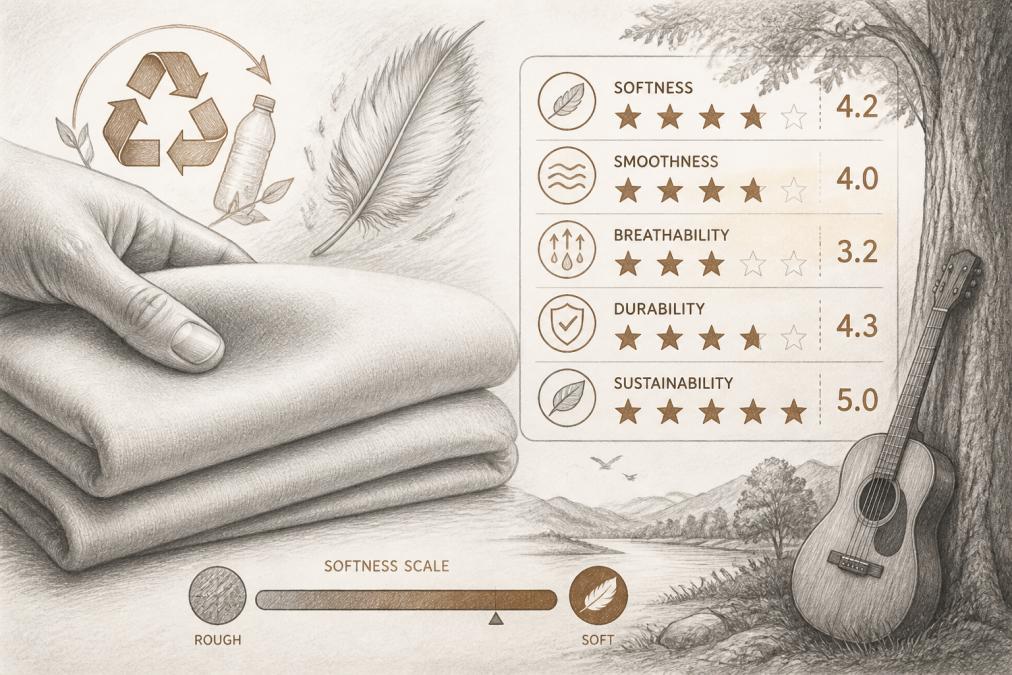
Recycled polyester fabric can feel genuinely soft, and in many cases it feels indistinguishable from virgin polyester. The fiber itself is chemically identical to conventional polyester; what changes is where it comes from. This guide from Rasta Hippies breaks down the hand-feel question honestly, because "is recycled polyester fabric actually soft" deserves a real answer rather than a marketing line.
Recycled polyester is a synthetic textile made by melting down post-consumer waste, mostly plastic bottles, and re-spinning it into new filament yarn or staple fiber. Because the polymer chain is rebuilt to the same specification as petroleum-based polyester, the resulting fabric can match virgin polyester for smoothness, drape, and strength. The softness a person feels on the skin depends far more on how the yarn is spun, finished, and blended than on whether the raw material was recycled.
Here is the part most guides skip: softness is a finishing decision, not a recycling one.
The Hand-Feel Factor: Why Touch Matters More Than Labels
Hand-feel is the textile industry's term for how a fabric feels against the skin, and it is the single biggest driver of whether a garment gets worn or left in the drawer. A label that says "100% recycled" tells a shopper nothing about whether the fabric will feel smooth or scratchy.
Three variables determine hand-feel in any polyester, recycled or not:
- Filament vs. staple: Filament yarn produces a slick, smooth surface. Staple fiber, cut short and spun like cotton, feels softer and more matte but pills more easily.
- Denier count: Lower denier means finer, softer fibers. Microfiber polyester sits at the soft end of the spectrum.
- Finishing treatments: Brushing, peaching, and enzyme washes physically soften the surface of the fabric after weaving.
A common mistake shoppers make is assuming a stiffer recycled garment means recycled fiber is inherently rough. In practice, that stiffness usually traces back to a heavier denier or a missing softening finish, both of which are cost decisions rather than material limitations.
Recycled Polyester vs Virgin Polyester Texture: The Real Difference
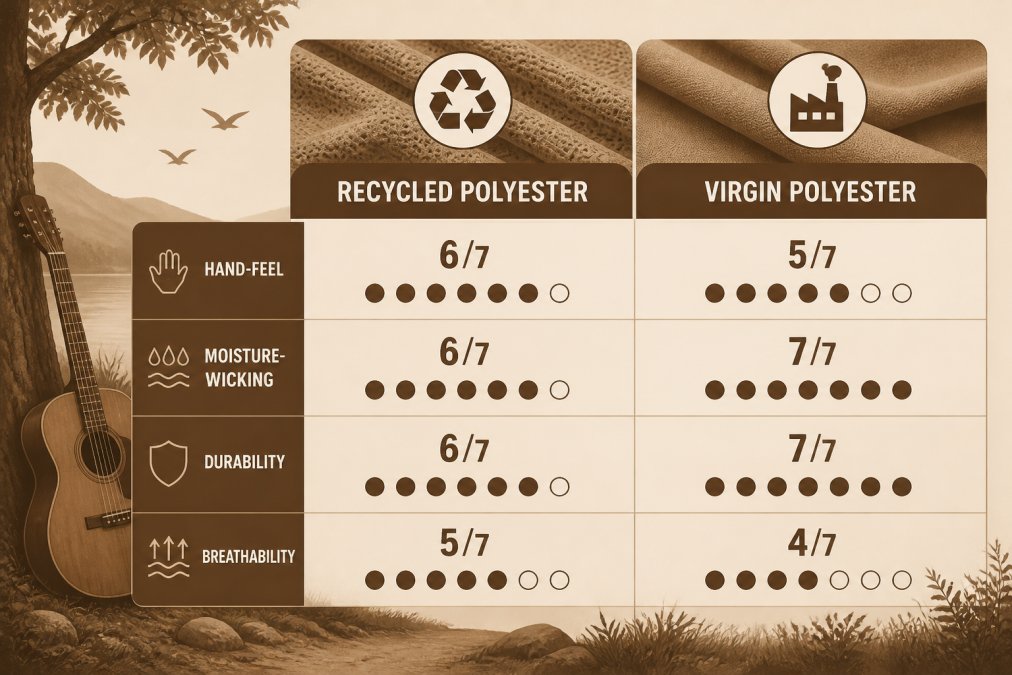
The honest answer is that there is no inherent texture difference between recycled and virgin polyester. Both are the same polymer, polyethylene terephthalate, and both can be produced as smooth filament or textured staple fiber. The gap people notice comes from the supply chain, not the chemistry.
Mechanical recycling grinds and re-melts plastic bottles, which can introduce slight variations in polymer quality if sorting is poor. Chemical recycling breaks the polymer down to its building blocks and rebuilds it, producing fiber that matches virgin polyester closely. When a recycled fabric feels rougher, the cause is usually lower-grade input material or a manufacturer cutting corners on finishing, not the recycling process itself.
Major brands have largely closed that gap. Nike's recycled polyester apparel uses Dri-FIT technology and lightweight construction built for high-intensity training, with durability that holds up to repeated washing. Adidas Primegreen applies standardized quality control across its recycled material line, which is why the fabric feel stays consistent from one production run to the next.
For accessories, Oliver Co. builds recycled polyester pieces with a water-repellent finish and a soft, flexible hand-feel that reads closer to a natural textile than a synthetic one. Independent makers get a similar result from Sew Dynamic's recycled fabrics, which are marketed specifically for a softer hand-feel than standard virgin polyester.
Side-by-Side Comparison Table
| Attribute | Recycled Polyester | Virgin Polyester | What It Means for Feel |
|---|---|---|---|
| Raw material | Post-consumer plastic bottles | Petroleum-based | No difference to touch |
| Hand-feel (filament) | Smooth to slick | Smooth to slick | Effectively identical |
| Hand-feel (staple) | Soft, cotton-like | Soft, cotton-like | Depends on denier, not origin |
| Moisture-wicking | High | High | Same hydrophobic behavior |
| Durability | High, varies by maker | High, consistent | Quality control matters more |
| Breathability | Low to moderate | Low to moderate | Improved only by blending |
| Crease resistance | High | High | Both resist wrinkling well |
Is Recycled Polyester Breathable? What You Need to Know
Recycled polyester is not breathable on its own, and neither is virgin polyester. Polyester is a hydrophobic synthetic fiber, meaning it repels water rather than absorbing it. That property makes it excellent at moving moisture away from the skin, but it also means the fabric traps heat unless it is engineered with ventilation.
This is where the confusion usually starts. Moisture-wicking and breathability are two different things. A recycled polyester shirt can pull sweat off your back quickly and still feel clammy if there is no airflow through the weave. Wicking moves liquid moisture along the fiber surface to the fabric's exterior where it evaporates; breathability is the fabric's ability to let air and water vapor pass through the weave itself. A fabric can excel at one and fail at the other.
The fix is construction, not fiber choice. Open-knit structures, mesh panels, and blends with cotton or spandex all improve airflow. Tellus Outdoor builds recycled polyester gear with moisture-wicking performance, thermal regulation, and a lightweight design aimed at exactly this problem. For everyday wear rather than athletic use, a recycled polyester and cotton blend will feel far more comfortable than 100% synthetic.
Here is the tactile connection most guides miss: breathability directly affects how soft a fabric feels against skin. A non-breathable polyester traps warmth and moisture, which makes the fabric feel slick, clammy, and sometimes sticky after light activity. The same fiber in an open-knit or mesh construction feels dry, airy, and noticeably softer to the touch because there is no moisture film between skin and fabric. Softness is not just surface texture; it is also the sensory experience of dryness and airflow.
For a practical hand-feel test, hold a swatch up to a light source. If you can see pinpoints of light through the weave, air will move through it and the fabric will feel cooler and softer in wear. If the fabric blocks light completely, it will trap heat and feel slicker against skin regardless of how the fiber was sourced.
How to Wash Recycled Polyester for Maximum Softness
Recycled polyester keeps its softness when washed in cold water and dried on low heat. Hot water and high dryer temperatures stress the fibers, which causes the surface to roughen and the fabric to pill over time.
A simple routine that protects texture:
- Turn garments inside out before washing to reduce surface abrasion
- Use cold water on a gentle or delicate cycle
- Skip fabric softener, which coats the fibers and reduces moisture-wicking
- Avoid dryer sheets for the same reason
- Tumble dry on low, or hang dry when possible
- Wash with similar fabrics to limit friction from zippers and hooks
Microplastic shedding is a real trade-off here. Synthetic fabrics release small fibers during washing, and some research suggests recycled polyester can shed more than virgin polyester because of the re-melted polymer structure. Washing less often, using a fine mesh laundry bag, and choosing front-loading machines all reduce shedding. The NOAA Marine Debris Program tracks how these fibers move from wastewater into waterways, which is why care habits matter beyond just keeping a shirt soft.
Pros and Cons of Recycled Polyester Softness
Recycled polyester can be just as soft as virgin polyester, but the softness you get depends on the manufacturer. That is the honest summary, and it cuts both ways.
What works in its favor:
- Modern filament and microfiber versions feel smooth and comfortable against skin
- Finishing treatments like brushing and peaching deliver a genuinely soft hand-feel
- Blends with cotton, modal, or spandex soften the fabric further
- Colorfastness and stain resistance hold up well through repeated washing
- Crease-resistant properties keep garments looking crisp without ironing
Where it falls short:
- Budget recycled polyester can feel stiff if the maker skips softening finishes
- Quality varies significantly by manufacturer, more so than with virgin polyester
- Microplastic shedding during washing is a genuine environmental concern
- Pure recycled polyester still lacks breathability without a blend
- Higher production cost than virgin alternatives in some supply chains
Blends vs. 100% Recycled Content: Which Feels Softer?
Blended recycled polyester almost always feels softer than 100% recycled content. Adding cotton, modal, or a small percentage of spandex softens the surface, improves breathability, and gives the fabric a more natural drape. But the softness difference is not just about adding a softer fiber; it is about how the blend changes the fabric's structure at the yarn level.
When recycled polyester is blended with cotton, the cotton fibers sit alongside the synthetic filaments and create tiny air pockets in the yarn structure. Those air pockets give the fabric a loftier, more compressible hand-feel. A 60/40 recycled polyester-cotton blend typically feels noticeably softer and more breathable than a 100% recycled polyester jersey of the same weight. Modal and lyocell blends go further: these regenerated cellulose fibers are inherently smooth and drapey, so even a 30% modal content can transform a stiff recycled polyester into something that feels closer to a high-quality cotton tee.
Spandex blends work differently. Adding 5-10% spandex does not make the fabric softer in the traditional sense, but it makes it more flexible and conforming, which many wearers perceive as comfort. The fabric moves with the body instead of against it, reducing the scratchy friction that can happen when a stiff polyester rubs against skin during movement.
That said, 100% recycled polyester has its place. For water-repellent accessories, industrial workwear, and performance outerwear, pure recycled content delivers durability and moisture management that blends cannot match. TenCate Protective Fabrics, for example, builds industrial-grade recycled polyester with a crease-resistant finish, colorfast technology, and stain-resistant properties, all optimized for utility rather than tactile softness.
The choice comes down to use case. A t-shirt or hoodie worn against the skin benefits from a blend. A rain shell, bag, or uniform benefits from 100% recycled content.
Here is the unique angle most guides skip: the softness of a blend is not linear. Adding 10% cotton to recycled polyester makes a marginal difference. Adding 30-40% cotton makes a dramatic difference. But past 50% cotton, the fabric starts to lose the quick-dry and durability benefits that made recycled polyester attractive in the first place. The sweet spot for softness without sacrificing performance is typically a 60/40 to 70/30 recycled polyester-cotton ratio. For modal blends, even 20-30% modal content delivers a significant softness upgrade because modal fibers are finer and smoother than cotton at the same weight.
When shopping, check the fiber content label for the exact blend ratio, not just the presence of a blend. A garment labeled 'cotton blend' could be 95% recycled polyester and 5% cotton, which will feel almost identical to 100% recycled polyester. Look for blends where the softening fiber is at least 30% of the content if tactile softness is your priority.
Conclusion
The softness question has a clear answer once the noise is stripped away: recycled polyester fabric can feel soft, and the fiber's origin has almost nothing to do with it. Denier, yarn type, finishing, and blending decide the hand-feel. Shoppers who want a genuinely soft recycled garment should look for microfiber or brushed finishes, favor blends for skin-contact pieces, and wash in cold water to protect the texture over time.
For anyone building a wardrobe around conscious values, the texture question is only half the story. RastaHippies.com brings together Reggae Rasta and Hippie culture through original art, handcrafted apparel, and custom design services, all rooted in positive energy and a commitment to ocean and environmental conservation. The brand supports causes including Bigger Than Waves, the Rob Machado Foundation, and the Kōkua Hawaiʻi Foundation, so a soft recycled tee carries meaning beyond the fabric. Explore the collection at RastaHippies.com and wear something that matches both comfort and conscience.
Frequently Asked Questions
What does recycled polyester fabric feel like?
Recycled polyester typically feels smooth and slightly slick, similar to virgin polyester but often with a softer finish due to improved mechanical recycling. Some lower-quality versions can feel stiff or plastic-like, but higher-grade recycled polyester, especially when blended with cotton or spandex, offers a comfortable, flexible hand-feel that works well for everyday wear.
Is recycled polyester as soft as virgin polyester?
In most cases, yes. Modern mechanical and chemical recycling processes can produce recycled polyester that matches or even exceeds the softness of virgin polyester. The key is the polymer quality and how the fibers are spun. Brands that prioritize hand-feel often use finer filament yarns, resulting in a smoother, more supple texture.
How does washing affect the softness of recycled polyester?
Washing can actually improve softness over time if done correctly. Use cold water and a gentle cycle, avoid fabric softeners (they coat fibers and reduce breathability), and skip the dryer or use low heat. This routine preserves the fabric's hand-feel and extends its life.
Can recycled polyester be blended with other fibers to improve softness?
Absolutely. Blending recycled polyester with cotton, modal, or spandex enhances softness and drape. For example, a 50/50 blend with cotton creates a softer, more breathable fabric, while a small percentage of spandex adds stretch and flexibility. These blends are common in t-shirts, hoodies, and activewear where comfort is a priority.
Does recycled polyester irritate sensitive skin?
Recycled polyester is generally hypoallergenic and safe for sensitive skin. However, some people may find synthetic fabrics less breathable, which can lead to discomfort in hot weather. If you have very sensitive skin, look for blends with natural fibers like cotton or bamboo, and always wash new garments before wearing to remove any manufacturing residues.