 listicle
Sustainable Fashion Brands for Plus Sizes: 2026 Guide
Table of Contents
- Why Plus-Size Shoppers Need a Different Sustainability Standard
- Quick Comparison: Sustainable Fashion Brands for Plus Sizes
- 1. Girlfriend Collective: Recycled Activewear Up to 6XL
- 2. Pact: Affordable Organic Cotton Basics
- 3. TomboyX: Gender-Neutral Intimates and Loungewear
- 4. Warp + Weft: Size-Inclusive Denim With Minimal Water Use
- 5. EILEEN FISHER: Timeless Pieces With a Take-Back Program
- 6. Reformation: Trendy Styles With Dedicated Extended Sizing
- How to Build a Sustainable Plus Size Wardrobe
- The Bottom Line on Sustainable Fashion Brands for Plus Sizes
- Frequently Asked Questions
Last Updated: September 7, 2026
Plus-size shoppers face a frustrating paradox: the brands that actually fit often cut corners on ethics, while sustainable labels rarely stock sizes above an XL. At RastaHippies.com, the belief is that conscious consumerism should not be reserved for straight sizes, and this guide to sustainable fashion brands for plus sizes proves that ethical manufacturing and extended sizing can coexist.
Sustainable fashion brands for plus sizes combine responsible production methods, such as organic materials and fair wages, with size ranges that genuinely extend beyond a 2XL. Below, we break down six brands that treat both sustainability and size inclusivity as non-negotiable standards. Each pick was evaluated on fabric sourcing, supply chain transparency, and whether its size range holds up across entire product lines, not just one token dress.
Why Plus-Size Shoppers Need a Different Sustainability Standard
The mainstream sustainability conversation often overlooks a core tension: producing larger garments requires more fabric, which can increase a brand's carbon footprint per item. This is not a reason to exclude extended sizes, but it is why a one-size-fits-all ethical scorecard fails.
What matters most is the intersection of garment longevity and inclusive design. A well-constructed piece that fits properly and lasts for years is inherently more sustainable than a cheap item tossed after a few washes. For plus-size bodies, fit is the primary driver of whether a garment gets worn or abandoned.
Quick Comparison: Sustainable Fashion Brands for Plus Sizes
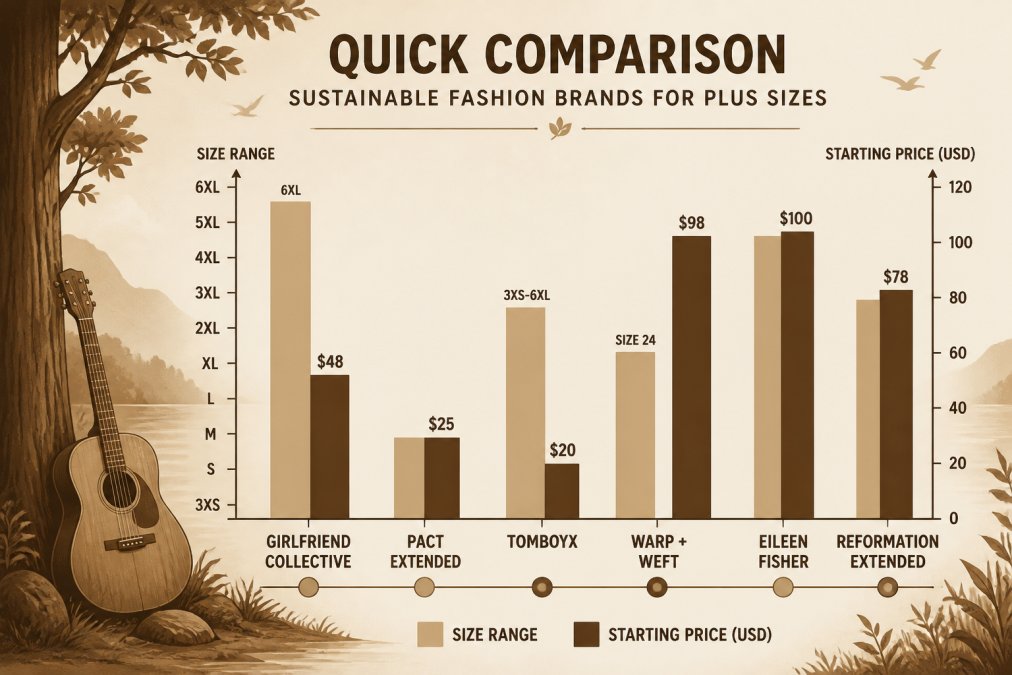
Finding the right label starts with knowing which brand prioritizes what. This snapshot helps narrow the search by size ceiling, starting price, and core material focus.
| Brand | Size Range | Starting Price | Core Materials | Best For |
|---|---|---|---|---|
| Girlfriend Collective | Up to 6XL | $48 | Recycled polyester (RPET), fishing nets | High-performance activewear |
| Pact | Extended sizing | $25 | GOTS-certified organic cotton | Affordable everyday basics |
| TomboyX | 3XS to 6XL | $20 | OEKO-TEX certified fabrics | Gender-neutral intimates |
| Warp + Weft | Up to size 24 | $98 | Recycled water denim | Ethically produced jeans |
| EILEEN FISHER | Extended sizing | $100 | Organic fibers, recycled materials | Timeless investment pieces |
| Reformation | Dedicated extended line | $78 | Deadstock fabrics, sustainable fibers | Trendy occasion wear |
1. Girlfriend Collective: Recycled Activewear Up to 6XL
Girlfriend Collective builds its reputation on turning waste into workout gear. The brand transforms post-consumer water bottles into recycled polyester (RPET) and recovers fishing nets for its fabrics. Its size range extends up to 6XL, a rarity in the activewear space.
The brand operates with a transparent supply chain and maintains SA8000 certified factories. Its garment recycling program addresses the end-of-life problem that plagues most synthetic activewear. The main drawback is the price point, but for shoppers who want leggings that survive hundreds of washes without pilling, the durability often justifies the cost.
2. Pact: Affordable Organic Cotton Basics
Pact answers the question of whether sustainable fashion for plus sizes can be budget-friendly. The brand works exclusively with GOTS-certified organic cotton, and its factories hold Fair Trade certification, supporting fair wages and safe working conditions.
Pact's extended sizing covers everyday essentials: tees, underwear, loungewear, and sleepwear. The styles lean casual and minimal, a limitation for occasion wear. But for building a capsule wardrobe of staples that hold up wash after wash, Pact delivers exceptional value.
3. TomboyX: Gender-Neutral Intimates and Loungewear
TomboyX approaches size inclusivity with an industry-leading range from 3XS to 6XL. The brand specializes in underwear and loungewear designed with a gender-neutral fit philosophy, accommodating a variety of body shapes without conforming to rigid categories.
All fabrics carry OEKO-TEX certification, verifying that textiles are free from harmful substances, a legitimate concern for intimates. Comfort is the clear design priority, with soft waistbands and breathable materials. The tradeoff is scope: TomboyX does not venture into tailored outerwear or dresses, so those seeking a complete wardrobe will need to pair these pieces with other labels.
4. Warp + Weft: Size-Inclusive Denim With Minimal Water Use
Denim production is notoriously water-intensive, but Warp + Weft tackles this through vertical integration and recycled water systems, controlling its process from fiber to finished jean. Sizing runs up to a 24, roughly a 3XL or 4XL depending on the cut.
A standout feature is sizing consistency across styles, making online ordering more predictable. The variety of washes and cuts is narrower than fast-fashion mills offer, but the quality and ethical production make up for it. For a wardrobe workhorse like denim, the price per wear over several years is competitive.
5. EILEEN FISHER: Timeless Pieces With a Take-Back Program
EILEEN FISHER operates at the luxury end of sustainable fashion, with prices reflecting its commitment to organic fibers, recycled materials, and ethical manufacturing. Its minimalist silhouettes resist the seasonal churn of fast fashion. Extended sizing applies across many core styles, though not every runway piece translates to the fuller range.
What sets EILEEN FISHER apart is its Renew take-back program: customers return worn garments, which the brand cleans, repairs, and resells. This circular model keeps clothing in use rather than sending it to a landfill. For shoppers seeking staples that last a decade, the higher upfront cost is an investment. The aesthetic leans quiet and refined, which may feel plain for those who prefer bold prints.
6. Reformation: Trendy Styles With Dedicated Extended Sizing
Reformation proves that sustainable fashion does not have to mean sacrificing trend. The brand produces fashion-forward dresses, separates, and occasion wear using deadstock fabric and sustainable fibers. Its operations are carbon-neutral, covering both shipping and production.
The dedicated extended sizing collection addresses the historical gap in Reformation's offerings, though not every main-line item comes in plus sizes. Its transparency reporting is among the strongest in the industry, with detailed environmental impact breakdowns per garment. For a special event, Reformation offers a compelling alternative to renting or buying new fast fashion.
How to Build a Sustainable Plus Size Wardrobe
Building a wardrobe that aligns with both values and fit requires a strategy beyond swapping one brand for another. The first step is auditing what is already owned, extending the life of an existing garment through repair or resale is the most sustainable choice. For new purchases, prioritize natural and recycled fibers over virgin synthetics.
A practical approach is the capsule wardrobe method: choosing versatile, quality-focused pieces that mix and match rather than accumulating trend-driven items. When evaluating sustainable fabrics for plus size clothing, consider breathability and durability, organic cotton and linen excel in warm weather, while recycled polyester suits activewear. Washing in cold water preserves fabric integrity and cuts energy use. Supporting brands with supply chain transparency and fair trade certification ensures the wardrobe reflects a commitment to ethical labor.
Solving the Fit Puzzle: Measuring for Sustainable Brands
The single biggest barrier to a successful sustainable plus-size wardrobe is inconsistent sizing across brands. A size 2XL at one label may fit like a 1XL at another, a variance even more pronounced among smaller sustainable brands. This is not a flaw in the shopper; it is a flaw in the industry's standardization.
To navigate this, most fit specialists recommend using body measurements as your primary guide. You will need three key numbers: bust, waist, and hip; for bottoms, also measure the inseam and rise. Compare these against a brand's detailed size chart, not the generic S-M-L-XL one. A common pattern is that a size chart lists the garment's waistband measurement, not your body's waist. A garment needs 'ease', extra room beyond your body measurement, to fit comfortably. For plus-size bodies, this ease is essential, not optional.
Here is a practical approach for measuring accurately at home:
- Bust: Measure around the fullest part of your chest, keeping the tape measure parallel to the floor.
- Waist: Find your natural waist, which is the narrowest part of your torso, usually just above the belly button. Keep the tape snug but not tight.
- Hip: Measure around the fullest part of your hips and buttocks, again keeping the tape parallel to the floor.
- Inseam: Measure from the top of your inner thigh down to your ankle bone.
Once you have these numbers, look for brands that provide garment-specific measurements. When a brand does not, search for reviews from other plus-size shoppers who share their measurements and the size they purchased, this crowdsourced data is often more reliable than the brand's own size chart.
The Bottom Line on Sustainable Fashion Brands for Plus Sizes
The market for sustainable fashion brands for plus sizes is maturing, but it still demands diligence. No single brand covers every category at every size, so building a wardrobe means mixing specialists: Girlfriend Collective for activewear, Pact for basics, Warp + Weft for denim, and Reformation for events.
The common thread across these labels is a rejection of the false choice between ethics and inclusion. They prove that recycled fibers, fair wages, and extended sizing can coexist. For shoppers, the power lies in voting with dollars for labels that respect both people and the planet.
A Decision Framework for Your Next Purchase
To make a choice that is right for your body and your budget, use this simple framework before you hit 'add to cart.'
Step 1: Define the Role of the Garment. Is it a high-performance activewear item, a durable everyday basic, or a special occasion dress? This immediately narrows your options.
Step 2: Check the Fabric's Lifecycle. Look beyond the term 'sustainable' and ask what the fiber is. For high-wear items like jeans, recycled cotton or a blend with stretch offers longevity. For pieces you will sweat in, recycled polyester (RPET) is practical. For garments against your skin all day, GOTS-certified organic cotton is a strong option. Match the fabric's properties to the garment's intended use.
Step 3: Calculate Price Per Wear, Not Just Price. A $100 pair of jeans worn twice a week for three years costs roughly $0.32 per wear; a $40 fast-fashion pair that falls apart after ten washes costs $4.00 per wear. This is the most honest measure of value in sustainable fashion.
Step 4: Verify the 'Inclusivity' Claim. A brand that stocks up to a 3XL in one style but only up to an XL in everything else is not truly size-inclusive. Check the size range across the entire product line, not just a single token piece.
Finding clothing that honors personal values and fits properly is a challenge, but the growing range of sustainable options makes it easier than it was even a few years ago. At RastaHippies.com, the commitment to conscious living extends beyond apparel to original art, handcrafted merchandise, and custom design services rooted in positive energy and a love for nature. Supporting charitable foundations dedicated to ocean and environmental conservation is part of the mission. Explore the collections and express individual truth through designs that celebrate unity, peace, and the shared heartbeat of two cultures devoted to freedom.
Frequently Asked Questions
What makes a plus-size fashion brand truly sustainable?
Look for third-party certifications like GOTS for organic cotton or SA8000 for ethical factories. Check whether the brand publishes its full supplier list and manufacturing processes. A truly sustainable plus-size brand uses recycled or organic materials, pays fair wages, and offers consistent extended sizing, not just one token plus-size item. Be wary of brands that claim sustainability but only offer up to an XL or lack transparency about their supply chain.
Are there affordable sustainable options for plus-size shoppers?
Yes. Several brands offer affordable sustainable options for plus-size shoppers. These brands prove that ethical manufacturing and extended sizing do not have to carry luxury price tags. The key is focusing on cost per wear: a well-made organic cotton item that lasts for years can be more economical in the long run than a fast-fashion alternative you replace frequently.
What sustainable fabrics work best for plus-size clothing?
Organic cotton, Tencel lyocell, and recycled polyester (RPET) offer breathability, stretch, and durability. Deadstock fabrics, which are unused materials from other production runs, reduce waste while providing unique textures. For denim, look for brands like Warp + Weft that recycle water during manufacturing. Avoid stiff, non-stretch fabrics that do not accommodate natural body movement, and check that the fabric content includes enough elastane for comfort.
Do sustainable plus-size brands offer consistent sizing across their full range?
Consistency varies by brand. Warp + Weft is known for uniform sizing across denim styles. TomboyX and Girlfriend Collective offer ranges up to 6XL with reliable fits. Other brands may only extend sizing on select items. Check each product's size chart rather than assuming a brand's entire collection fits the same way. Customer reviews often provide the most honest picture of how a specific garment runs.