 listicle
Where to Buy Ethical Hippie Clothing: 10 Top Brands
Table of Contents
- Quick Comparison: Sustainable Boho Clothing Brands
- 1. Soul Flower: Affordable Earth-Conscious Staples
- 2. Mata Traders: Fair Trade Artisan Craftsmanship
- 3. Tamga Designs: Vibrant Prints, Low-Impact Dyes
- 4. Cleobella: Premium Handcrafted Bohemian Style
- 5. Indah Clothing: Beachy Silhouettes, Ethical Roots
- 6. Auguste the Label: Vintage-Inspired with a Conscience
- 7. Earthbound Trading Co.: Budget-Friendly Boho Variety
- How to Build an Ethical Wardrobe Without Overspending
- How to Spot Greenwashing in Boho Brands
- Frequently Asked Questions
Last Updated: September 14, 2026
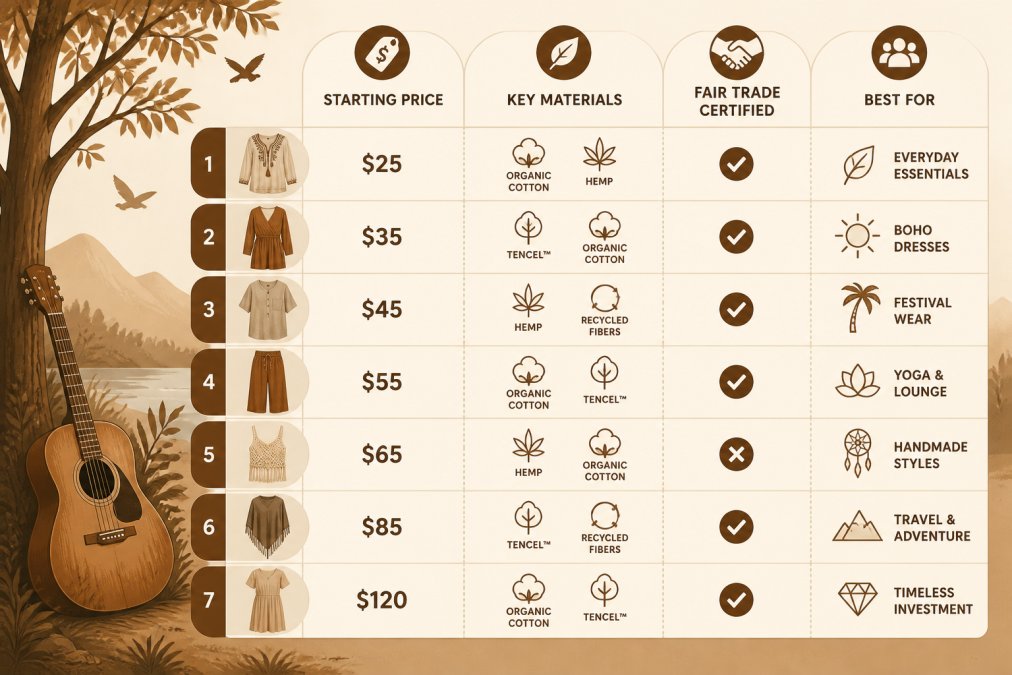
Quick Comparison: Sustainable Boho Clothing Brands
Finding where to buy ethical hippie clothing starts with knowing which brands actually verify their supply chains rather than just claiming to. The sustainable boho clothing market has grown crowded with labels that talk about consciousness while sourcing from the same opaque factories as fast fashion. This guide cuts through that noise with brands that show their work.
The stakes are real: the apparel industry remains one of the largest polluters globally, and greenwashing has become sophisticated enough that shoppers need verification tools, not just marketing language. Below, we break down materials, certifications, and trade-offs for each brand so readers can choose based on evidence.
| Brand | Starting Price | Key Materials | Certification | Best For |
|---|---|---|---|---|
| Soul Flower | $39 | Organic cotton, hemp | Eco-friendly fabrics | Affordable staples |
| Mata Traders | $50 | Hand-crafted textiles | Fair trade certified | Artisan support |
| Tamga Designs | $60 | Tencel, low-impact dyes | Circular fashion focus | Colorful prints |
| Cleobella | $120 | Artisan techniques | Slow-fashion cycles | Premium craftsmanship |
| Indah Clothing | $80 | Natural fibers | Ethical labor standards | Beachy silhouettes |
| Auguste the Label | $90 | Recycled, organic | 1% for the Planet | Vintage-inspired |
| Earthbound Trading | $25 | Mixed materials | Varies by product | Budget variety |
1. Soul Flower: Affordable Earth-Conscious Staples
Soul Flower is an independent retailer specializing in earthy boho apparel made from organic and recycled materials, with small-batch production that reduces waste. The brand's original nature-inspired graphics set it apart from generic hippie prints.
Soul Flower is one of the more accessible entry points into ethical fashion. The trade-off is limited inventory compared to large retailers, so popular sizes sell out.
2. Mata Traders: Fair Trade Artisan Craftsmanship
Mata Traders partners with artisans in India and Nepal to produce bohemian-style clothing through certified fair-trade manufacturing. The brand emphasizes helping women through employment, and its supply chain transparency is documented rather than implied.
The cost reflects hand-crafted textiles and traditional techniques that mass production cannot replicate. For shoppers prioritizing ethical labor practices, this is a direct way to support artisan communities.
Fair Trade Certified standards and certification process
3. Tamga Designs: Vibrant Prints, Low-Impact Dyes
Tamga Designs uses Tencel and low-impact dyes to create vibrant boho prints with a focus on circular fashion and waste reduction. The brand's sustainability credentials are among the strongest in this list, and the fabric durability justifies the investment.
Limited physical retail presence means most shoppers buy online, which makes checking size charts essential before ordering.
4. Cleobella: Premium Handcrafted Bohemian Style
Cleobella creates bohemian apparel using hand-blocked prints and intricate embroidery, partnering with global artisans to preserve heritage crafts. Production follows slow-fashion cycles rather than trend-driven drops.
Cleobella is in the premium tier. What buyers get for that premium is detailed craftsmanship and unique designs that do not appear on every festival grounds.
5. Indah Clothing: Beachy Silhouettes, Ethical Roots
Indah Clothing produces relaxed, beach-ready boho silhouettes in Bali under ethical labor standards, using natural fibers and sustainable dyeing methods. The pricing reflects the locally produced, small-scale manufacturing model.
Sizing can run inconsistent across styles, so ordering two sizes and returning one is a practical approach for first-time buyers.
6. Auguste the Label: Vintage-Inspired with a Conscience
Auguste the Label combines vintage-inspired floral and earthy prints with recycled and organic materials. As a member of 1% for the Planet, the brand commits a portion of revenue to environmental causes.
International shipping costs may apply depending on location, which is worth factoring into the total cost of ownership.
1% for the Planet membership and giving model
7. Earthbound Trading Co.: Budget-Friendly Boho Variety
Earthbound Trading Co. offers an extensive collection of hippie pants, boho dresses, and accessories at accessible price points. The variety spans casual wear to festival styles, making it a one-stop option for building an ethical wardrobe on a budget.
Sustainability transparency varies by product, so shoppers should check individual item details rather than assuming store-wide standards apply.
How to Build an Ethical Wardrobe Without Overspending
Most guides stop at the checkout. The real cost of an ethical wardrobe is decided across the whole life of the garment, how many times you wear it, how you care for it, and what happens to it when you are done. That full-lifecycle view is where the actual savings live, and it is the part almost every boho buying guide skips.
Price-per-wear, done properly
Price-per-wear is total cost divided by number of wears. But the honest version of the math includes care and end-of-life:
- Add care cost. Cold-wash, line-dry garments last longer and cost less to run than hot-wash, tumble-dry cycles. Natural fibers like hemp and linen tolerate this better than most synthetics.
- Add repair cost. A $15 hem repair extends a $120 dress by years. A thrown-away dress costs the full $120 again.
- Subtract resale value. A well-made boho piece from a recognized ethical label often resells for 30-50% of retail on resale marketplaces. Fast-fashion boho typically resells for almost nothing.
Run those three adjustments and the gap between an Earthbound piece and a Cleobella piece narrows or reverses, depending on how often you actually wear it.
A buying framework that survives the season
- Audit first. Photograph everything you own, sort by how often you wore it in the last 12 months, and identify the actual gaps.
- Set a wear target before you buy. If you cannot picture wearing a piece at least 20 times, it is not an ethical purchase regardless of the label.
- Check certification, not aesthetics. Confirm GOTS, Fair Trade Certified, WFTO, or GRS status before trusting a claim.
- Buy versatile, not trendy. A hemp button-down, a linen midi, and a well-cut organic cotton tee outperform a closet of festival-only pieces.
- Use resale first. Poshmark, Depop, Mercari, and ThredUp all carry boho labels at a fraction of retail and extend garment life.
End-of-life: the step nobody writes about
When a garment reaches the end of its useful life, the ethical move is not the trash. Options, roughly in order of preference:
- Repair. A tailor can re-hem, patch, or resize for a fraction of replacement cost. Denim and hemp pieces are especially repairable.
- Resell. Poshmark, Depop, and Mercari move boho pieces quickly if photographed well. Even worn items sell.
- Trade or swap. Local clothing swaps and Buy Nothing groups keep garments in circulation at zero cost.
- Donate with intent. Give to organizations that actually distribute clothing locally, not to bins that ship unsorted textiles overseas.
- Recycle textiles. Brands including Patagonia (through Worn Wear) and retailers like H&M and Madewell run take-back programs that accept worn textiles. For 100% natural-fiber pieces with no elastane, textile recycling recovers the fiber; blended fabrics are harder to recycle and often become insulation or wiping rags.
- Compost, carefully. Untreated, undyed 100% cotton, linen, and hemp can be composted. Anything with synthetic thread, elastic, or dye should not go in a home compost pile.
Capsule math
A 30-40 piece capsule of certified, well-made boho staples typically outperforms a 100-piece closet of disposable items on both cost-per-wear and carbon footprint. The capsule works because every piece is worn often enough to justify its production footprint, which is the entire point of slow fashion.
How to Spot Greenwashing in Boho Brands
Greenwashing is the practice of making environmental or labor claims that sound meaningful but cannot be verified. In boho fashion it is especially common because the aesthetic itself, earthy tones, hand-dyed prints, festival imagery, implies ethics before a single claim is made. The FTC Green Guides, which govern how environmental marketing claims can legally be made, treat vague terms like "eco-friendly," "natural," and "green" as potentially deceptive when they are not qualified. That gives shoppers a real legal hook, not just a vibe check.
The five greenwashing patterns to look for
- Unqualified adjectives. "Eco-friendly fabric" and "sustainable cotton" mean nothing without a standard behind them. Look for "GOTS-certified organic cotton," "OEKO-TEX Standard 100," or "GRS-certified recycled", each is a specific, auditable claim.
- One good initiative hiding a bad core. A brand that plants a tree per order while sourcing from an undisclosed factory is using a small positive to offset an unaddressed negative. Ask what percentage of the product line is actually certified.
- Self-reported metrics. "We offset 100% of our emissions" is a claim the brand grades itself on. Third-party audits, B Corp scores, and public supplier lists are harder to fake.
- Certification logo misuse. Logos get copied. Verify the brand actually appears in the certifier's public directory before trusting the badge.
- Vague artisan language. "Handmade by artisans" is not the same as "Fair Trade Certified" or "WFTO Guaranteed." The first is marketing; the second is a standard with a complaints process.
A verification workflow you can run in ten minutes
- Step 1, Name the claim. Write down the exact phrase the brand uses ("organic," "fair trade," "recycled").
- Step 2, Match it to a standard. Organic cotton → GOTS. Fair labor → Fair Trade Certified or WFTO. Recycled content → GRS. Low-impact dye → bluesign or OEKO-TEX.
- Step 3, Check the directory. GOTS, Fair Trade Certified, B Lab, and OEKO-TEX all publish searchable lists of certified companies. If the brand is not listed, the claim is unverified.
- Step 4, Read the supply chain page. A real disclosure names factories, countries, and tiers. A vague one says "our partners overseas."
- Step 5, Cross-check donation claims. If a brand says it gives to a foundation, the foundation's public records should confirm it.
FTC Green Guides on environmental marketing claims GOTS public certified supplier database B Lab certified B Corp directory
Frequently Asked Questions
What makes hippie clothing considered ethical?
Ethical hippie clothing combines the free-spirited boho aesthetic with responsible production. That means organic or recycled fabrics like hemp and organic cotton, fair wages for garment workers, low-impact or natural dyes, and transparent supply chains. Many ethical brands also use small-batch or handmade production to reduce waste. The goal is clothing that honors both personal values and the planet, aligning with the conscious consumerism at the heart of hippie culture.
What materials should I look for in sustainable hippie fashion?
Prioritize organic cotton, hemp, linen, and Tencel (lyocell). These fibers use less water and fewer pesticides than conventional cotton or polyester. Hemp clothing is especially durable and improves with age. Look for natural dyes or low-impact dye processes, and avoid garments with heavy synthetic blends that shed microplastics. Certifications like GOTS (Global Organic Textile Standard) or Fair Trade Certified confirm the claims are verified, not just marketing.
How can I identify sustainable boho clothing brands without falling for greenwashing?
Check for third-party certifications such as Fair Trade Certified, GOTS, or B Corp status. Vague terms like 'eco-friendly' or 'natural' mean little without proof. Look for published supply chain information, specific material breakdowns, and named factory partners. If a brand cannot tell you where its fabric comes from or who made the garment, treat sustainability claims with skepticism. Transparency is the clearest signal of genuine commitment.
Are there affordable options for ethical hippie apparel?
Yes. Earthbound Trading Co. offers boho styles at accessible price points, and Soul Flower has earth-conscious staples. Secondhand marketplaces like Poshmark let you find higher-end ethical brands at reduced prices while extending garment life. Price-per-wear matters more than sticker price: a well-made hemp or organic cotton piece that lasts years costs less per wearing than a fast-fashion item that falls apart after a few washes.
How does buying ethical hippie clothing support ocean conservation?
Ethical brands often use natural or low-impact dyes that keep toxic runoff out of waterways, and organic fibers reduce pesticide pollution that reaches oceans. Some companies donate a portion of sales to environmental nonprofits. Choosing recycled textiles and biodegradable materials also keeps synthetic microfibers out of marine ecosystems. Every purchase from a verified ethical brand is a small vote for cleaner water and healthier marine life.