 listicle
Where to Buy Recycled Clothing: 10 Best Options
Table of Contents
- Quick Comparison: Top Recycled Clothing Retailers
- 1. ThredUp: The Largest Online Consignment Store
- 2. Poshmark: Peer-to-Peer Marketplace for Specific Brands
- 3. Girlfriend Collective: Activewear Made from Recycled Plastics
- 4. Patagonia Worn Wear: Durable Gear That Lasts
- 5. Tentree: Casual Wear That Plants Trees
- 6. Pact: Affordable Organic Cotton Basics
- 7. Vinted: No-Fee Marketplace for Secondhand Finds
- 8. Grailed: Curated Marketplace for Designer and Streetwear
- 9. Depop: Social Marketplace for Vintage and Upcycled Trends
- 10. Reformation: Trend-Focused Sustainable Fashion
- How to Shop for Secondhand Clothes Online
- What Is the Difference Between Recycled, Upcycled, and Vintage Clothing?
- How to Verify Sustainability Claims
- Frequently Asked Questions
Last Updated: September 9, 2026
The fast fashion cycle has left mountains of textile waste in its wake, making recycled clothing one of the most effective ways to shrink a personal carbon footprint. This guide breaks down the ten best places to buy recycled clothing, balancing price, ethics, and style.
Quick Comparison: Top Recycled Clothing Retailers
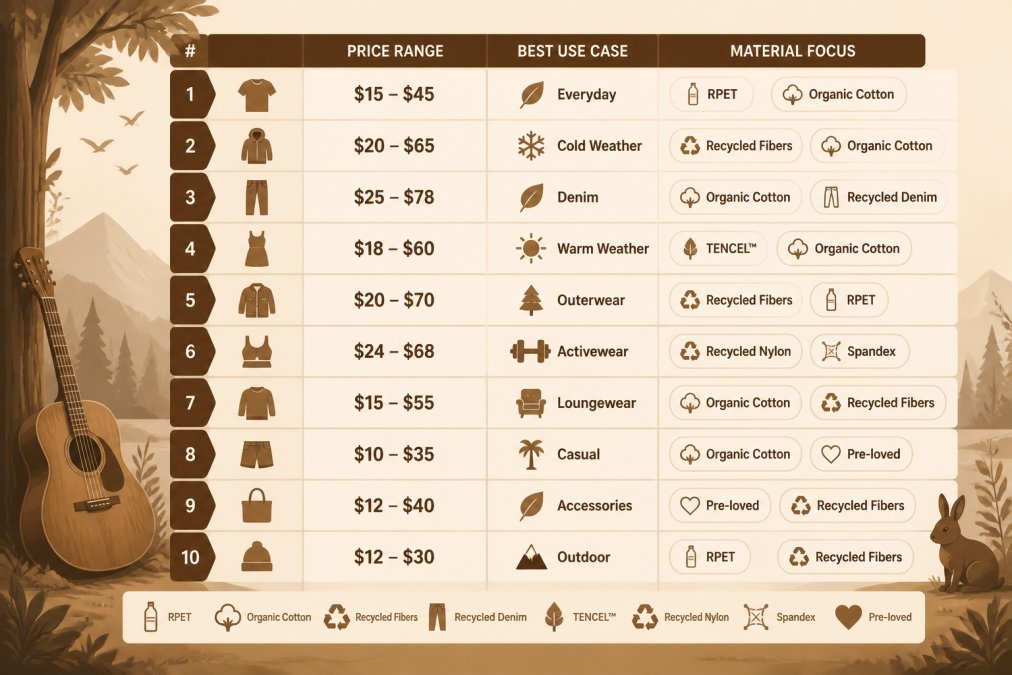
Recycled clothing spans two categories: secondhand resale platforms that extend garment life and brands manufacturing new pieces from recycled fibers. The right pick depends on whether the priority is finding a specific vintage piece or supporting circular manufacturing.
| Retailer | Price Range | Best For | Material Focus |
|---|---|---|---|
| ThredUp | Varies by item | Wide secondhand selection | Pre-loved apparel |
| Poshmark | Varies by seller | Specific brand hunting | Peer-to-peer resale |
| Girlfriend Collective | From $40 | Recycled activewear | RPET from bottles |
| Patagonia Worn Wear | From $50 | Durable outdoor gear | Recycled polyester/nylon |
| Tentree | From $35 | Casual wear, reforestation | Recycled polyester, Tencel |
| Pact | From $25 | Affordable organic basics | GOTS organic cotton |
| Vinted | Varies by seller | Budget secondhand finds | Pre-loved apparel |
| Grailed | From $50 | Designer and streetwear | Curated resale |
| Depop | From $10 | Vintage and upcycled trends | Unique secondhand pieces |
| Reformation | From $78 | Trend-focused sustainable fashion | Deadstock, recycled fabrics |
1. ThredUp: The Largest Online Consignment Store
ThredUp operates as a massive online consignment and thrift store, funneling secondhand apparel through quality control before listing it for resale. The inventory spans thousands of brands, and search filters narrow by size, label, and condition. The tradeoff is that inventory rotates quickly, so a saved item can vanish within hours.
2. Poshmark: Peer-to-Peer Marketplace for Specific Brands
Poshmark flips the model: individual sellers list new or secondhand clothing directly, and buyers interact through a social feed and direct messaging. The platform shines when hunting for a specific brand or style that resale giants do not stock. Pricing is negotiable through the offer system, which can yield savings on higher-end labels.
3. Girlfriend Collective: Activewear Made from Recycled Plastics
Girlfriend Collective manufactures activewear from recycled materials, primarily post-consumer water bottles transformed into RPET fabric. The brand also runs a circular recycling program for old gear. Sizing is notably inclusive, and the fabric is durable enough for repeated workouts, though the price point sits at a premium.
4. Patagonia Worn Wear: Durable Gear That Lasts
Patagonia's Worn Wear program resells used Patagonia gear alongside new items made from recycled polyester and nylon. The company backs everything with lifetime repair services, meaning a worn jacket can be restored rather than replaced. The initial investment is higher than most resale platforms, but durability and repair policy lower the cost per wear over time.
5. Tentree: Casual Wear That Plants Trees
Tentree builds casual wear from recycled polyester and Tencel, with a transparent manufacturing process. Every item purchased triggers ten tree plantings, connecting the clothing directly to reforestation efforts. The styles skew toward comfortable, everyday basics rather than technical performance gear, and the price point sits mid-range.
6. Pact: Affordable Organic Cotton Basics
Pact focuses on GOTS-certified organic cotton and Fair Trade certified factories, producing sustainable basics at accessible price points. The starting prices are among the lowest in this list, making the brand an easy entry point for shoppers new to sustainable fashion. The main limitation is style: Pact's selection centers on essentials like tees, underwear, and loungewear rather than trend-driven pieces.
7. Vinted: No-Fee Marketplace for Secondhand Finds
Vinted operates as a global marketplace where sellers list secondhand clothing without paying commission fees, keeping prices lower than competitor platforms. The mobile app is user-friendly, and inventory spans vintage pieces alongside modern labels. Quality varies widely since there is no central curation, but for patient browsers, the deals are worth the effort.
8. Grailed: Curated Marketplace for Designer and Streetwear
Grailed targets fashion-forward shoppers seeking high-end, designer, and streetwear pieces. The platform offers authentication services for high-value items, reducing the risk of counterfeit goods. The curation leans heavily toward menswear, with a strong focus on rare and limited-release pieces. Prices run higher than general resale platforms, but authenticated luxury at a discount beats retail.
9. Depop: Social Marketplace for Vintage and Upcycled Trends
Depop functions like a social network for fashion, with sellers curating vintage, upcycled, and one-of-a-kind pieces. The interface is highly visual, and direct messaging allows for price negotiation. Younger shoppers chasing Y2K trends and unique upcycled designs will find the platform unmatched. Shipping times vary significantly since every seller operates independently, so reading seller reviews is essential.
10. Reformation: Trend-Focused Sustainable Fashion
Reformation produces modern, trend-focused clothing using deadstock and recycled fabrics, with transparent sustainability reporting on every product page. The brand publishes clear environmental impact data, allowing shoppers to see the footprint of each garment before purchasing. The luxury price point is the steepest on this list, and the cuts run small, so sizing up is a common recommendation.
How to Shop for Secondhand Clothes Online
Buying secondhand online is a different discipline than buying new. There is no standardized sizing, no consistent return policy, and no quality control beyond what the seller describes.
Master the Measurement Game
Brand sizing is unreliable, and vintage sizing is a completely different system. The only reliable reference is a garment's flat measurements. Before buying anything, ask the seller for these four numbers:
- Pit-to-pit (chest width): Lay the garment flat and measure from armpit seam to armpit seam.
- Shoulder to shoulder: Measure across the back from shoulder seam to shoulder seam.
- Sleeve length: From the shoulder seam to the end of the cuff.
- Total length: From the top of the collar to the bottom hem.
Compare these against a well-fitting garment you already own. Take measurements of your favorite t-shirt, jacket, and pair of pants, and keep them in a notes app.
Platform-Specific Tactics
Each major resale platform has its own quirks:
- ThredUp: Use the "condition" filter aggressively. "Excellent" pieces are often indistinguishable from new, while "gently used" may have visible wear. The price gap between these tiers is frequently small, making the upgrade an easy call for staples. Also, set up saved searches for brands you love; ThredUp's inventory rotates constantly, and alerts catch items before they sell.
- Poshmark: The offer system is your friend. Sellers expect negotiation, and offering 70-80% of the listed price is standard practice. Bundle multiple items from the same seller to save on shipping, which is typically a flat fee per order. Check the seller's "love notes" (positive reviews) and look for sellers who post multiple photos, including close-ups of fabric and tags.
- eBay: Search for "NWT" (new with tags) or "NWOT" (new without tags) to find unworn items at a discount. Use the "sold listings" filter to see what similar items actually sold for, which prevents overpaying. For vintage pieces, search by era (e.g., "1980s denim jacket") rather than brand, since older labels are often obscure.
- Depop: Read seller reviews carefully and look for sellers who describe flaws honestly. Depop's culture leans toward curated aesthetics, so photos are often styled rather than informative. Ask for unedited photos of the fabric and any wear points. Negotiate politely; most sellers expect offers.
- Grailed: For high-value designer items, use the platform's authentication service. It adds a fee but protects against counterfeits. Check the seller's transaction history and look for sellers who accept returns, even if it costs extra.
The Fabric and Flaw Inspection
Photos can hide a multitude of sins. When a listing lacks detail, ask the seller directly:
- Pilling: Ask if there is any fuzz or bobbling on the fabric surface, especially on sweaters and wool blends.
- Stains: Ask for a photo under bright light. Sellers often photograph in soft lighting that masks discoloration.
- Odors: Ask if the item smells of smoke, perfume, or mildew. These odors can be difficult to remove from certain fabrics.
- Elastic: For waistbands and cuffs, ask if the elastic is still springy or if it has stretched out.
- Zippers and buttons: Ask if all hardware functions properly. Replacing a zipper on a vintage coat can cost more than the coat itself.
Care and Maintenance of Recycled Garments
Once your secondhand or recycled purchase arrives, proper care extends its life. Different materials demand different treatment:
- Recycled polyester (RPET): Wash in cold water on a gentle cycle. High heat breaks down the plastic fibers and causes microplastic shedding. Air dry whenever possible, or use the lowest dryer setting. Avoid fabric softeners, which coat the fibers and reduce breathability.
- Mechanically recycled cotton: This fiber is shorter than virgin cotton, making it more prone to pilling. Wash inside out in cold water and line dry. Use a fabric shaver to remove pills without damaging the weave.
- Vintage synthetics (polyester, nylon, rayon): These older fabrics can be delicate. Hand wash or use a mesh laundry bag on a delicate cycle. Never wring them out; lay them flat to dry. Rayon is especially prone to shrinking, so cold water is non-negotiable.
- Wool and cashmere: Hand wash in lukewarm water with a wool-specific detergent, or dry clean. Never hang wet wool; it stretches. Lay flat on a towel to dry. Store folded, not on hangers, to maintain shape.
The Return Policy Reality
Most secondhand platforms do not offer free returns. Before purchasing, read the platform's return policy and factor the potential cost into your decision.
What Is the Difference Between Recycled, Upcycled, and Vintage Clothing?
Recycled clothing is manufactured from reclaimed materials, such as plastic bottles converted into polyester fiber or old garments broken down and respun into new yarn. Upcycled clothing takes existing garments and transforms them into new pieces without breaking down the original material, often through redesign or embellishment. Vintage clothing refers to original garments from a previous era, typically at least twenty years old, valued for their historical aesthetic. Understanding this distinction matters: recycling reduces waste through material recovery, while upcycling preserves the original garment's structure. The Ellen MacArthur Foundation's circular economy framework frames these approaches within a broader shift toward circular fashion, where garments stay in use longer and materials retain their value. Shoppers seeking the lowest environmental impact should prioritize secondhand first, then recycled manufacturing, with upcycled pieces offering a creative middle ground.
How to Verify Sustainability Claims
The term "recycled" has become a marketing magnet, and not every brand wearing it deserves the label. Greenwashing, where a company overstates its environmental efforts, is rampant in fashion.
The First Filter: Check the FTC Green Guides
The Federal Trade Commission's Green Guides stipulate that a product labeled "recycled" must contain recycled content, and if the claim is unqualified, the entire product must be recycled. If a brand says a garment is "made from recycled materials," the FTC expects them to specify the percentage.
Look for the Paper Trail, Not Just the Badge
The Global Recycled Standard (GRS) is the most common certification for recycled textile content. It verifies the percentage of recycled material in a product and tracks it through the entire supply chain. However, GRS certification applies to a specific facility or product line, not the whole brand. For organic fibers, the Global Organic Textile Standard (GOTS) is the gold standard, requiring at least 70% certified organic fibers and restricting harmful chemicals throughout processing.
The Transparency Test: Ask Three Questions
A brand that is genuinely using recycled materials can answer three basic questions without hesitation: the exact percentage of recycled content in the specific garment, where the recycled input comes from, and what happens to the garment at the end of its life. A true circular model has a take-back program or a documented recycling partnership.
Red Flags That Signal Greenwashing
Watch for these patterns: a single "sustainability page" with no data on material sourcing; stock photos of nature paired with vague terms like "eco-friendly" without a single metric; recycled content only in accessories while the core line remains virgin polyester; and no third-party audit.
The Practical Shopper's Checklist
Before you click "add to cart," run this five-point check: read the fiber content label for specific materials rather than just "recycled"; search for the GRS certificate number; check the care label for recycling instructions; and email the brand, a legitimate company will respond with specifics.
Verification is not about distrusting every brand; it is about rewarding the ones that do the work. When a company voluntarily submits to third-party audits and publishes its material breakdowns, it is signaling that its environmental commitment is structural, not superficial. That is the kind of brand worth supporting with your dollars.
Frequently Asked Questions
Which clothing brands recycle clothes?
Several brands build their entire model around recycled materials. For secondhand options, various platforms resell clothing that might otherwise end up in landfills.
What is the difference between recycled and vintage clothing?
Recycled clothing means the garment itself is made from materials that have been reprocessed, like plastic bottles turned into polyester fabric. Vintage clothing refers to original, secondhand pieces from a previous era, typically at least 20 years old. Upcycled clothing sits in between: it takes old garments and transforms them into new designs. Each choice reduces textile waste, but they work through different processes.
How do I verify sustainability claims when buying recycled clothing?
Look for third-party certifications rather than trusting marketing language. GOTS certification verifies organic fiber claims. Fair Trade certification confirms ethical factory conditions. Many brands publish supply chain transparency reports or list their factory partners. Check for specific data like percentages of recycled content. Be wary of vague terms like 'eco-friendly' without concrete evidence. When buying secondhand online, check seller ratings and look for detailed photos of fabric condition.
Is buying recycled clothing better for the environment?
Yes. The fashion industry produces roughly 10% of global carbon emissions, and textile waste fills landfills at alarming rates. Buying recycled clothing reduces demand for virgin materials, cuts carbon footprint, and diverts garments from waste streams. Secondhand shopping extends garment life without any new production. Choosing brands that use recycled fibers supports the circular economy. Every purchase keeps clothing in use longer and reduces environmental impact.
What is the 3-3-3 rule for clothes?
The 3-3-3 rule is a simple wardrobe reset: pick 3 tops, 3 bottoms, and 3 pairs of shoes to wear for the next 3 weeks. This practice helps you rediscover what you already own, reduce impulse buying, and extend the life of your clothes. It is especially useful when transitioning to more sustainable shopping habits. By wearing what you have more consistently, you cut down on unnecessary purchases and see which pieces truly earn their place in your closet.