 how-to
How to Find Ethical Clothing Donations: 2026 Guide
Table of Contents
- What You'll Need Before You Donate
- Step 1: Sort and Prepare Your Clothing for Donation
- Step 2: How to Vet a Clothing Charity Before You Give
- Step 3: Best Charities for Clothing Donations and How to Choose
- Step 4: Find Local Drop-Off Centers and Schedule Bulk Pickup
- Step 5: Textile Recycling Programs for Unwearable Items
- Step 6: Track Your Tax Deduction and Document Your Donation
- Step 7: Resale, Consignment, and Clothing Swaps as Alternatives
- Frequently Asked Questions
Last Updated: September 18, 2026
What You'll Need Before You Donate
Gathering a few basics before you donate keeps the process quick and helps your ethical clothing donations actually reach someone who needs them. Ethical clothing donations start with a simple rule: never hand over anything you wouldn't feel good about wearing yourself.
Here's what to have ready:
- Sturdy bags or boxes that won't tear in transit
- Clean, dry items sorted by type
- A phone or computer to check a charity's nonprofit status
- A notebook or spreadsheet to log what you give
That last item matters more than most people think.
Step 1: Sort and Prepare Your Clothing for Donation
Sorting is where good intentions either hold up or fall apart. The goal is to separate wearable items from worn-out ones, because they follow different paths.
Start with three piles:
- Gently used. Clean, stain-free, no holes. These are ready to donate.
- Wearable but tired. Faded or slightly worn. Good for textile recycling programs.
- Unwearable. Torn, stained, or stretched out. These go to material recovery, not a donation bin.
Step 2: How to Vet a Clothing Charity Before You Give
Vetting a clothing charity means confirming it's a legitimate nonprofit and learning where your items actually end up. This step takes ten minutes and protects you from the donation bins that quietly sell clothes for profit. Most donors never ask the hard questions, which is exactly why so many clothes end up in commercial resale chains or overseas bales instead of on a neighbor's back.
Check Charity Transparency and Nonprofit Status
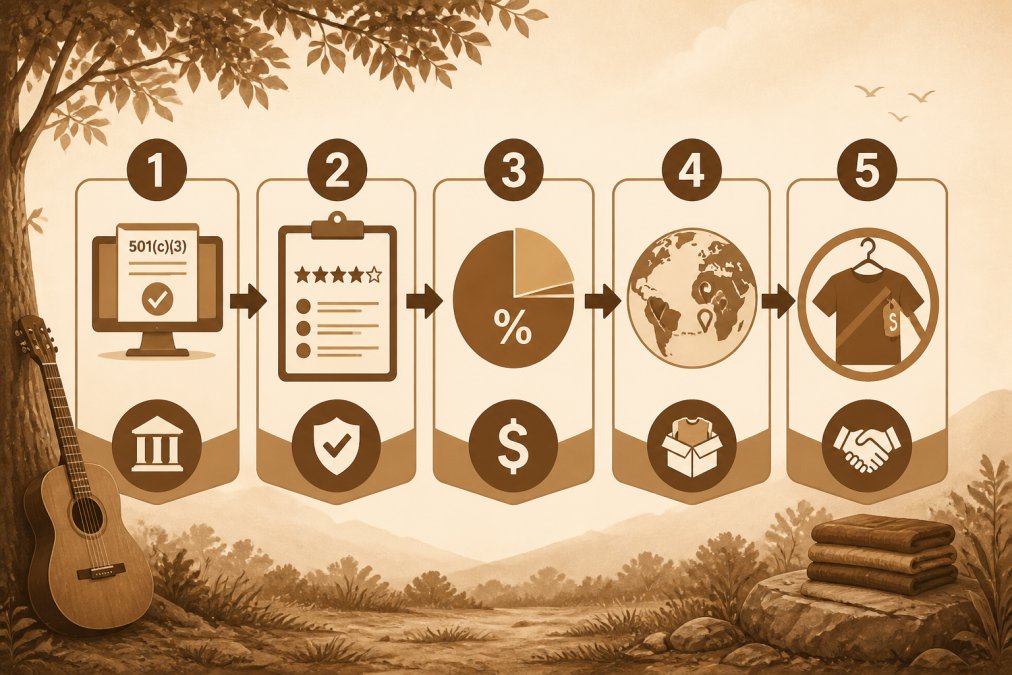
Charity transparency is the first filter. A real nonprofit has a 501(c)(3) designation, which the IRS lists publicly. Use the IRS Tax Exempt Organization Search to confirm status in under a minute. If a group isn't listed, treat it as a for-profit collector and walk away. Independent watchdogs like Charity Navigator's rating system also publish how much of each dollar reaches programs versus overhead.
The Transparency Verification Checklist
Use this checklist to separate genuine charities from opaque collectors:
- Verify 501(c)(3) status on the IRS Tax Exempt Organization Search. No listing means no tax deduction and likely a for-profit operation.
- Request a copy of their most recent Form 990, the annual information return nonprofits file with the IRS. It shows revenue, program expenses, and how much goes to salaries versus services.
- Ask what happens to unsold clothing. Some charities sell unsold items to textile recyclers; others send them to landfills. The best ones have a clear answer.
- Confirm whether they distribute locally or export. Many donation bins collect clothes for overseas markets, which may not be the local impact you intended.
- Check for a physical address and phone number. A legitimate charity will have both and will answer questions.
- Look for accreditation from the BBB Wise Giving Alliance or Candid (formerly GuideStar), which verify nonprofit transparency.
Ask Where Your Clothes Actually Go
Where your clothes go is the question most donors never ask. Some charities distribute items directly to local shelters. Others sell them in thrift stores to fund programs. Both can be ethical, but you deserve to know which one you're supporting.
Call or email and ask three things:
- Do you give clothes directly to people in need?
- What share of donations gets sold rather than given?
- Do you work with a nonprofit partner or a commercial reseller?
Step 3: Best Charities for Clothing Donations and How to Choose
The best charities for clothing donations are ones that match your values and can prove where items go. There's no single winner, so pick based on what matters most to you.
| Charity Type | What They Do | Best For |
|---|---|---|
| Local shelters | Give clothes directly to people in need | Immediate community impact |
| National nonprofits | Fund programs through thrift sales | Broad reach, easy drop-off |
| Faith-based groups | Distribute through congregations | Neighborhood connections |
| Environmental groups | Run textile recycling programs | Worn or unwearable items |
Step 4: Find Local Drop-Off Centers and Schedule Bulk Pickup
Finding a drop-off center takes minutes, and bulk pickup saves a trip when you have several bags. Both options work, so pick based on how much you're giving.
Drop-Off Centers vs. Home Pickup Services
Drop-off centers are faster and give you a receipt on the spot. Home pickup services suit big hauls, bulky items, or anyone without a car.
- Drop-off: Same-day, you keep control, best for a few bags.
- Pickup: Scheduled, hands-off, best for bulk or heavy items.
Step 5: Textile Recycling Programs for Unwearable Items
Textile recycling programs take the clothes that donation centers reject. Torn shirts, stained pants, and single socks still have value as material recovery, not trash.
Look for:
- Retailers that collect worn items in-store
- Municipal recycling centers with textile bins
- Nonprofits that partner with fiber recyclers
Step 6: Track Your Tax Deduction and Document Your Donation
A tax deduction is only as good as your paperwork. The IRS requires a written record for clothing gifts, and without it, you can't claim a thing. But the rules are more nuanced than most donors realize, especially when you're donating items that might be recycled rather than worn again.
What the IRS Actually Requires
For clothing donations, you can generally deduct the fair market value of items in good condition or better. The IRS expects you to keep a written record for any gift worth more than a modest amount, and for noncash contributions over $500, you must file Form 8283 with your return. If you claim more than $5,000 in noncash donations, you'll need a qualified appraisal.
Keep these for every donation:
- A dated list of items given
- The charity's name and nonprofit status
- A receipt or acknowledgment letter
- Fair market value estimates for each item
How to Value Clothing Donations
Fair market value is what the item would sell for in a thrift store, not what you paid for it. A common approach is to use thrift-store prices as a guide. For example, a gently used shirt might be valued at a few dollars, while a designer coat could be worth more. The IRS doesn't publish a fixed price list, but it does expect your valuation to be reasonable and defensible.
The Textile Recycling Tax Trap
Here's where many ethical donors get confused: if you donate worn-out items to a textile recycling program, you generally cannot claim a tax deduction unless the organization is a qualified 501(c)(3) charity. Most municipal recycling centers and for-profit textile recyclers are not charities, so your donation is not tax-deductible, even though it's environmentally responsible.
- Gently used clothing → donate to a qualified charity and get a receipt.
- Unwearable textiles → recycle through a municipal program or retailer take-back, but don't expect a tax benefit.
Documentation for Pickup Services
If you schedule a home pickup, the driver may not provide a receipt on the spot. Request an acknowledgment letter by email within a few days. The letter should include the charity's name, the date of pickup, and a description of the items, but not a dollar value, which you are responsible for estimating.
Step 7: Resale, Consignment, and Clothing Swaps as Alternatives
Donation isn't the only ethical path. Resale, consignment, and clothing swaps keep items in use and can put money back in your pocket.
- Resale: Best for brand-name or trendy items with strong resale value.
- Consignment: Best for quality pieces you'd rather not price yourself.
- Swaps: Best for everyday clothes and a fun, low-effort exchange.
Frequently Asked Questions
Where is the most ethical place to donate clothes?
The most ethical place depends on your goals. Local shelters and community organizations often have the lowest overhead and direct community impact. Nationally, organizations like Goodwill and Salvation Army are transparent but vary by region. For maximum transparency, look for charities that publish annual reports showing exactly how donations are used. Always verify a charity's 501(c)(3) status through the IRS Tax Exempt Organization Search before donating.
How can I ensure my donated clothes don't end up in a landfill?
Start by donating only clean, stain-free, gently used items that charities can actually resell or distribute. For worn or damaged textiles, use textile recycling programs instead of donation bins. Ask charities directly about their sorting process and what happens to unsold items. Some organizations partner with material recovery facilities that turn unusable fabric into insulation, rags, or new fibers, keeping textile waste out of landfills.
What types of clothing are most needed by charities?
Charities most need seasonally appropriate, clean, and gently used basics: coats, jackets, jeans, shirts, and shoes. Children's clothing and plus-size items are consistently in high demand. Professional attire for job interviews is also needed, especially through organizations that support workforce reentry. Avoid donating items that are stained, torn, or missing buttons, as these often end up as textile waste rather than helping someone in need.
Can I get a tax deduction for donating clothes, and what documentation do I need?
Yes, donations to qualified 501(c)(3) organizations are tax-deductible if you itemize deductions. For clothing donations, the IRS requires a receipt from the charity and a written acknowledgment for donations valued over $250. For items valued over $500, you may need Form 8283. Keep a detailed list of what you donated, including condition and estimated resale value. Always get a donation receipt, even for small donations.