 how-to
How to Verify Sustainable Clothing Certifications
Last Updated: November 1, 2026
Quick Summary
To verify sustainable clothing certifications, find the certificate number, search the certifying body's official database, and confirm the holder matches the brand or manufacturer. Then check the scope and expiry date, and ask for chain-of-custody evidence for the specific batch. No certificate number is a red flag.
- GOTS covers organic fiber, processing and social criteria, but not every fabric in a store.
- OEKO-TEX Standard 100 tests for harmful substances, not organic or recycled fiber content.
- GRS follows recycled content and chain of custody, but not labor conditions at every facility.
- A real certificate number paired with an exaggerated marketing claim is the most common trick.
- A certificate covers a defined scope, not a brand's entire supply chain.
Table of Contents
- Sustainable Fashion Certifications Explained: What Each Logo Actually Covers
- Textile Certification Lookup: Where to Check a Certificate Number
- How to Check Clothing Certification Claims Step by Step
- Frequently Asked Questions
Sustainable Fashion Certifications Explained: What Each Logo Actually Covers
Learning how to verify sustainable clothing certifications starts with knowing what each logo claims: GOTS covers organic fiber from field to final product, OCS tracks organic content percentage, GRS follows recycled content and chain of custody, OEKO-TEX Standard 100 tests for harmful substances, and Fair Trade addresses labor standards. For a closer look at what OEKO-TEX certification means in practice, see this guide to OEKO-TEX certified apparel for sensitive skin. A logo alone does not confirm a brand's whole sustainability story, so see what makes clothing truly sustainable.
FashionUnited's overview of sustainability certification organizations notes that many certification networks exist, so one logo rarely covers every claim.
| Certification | What It Covers | What It Does Not Prove |
|---|---|---|
| GOTS | Organic fiber, processing, social criteria | That every fabric in the store is organic |
| OCS | Percentage of organic content | Chemical safety of dyes |
| GRS | Recycled content, chain of custody | Labor conditions at every facility |
| OEKO-TEX 100 | Harmful substance testing | Organic or recycled fiber content |
| Fair Trade | Labor standards, wages, social responsibility | Environmental impact of materials |
Textile Certification Lookup: Where to Check a Certificate Number
A textile certification lookup is the fastest way to test a claim: every legitimate certificate carries a number, scope, and expiry date, and the holder's name should match the brand or manufacturer. Start with the certifying body's own database, GOTS, OCS, GRS, OEKO-TEX, and Fair Trade each publish searchable directories; no certificate number is a red flag.
How to Check Clothing Certification Claims Step by Step
Find the certificate number, search the certifying body's official database, confirm the holder matches the brand or manufacturer, check the scope and expiry date, and ask for chain-of-custody evidence for the specific batch.
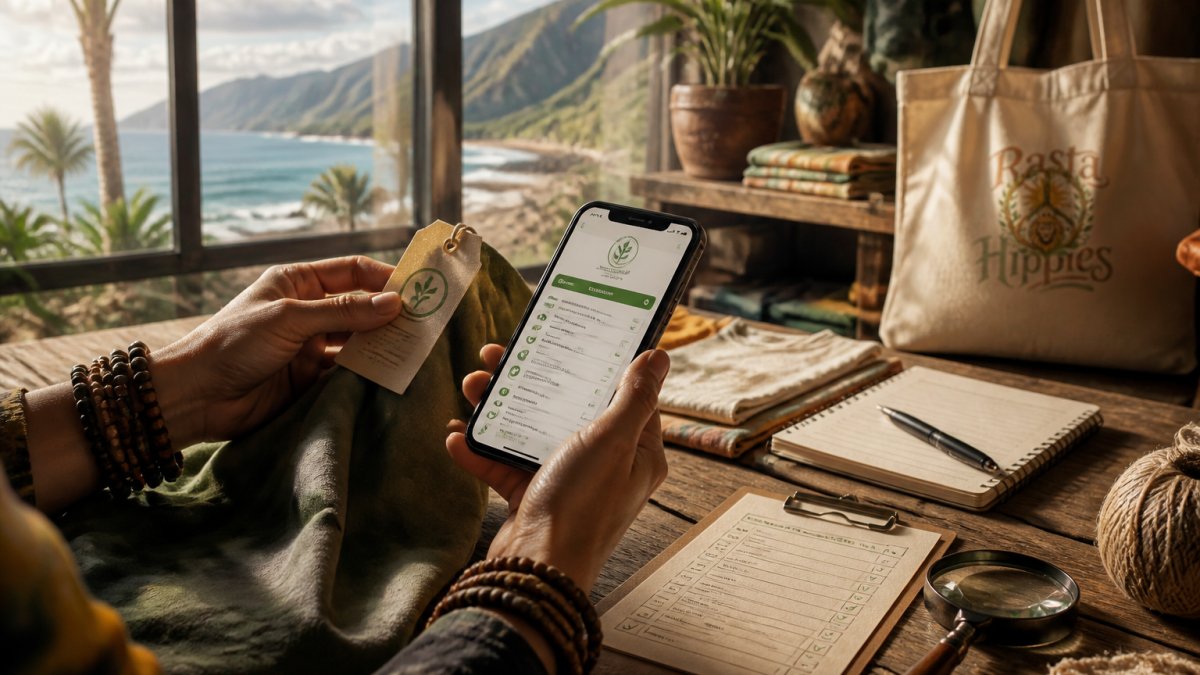
Watch out: a real certificate number paired with an exaggerated marketing claim is the most common trick. For warning signs, read how to spot greenwashing in fashion and the signs a clothing brand is truly ethical. For custom design work, reach out to Rasta Hippies for custom design and general inquiries. A certificate covers a defined scope, not a brand's entire supply chain, so verification beats trust in logos alone.
Small business owners and creatives are invited to join Rasta Hippies as the new site grows. Visit RastaHippies.com and Rastahippies.store to check out our eco-friendly merchandise and support the growth of our business.
Frequently Asked Questions
How can I tell if a clothing certification is legitimate?
Look up the certificate number in the issuing body's official database and confirm the brand name, product scope, and expiry date match the garment. A logo alone proves nothing; 57% of Gen Z say they require proof such as certifications before trusting sustainability claims, . If the brand cannot supply a certificate number or license ID, treat the claim as unverified. Legitimate certifiers publish searchable records, so a missing or mismatched entry is a clear warning sign.
Can a clothing certification expire or be revoked?
Yes. Most textile certifications carry a validity period and require renewal audits, and a certifier can suspend or revoke a certificate if a facility fails inspection. Always check the expiry date in the database rather than relying on a hangtag printed years ago. If a brand shows a certificate that lapsed, ask for the current one. A valid certificate number with an expired date still means the product is not covered today.
What is the difference between a certified garment and a certified material?
A certified material claim means a specific fiber or fabric, such as organic cotton, was verified at some stage of the textile supply chain. A certified garment claim means the final product itself was assessed against a standard, which requires chain of custody records linking the material to the finished item. Many brands blur this line. When you check clothing certification claims, confirm whether the certificate scope covers the final product or only the raw material.