 how-to
How to Identify Authentic Sustainable Clothing
Table of Contents
- Why Authenticity Is Hard to Verify
- Step 1: Check the Fabric, Not the Label
- Step 2: Verify Third-Party Sustainable Fashion Certifications
- Step 3: How to Spot Greenwashing in Fashion
- Step 4: Demand Supply Chain Transparency
- Step 5: Evaluate Durability and Care
- Your Checklist for Sustainable Clothing
- Conclusion
- Frequently Asked Questions
Last Updated: September 8, 2026
Why Authenticity Is Hard to Verify
The sustainable clothing market has grown so quickly that the term itself has become almost meaningless. Anyone can print a leaf on a tag and call a garment "eco-friendly," which is exactly why shoppers now face a confusing landscape of vague promises and feel-good marketing. Authentic sustainable clothing is defined by verifiable practices across materials, labor, and supply chain, not by the aesthetic of the brand selling it.
The team has watched this confusion play out with conscious consumers who genuinely want to support ethical manufacturing. The hard truth is that identifying sustainable clothing requires detective work. Most brands will not volunteer the information that exposes their weak points, so shoppers need a repeatable method for separating real commitments from marketing language. This guide walks through a five-step verification process built on material analysis, third-party certification, and supply chain transparency.
Step 1: Check the Fabric, Not the Label
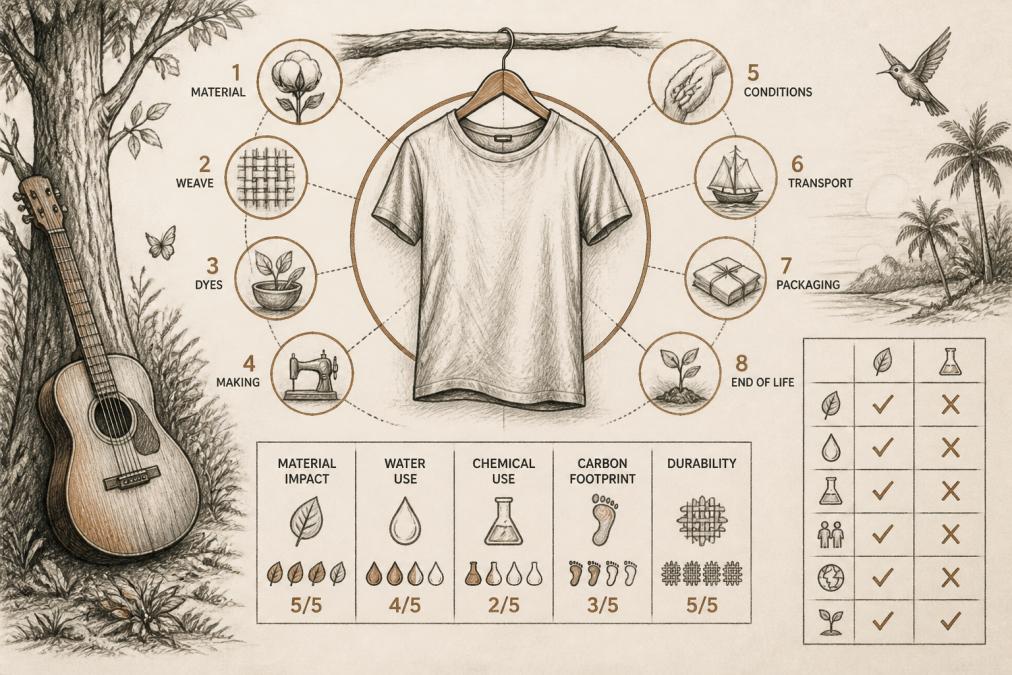
The most reliable signal of sustainable clothing is the material composition, which is legally required to appear on every garment label. Fabric content reveals more about environmental impact than any brand story ever will.
Natural Fibers That Pass the Test
Certified organic cotton, linen, hemp, and wool are the strongest candidates for authentic sustainable clothing. Organic cotton grown without synthetic pesticides protects soil health and water systems, while hemp and linen require minimal irrigation and naturally resist pests. The critical distinction is the word "organic," which signals third-party oversight of growing practices. Plain "cotton" without certification remains one of the most resource-intensive crops in the world.
Recycled and Upcycled Options
Recycled polyester and nylon divert plastic waste from landfills and reduce reliance on virgin petroleum-based fibers. Upcycled materials take this further by transforming existing fabric waste into new garments without additional resource extraction. Both approaches support a circular economy, but shoppers should verify that recycling claims come from documented programs rather than vague sustainability statements.
Step 2: Verify Third-Party Sustainable Fashion Certifications
Third-party certifications are the closest thing to a legal guarantee in sustainable fashion. Unlike self-reported claims, these programs require independent audits of factories, materials, and labor conditions. However, not all certifications are equal, and understanding what each one actually verifies is critical to avoiding a false sense of security.
The Major Certifications and What They Cover
Global Organic Textile Standard (GOTS) is the gold standard for organic fibers. It verifies the entire supply chain, from harvested raw material to the finished garment, covering ecological and social criteria. This includes a ban on toxic inputs like formaldehyde and certain azo dyes, as well as compliance with International Labour Organization (ILO) core conventions for workers. A GOTS label means the fabric is certified organic and the factory has been audited for social and environmental practices.
Fair Trade Certified focuses specifically on labor and economic empowerment. It audits factories for safe working conditions, prohibits child and forced labor, and requires payment of a premium that workers control democratically. This certification is about people, not just the planet, and is a strong signal of ethical labor practices.
Bluesign takes a systems approach to chemical management. It audits the entire manufacturing chain, from raw materials to finished product, to ensure that resources are used responsibly and that harmful substances are eliminated from the start. A Bluesign-approved product means the factory has a robust chemical management system in place, which is crucial for protecting both workers and waterways from toxic runoff.
Cradle to Cradle Certified is a multi-attribute standard that assesses material health, product circularity, clean air and climate protection, water and soil stewardship, and social fairness. It is one of the most comprehensive certifications, but it is less common in mainstream apparel than GOTS or Fair Trade.
The Limits of Certification
Another key limitation is the difference between a certified factory and a certified product. A brand might have a GOTS-certified factory, but if the product label does not carry the GOTS logo, the specific item you are holding may not have been produced under that certified process. Look for the certification logo on the garment's hangtag or label, not just a mention of it in the brand's marketing copy.
How to Check a Certification's Validity
Most reputable certifiers maintain public databases of licensed brands and facilities. Before trusting a label, you can cross-reference the brand name against the certifier's official list. If a brand claims to be GOTS-certified but is not listed on the GOTS public database, that claim is false. This simple step takes less than a minute and is one of the most effective ways to verify authenticity.
Finally, be wary of self-created seals or vague terms like "eco-conscious" or "green certified." These have no legal definition and no independent oversight. Authentic certifications are backed by publicly available standards, third-party audits, and a transparent chain of custody. If you cannot find the standard behind a claim, treat it as marketing, not verification.
Step 3: How to Spot Greenwashing in Fashion
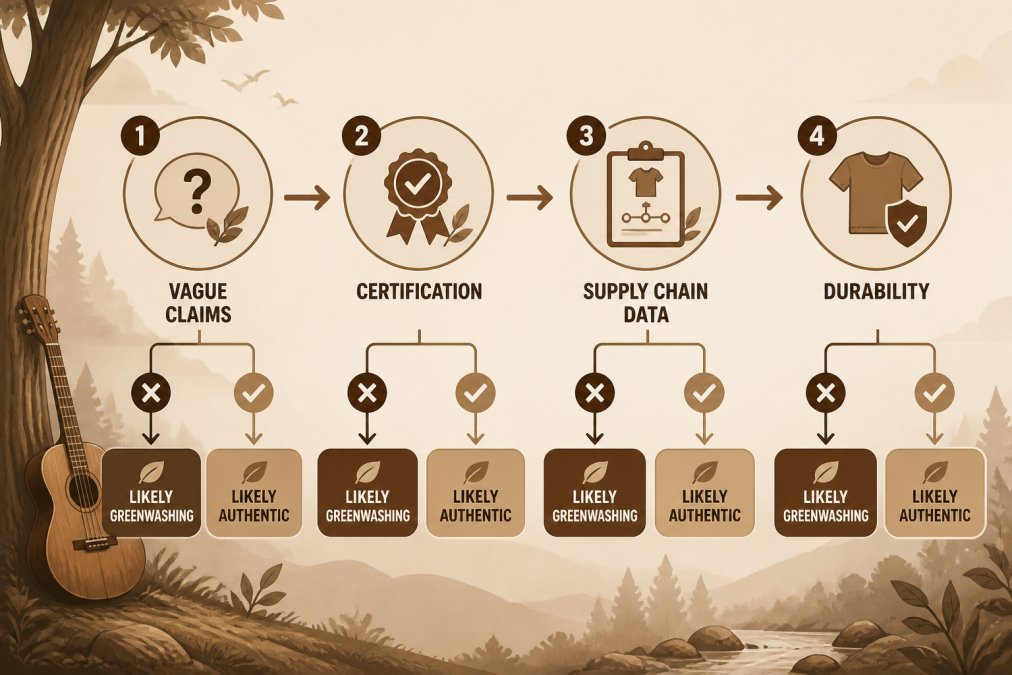
Greenwashing in fashion refers to marketing that exaggerates or fabricates environmental credentials without substantive action to back them up. It is the primary obstacle to identifying authentic sustainable clothing, and it takes predictable forms.
Vague language is the first red flag. Terms like "eco-friendly," "green," and "conscious" carry no legal definition and require no proof. Specific, measurable claims such as "100% certified organic cotton" or "50% recycled polyester with traceable sourcing" indicate a brand that can back its statements. Look for concrete data about water usage, carbon footprint, and waste reduction rather than emotional appeals to nature.
Step 4: Demand Supply Chain Transparency
Supply chain transparency is the ultimate test of a brand's commitment. It is easy to claim sustainability when you control the marketing; it is much harder to prove it when you open your factories to public scrutiny. Authentic sustainable brands publish supplier lists, factory audit results, and environmental impact reports because they have nothing to hide. But how do you actually verify this information? This is where a 'detective-style' approach separates real commitments from polished press releases.
The Digital Verification Toolkit
Most shoppers stop at reading a brand's 'Sustainability' page. To go deeper, you need to use the same tools that investigative journalists and industry auditors use. This is a content gap most guides miss, but it is the most effective way to verify claims in real-time.
1. Check the Corporate Registry. In the United States, every registered business has a public filing with the state where it is incorporated. Look up the brand's legal name on the Secretary of State's website for that state. This will tell you who the registered agent is, when the company was founded, and whether it is a public or private entity. A brand that cannot be found in a corporate registry is a red flag.
2. Search the EPA's Enforcement and Compliance Database. The Environmental Protection Agency (EPA) maintains a public database of facilities that have violated environmental regulations. If a brand claims to be sustainable but its manufacturing partners appear on this list, that claim is suspect. You can search by company name or location to see if any of the brand's known suppliers have a history of environmental non-compliance.
3. Use the Department of Labor's ILAB List. The U.S. Department of Labor's Bureau of International Labor Affairs (ILAB) publishes a list of goods produced by child labor or forced labor. While this list is country and product specific, cross-referencing a brand's sourcing countries against this list can highlight potential risks in their supply chain. A brand that sources cotton from a region on this list without a robust traceability program is a concern.
4. Look for a Published Supplier List. The most transparent brands publish a full list of their Tier 1 (cut-and-sew) and sometimes Tier 2 (fabric mills) suppliers on their website. If a brand does not publish this list, ask for it directly via email. A genuine commitment to transparency means they will provide it. If they refuse, that is a definitive answer.
What to Look For in an Impact Report
If a brand publishes an annual environmental or social impact report, do not just read the summary. Look for specific, measurable data points:
- Absolute emissions numbers (e.g., metric tons of CO2e) rather than just 'carbon neutral' claims.
- Water usage data in liters per garment or per facility.
- Waste diversion rates (percentage of waste recycled vs. sent to landfill).
- Audit results from third-party organizations like SEDEX or BSCI, which should show corrective action plans, not just pass/fail scores.
The FTC Green Guides as Your Legal Backstop
The Federal Trade Commission's Green Guides are the legal framework that defines what constitutes misleading environmental marketing claims in the United States. While the FTC does not pre-approve ads, it can and does take enforcement action against brands that make deceptive claims. Familiarizing yourself with the core principles of the Green Guides, such as the requirement that qualifications be clear and prominent, and that general claims like 'eco-friendly' be substantiated, gives you a legal baseline for what 'authentic' means. If a brand's claim would not survive an FTC review, it is not authentic.
Step 5: Evaluate Durability and Care
Garment longevity is the most overlooked factor in sustainable clothing. A piece that lasts five years has a fraction of the environmental impact of three cheaper alternatives bought in the same period. Sustainable clothing is designed for repeated wear, with quality stitching, substantial fabric weight, and timeless styling that resists seasonal trends.
Post-purchase care extends this lifespan further. Washing in cold water, air drying, and repairing minor damage rather than replacing garments dramatically reduces textile waste. Some brands offer repair programs or care guidance that reflects genuine investment in product longevity. This consideration matters because textile waste remains a significant environmental problem, and extending garment life is one of the most effective ways consumers can reduce their personal impact.
Your Checklist for Sustainable Clothing
Use this checklist when evaluating any new purchase to quickly separate authentic sustainable clothing from greenwashed alternatives.
| Checkpoint | What to Look For | Red Flag |
|---|---|---|
| Fabric content | Certified organic or recycled materials | Vague "eco" language |
| Third-party certification | GOTS, Fair Trade, Bluesign named specifically | Self-created "green" seals |
| Supply chain data | Named suppliers, audit results, impact reports | No supplier information |
| Durability | Quality stitching, substantial fabric weight | Ultra-thin, trend-driven pieces |
| Care requirements | Cold wash, air dry, repair guidance | Dry clean only, disposable design |
Budget-friendly sustainable shopping is possible through secondhand markets, which extend garment life without new production. The secondhand paradox is real: buying used clothing avoids the environmental cost of manufacturing entirely, making it arguably more sustainable than purchasing new certified pieces.
Conclusion
Identifying authentic sustainable clothing requires shifting from trusting brand stories to verifying material composition, third-party certifications, supply chain transparency, and durability. This detective work protects both personal values and financial investment while supporting brands that genuinely practice ethical manufacturing and environmental responsibility.
For those seeking apparel that aligns with conscious consumption without compromising on style or values, RastaHippies.com offers handcrafted designs rooted in peace, freedom, and nature. Each piece reflects a commitment to original art and positive energy while supporting charitable foundations dedicated to ocean and environmental conservation. Get started with RastaHippies.com and wear clothing that expresses individual truth through verified sustainable practices.
Frequently Asked Questions
What is the 3-3-3 rule for clothes?
The 3-3-3 rule is a shopping pause: wait 3 days before buying, ask if you can style it 3 ways, and check if it will last 3 years. This filters impulse purchases and pushes you toward durable, versatile pieces. For sustainable clothing, the rule helps you avoid buying items that end up in textile waste after a few wears.
How can I spot greenwashing in fashion marketing?
Look for vague claims like 'eco-friendly' or 'conscious' without proof. Authentic brands name specific third-party certifications, publish factory lists, and share data on water usage or carbon footprint. If a brand shows a green leaf logo but no certification name, treat it as marketing, not evidence.
What are the most reliable third-party certifications for sustainable clothing?
The Global Organic Textile Standard (GOTS) verifies organic fiber content and ethical manufacturing.
How is recycled cotton different from organic cotton?
Organic cotton is grown without synthetic pesticides or fertilizers, which protects soil and water. Recycled cotton comes from post-industrial or post-consumer waste, reducing landfill and the need for new fiber production. Recycled cotton can be shorter and weaker, so brands often blend it with virgin fibers for durability.