 how-to
How to Support Ocean Conservation Daily
Table of Contents
- Why Daily Ocean Conservation Matters
- How to Reduce Plastic Pollution in Your Daily Routine
- Ocean-Friendly Habits at Home You Can Start Today
- Choosing Sustainable Seafood and Ocean-Conscious Products
- Marine Conservation Organizations Worth Your Support
- Ocean Conservation Volunteer Opportunities Near You
- Measuring Your Impact and Staying Accountable
- Conclusion
- Frequently Asked Questions
Last Updated: October 21, 2026
Why Daily Ocean Conservation Matters
Ocean conservation daily happens in your home, at the grocery store, and in the choices you make every day. The ocean covers 71% of Earth and supports billions of people.
You don't need to move to a coastal town or become a marine biologist.
You don't need to be perfect, just consistent. Start with one habit, master it, then add another. That works better than overhauling your entire life at once.
According to the National Oceanic and Atmospheric Administration's marine conservation data, individual actions collectively drive measurable change in ocean health.
How to Reduce Plastic Pollution in Your Daily Routine
Plastic pollution is the ocean's biggest visible threat. Single-use plastics harm marine wildlife and break down into microplastics that enter food chains. Reducing them is one of the fastest ways to support ocean conservation daily.
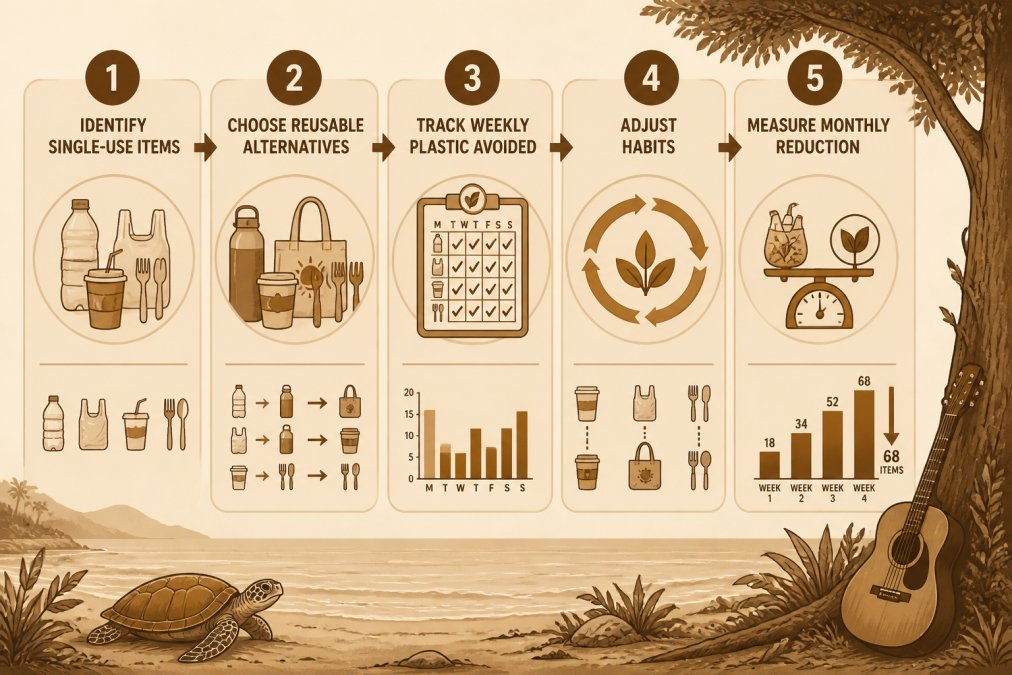
Here's a practical five-step approach:
-
Identify your single-use plastics. For one week, write down every plastic item you throw away. Most people use 15-20 single-use items per week without thinking about it.
-
Choose reusable alternatives. For each item on your list, find a reusable version. Reusable water bottles replace plastic bottles. Cloth bags replace plastic bags. Glass containers replace plastic wrap.
-
Make the switch gradually. Don't buy everything at once. Replace items as they wear out. This saves money and feels less overwhelming.
-
Track what you've avoided. Keep a simple count of single-use plastics you didn't use this week. Seeing the number grow is motivating.
-
Adjust and repeat. After a month, keep the habits that stuck and try new ones for the items that didn't change.
Common reusable swaps include:
- Reusable water bottles instead of plastic bottles
- Cloth shopping bags instead of plastic bags
- Glass food containers instead of plastic wrap
- Reusable coffee cups instead of disposable cups
- Metal straws instead of plastic straws
Ocean-Friendly Habits at Home You Can Start Today
Your home is where most daily choices happen. Ocean-friendly habits at home reduce pollution that reaches the ocean and save money at the same time.
In the kitchen:
- Buy loose produce instead of pre-packaged items
- Choose products in glass or metal containers
- Compost food scraps instead of throwing them away
- Use natural cleaning products that won't harm marine life when they reach waterways
In the bathroom:
- Choose reef-safe sunscreen (avoid oxybenzone and octinoxate, which damage coral)
- Use bar soap instead of liquid soap in plastic bottles
- Reduce water use during showers
- Avoid microbeads in face wash and toothpaste
In the laundry:
- Use natural, biodegradable detergents
- Wash full loads only
- Air-dry clothes when possible
Around the house:
- Reduce energy consumption to lower your carbon footprint
- Support renewable energy if available in your area
- Choose sustainable materials for new purchases
These habits address multiple problems at once: less water saves resources, natural products keep toxic chemicals out of waterways, and reduced energy use lowers the emissions driving ocean warming.
Choosing Sustainable Seafood and Ocean-Conscious Products
The seafood you eat directly affects marine ecosystems. Some fishing methods damage ocean habitats and deplete fish populations.
How to identify sustainable seafood:
Look for third-party certifications. The most recognized is the Marine Stewardship Council (MSC) label for responsibly managed fisheries; the Aquaculture Stewardship Council (ASC) certifies farmed fish.
When shopping, ask your fishmonger or grocer where the seafood comes from and how it was caught. Responsible vendors can answer these questions. If they can't, that's a red flag.
Seafood choices that support ocean conservation:
- Wild-caught Alaskan salmon (well-managed fishery)
- Farmed mussels and oysters (low environmental impact)
- Pole-caught tuna (avoids bycatch)
- Sustainably farmed trout
Avoid or limit:
- Imported shrimp (often caught with destructive methods)
- Atlantic cod and haddock (overfished)
- Bluefin tuna (severely depleted)
- Shark (slow to reproduce)
Beyond seafood, choose other ocean-conscious products. Look for companies that support marine conservation.
Marine Conservation Organizations Worth Your Support
Supporting established marine conservation organizations amplifies your impact, but choosing where to give, and how to engage beyond writing a check, requires homework. Here's how to verify groups, get involved in policy, and evaluate campaigns.
How to verify a conservation organization: Before donating, look for these indicators of credibility:
- Transparency: The organization publishes annual reports, audited financials, and clear breakdowns of how donations are used. Charity watchdogs like Charity Navigator and GuideStar provide independent ratings.
- Specific goals: Effective groups state measurable objectives (e.g., acres restored, pounds of debris removed, policies changed) rather than vague promises.
- Community involvement: Organizations that work with coastal communities and local stakeholders tend to have more durable results.
- Accountability: Look for a board of directors, clear leadership bios, and a way to contact the organization with questions.
Policy and civic engagement: Personal habits matter, but systemic change often requires policy action. Here's how to engage:
- Contact your representatives: Use official House and Senate websites to find your members of Congress. Write or call to support marine debris legislation, sustainable fisheries management, and ocean funding.
- Support effective policies: Learn about key laws like the Marine Debris Act and the Magnuson-Stevens Fishery Conservation and Management Act. Advocate for strong implementation and funding.
- Evaluate conservation campaigns: When a campaign asks for your support, check its specific ask, track record, and endorsements. Legitimate campaigns provide clear information and welcome questions.
- Attend public meetings: Local coastal zone management meetings and fisheries council meetings are open to the public and often accept comment.
Organizations making a difference: While this guide does not endorse specific groups, reputable organizations fall into these categories:
- Groups reducing plastic pollution and cleaning coastal areas
- Organizations protecting specific marine species and habitats
- Foundations supporting sustainable fishing and coastal communities
- Research institutions studying ocean health and climate impacts
Many offer monthly giving programs that provide steady funding for long-term projects.
Rasta Hippies supports marine conservation by partnering with organizations like the Rob Machado Foundation and Kōkua Hawaiʻi Foundation, which focus on protecting ocean ecosystems and supporting coastal communities. When you purchase from brands committed to ocean conservation, you're funding this work directly.
Ocean Conservation Volunteer Opportunities Near You
Volunteering connects you directly to ocean conservation work and builds community with others who care about marine ecosystems. You don't need special training, just the know-how to participate responsibly and find options that fit your schedule, budget, and location.
Beach and coastal cleanups: These are the most accessible volunteer opportunities. Groups organize regular cleanup events where volunteers remove litter from beaches and coastal areas. Most cleanups take 2-3 hours. To find cleanups near you:
- Search online for "beach cleanup [your area]"
- Check local environmental nonprofits' websites
- Ask at your city's parks and recreation department
- Join local environmental groups on social media
Before you go, know the safety basics:
- Wear closed-toe shoes and gloves (most cleanups provide gloves).
- Never touch or approach wildlife, report injured animals to organizers or local authorities.
- Avoid sharp objects, medical waste, or unknown containers; flag them for trained staff.
- Stay off sensitive dunes and vegetation; stick to marked paths.
- Bring water in a reusable bottle and wear reef-safe sunscreen.
Accessibility and low-cost options: You don't need to live near the coast or be physically able to join a beach cleanup. Consider:
- Virtual volunteering: Many organizations need help with data entry, social media, translation, or research.
- Community cleanups: Litter in rivers, parks, and storm drains reaches the ocean. Join or organize a neighborhood cleanup, easier to access and equally impactful.
- Citizen science: Apps like Marine Debris Tracker (from NOAA) let you log litter data anywhere.
- Advocacy and education: Write letters, create materials, or staff a booth at a local event.
- Micro-volunteering: Some groups offer one-hour tasks from home, like signing petitions or sharing campaign posts.
Other volunteer opportunities:
- Habitat restoration: Plant native vegetation to protect coastal areas
- Education: Help teach others about marine conservation
- Data collection: Assist researchers monitoring ocean health
- Advocacy: Support policy campaigns protecting marine ecosystems
Many organizations train volunteers on-site, so you can start immediately. If you're unsure about a specific event, ask the organizer about accessibility, required gear, and what to expect. A good organizer will welcome questions and provide clear guidance.
Measuring Your Impact and Staying Accountable
Tracking your progress keeps you motivated and shows your daily actions matter. Simple tracking works best, no complicated metrics needed.
Track these actions monthly:
- Single-use plastics avoided (estimate based on your swaps)
- Seafood purchases made from sustainable sources
- Volunteer hours contributed
- Donations made to marine conservation
- Energy saved (lower utility bills indicate reduced consumption)
Use a simple spreadsheet or notes app to log actions and results, then review after three months to see what changed.
When you share your progress with friends, family, or social media, you normalize ocean conservation daily. People see that it's possible and start making changes themselves.
Stay accountable:
- Join a group working on the same goals
- Share your progress with a friend
- Set monthly targets and review them
- Celebrate wins, no matter how small
Supporting ocean conservation daily is a practice, not a destination. Some months you'll do more, some months less. The consistency matters more than perfection.
Conclusion
Supporting ocean conservation daily is simpler than most people think.
The ocean faces real challenges, pollution, warming, overfishing, habitat loss, but they exist because of daily human choices, and daily human choices can solve them too.
Your actions matter: reducing plastic prevents pollution, choosing sustainable seafood protects marine ecosystems, and volunteering or donating funds conservation work directly.
Rasta Hippies believes that supporting ocean conservation daily is part of living with intention and purpose.
Start today. Pick one action from this guide. Do it tomorrow. Then do it again the next day.
Frequently Asked Questions
What's the easiest way to start supporting ocean conservation daily?
Start with one action: swap single-use plastics for reusables. Carry a reusable water bottle, use cloth bags for shopping, and refuse plastic straws. This single habit reduces marine debris and plastic pollution that harms ocean habitats. Once this becomes automatic, add another action like choosing sustainable seafood or supporting a marine conservation organization.
How can I verify that an ocean conservation charity is legitimate?
Check if the organization publishes annual reports showing where donations go and what conservation work they fund. Look for third-party certifications like GuideStar or Charity Navigator ratings. Legitimate marine conservation organizations clearly explain how your money supports ocean health, habitat protection, and marine wildlife. Avoid groups that make vague claims without measurable outcomes.
How do everyday choices help protect the ocean?
Individual actions reduce ocean pollution, support sustainable industries, and fund conservation work. Choosing sustainable seafood reduces overfishing. Using reusable products cuts plastic pollution that suffocates marine wildlife. Supporting ocean-conscious brands funds habitat protection. When millions of people make these choices, they shift markets toward responsible consumption and reduce greenhouse gas emissions that damage ocean climate regulation.
What ocean conservation volunteer opportunities don't require living near the coast?
Many organizations accept remote volunteers for research, data entry, social media, and fundraising. Some host virtual beach cleanups or plastic-reduction campaigns. Local community groups often need help organizing awareness events or managing recycling programs. Check VolunteerMatch or contact marine conservation organizations directly about remote positions that support ocean habitats and coastal communities from anywhere.
| Action | Time Commitment | Frequency | Impact |
|---|---|---|---|
| Reduce single-use plastics | 10 minutes | Daily | Prevents ocean pollution |
| Choose sustainable seafood | 5 minutes | Per purchase | Protects marine ecosystems |
| Volunteer at beach cleanup | 2-3 hours | Monthly | Direct habitat restoration |
| Donate to conservation | 5 minutes | Monthly | Funds research and protection |
| Track your progress | 5 minutes | Monthly | Maintains accountability |