 ultimate-guide
Is Fast Fashion Really That Bad? A Balanced Look
Table of Contents
- What Fast Fashion Is and How It Works
- The Fast Fashion Environmental Impact You Should Know About
- Fast Fashion Labor Practices and Worker Conditions
- Quality, Durability, and the True Cost of Cheap Clothing
- How to Identify Fast Fashion Brands
- Sustainable Fashion Alternatives That Actually Work
- Is Fast Fashion Really That Bad? The Honest Answer
- Frequently Asked Questions
Last Updated: October 14, 2026
What Fast Fashion Is and How It Works
Fast fashion is a retail model that produces clothing rapidly in response to trends, prioritizing speed and low cost over durability and quality.
The supply chain moves fast: design, manufacturing, and distribution can happen in weeks from concept to shelf.
Brands rely on trend forecasting and rapid inventory turnover, producing large quantities of each design and accepting that unsold items sit in clearance bins.
The Fast Fashion Environmental Impact You Should Know About
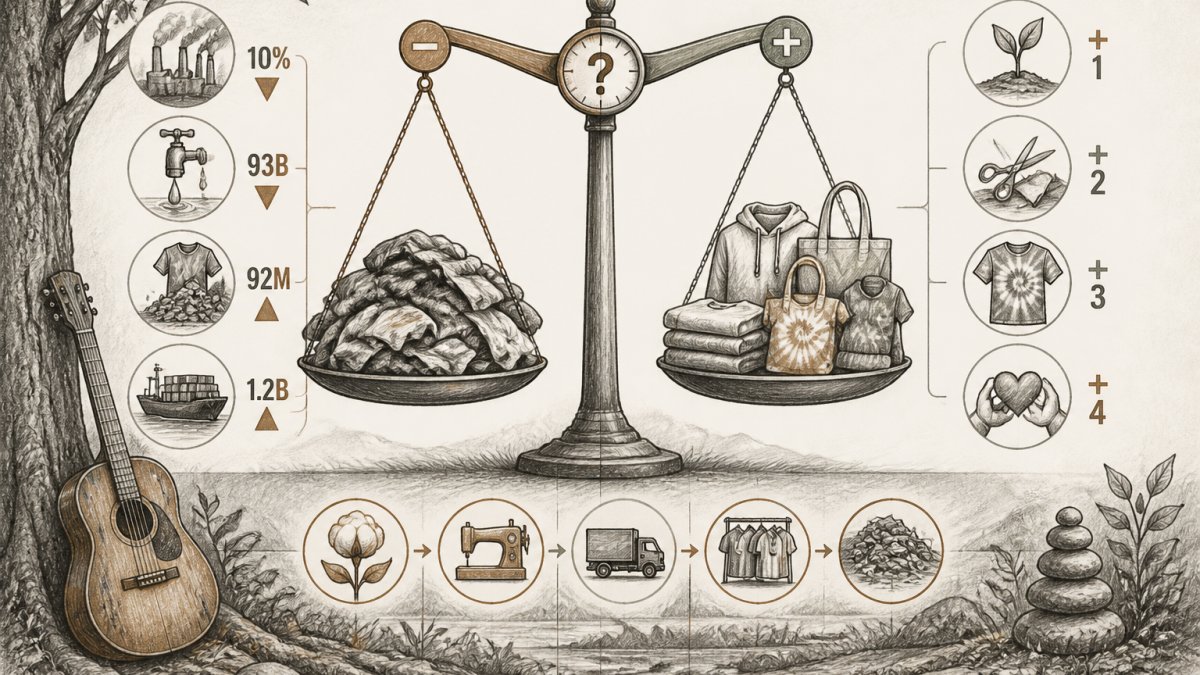
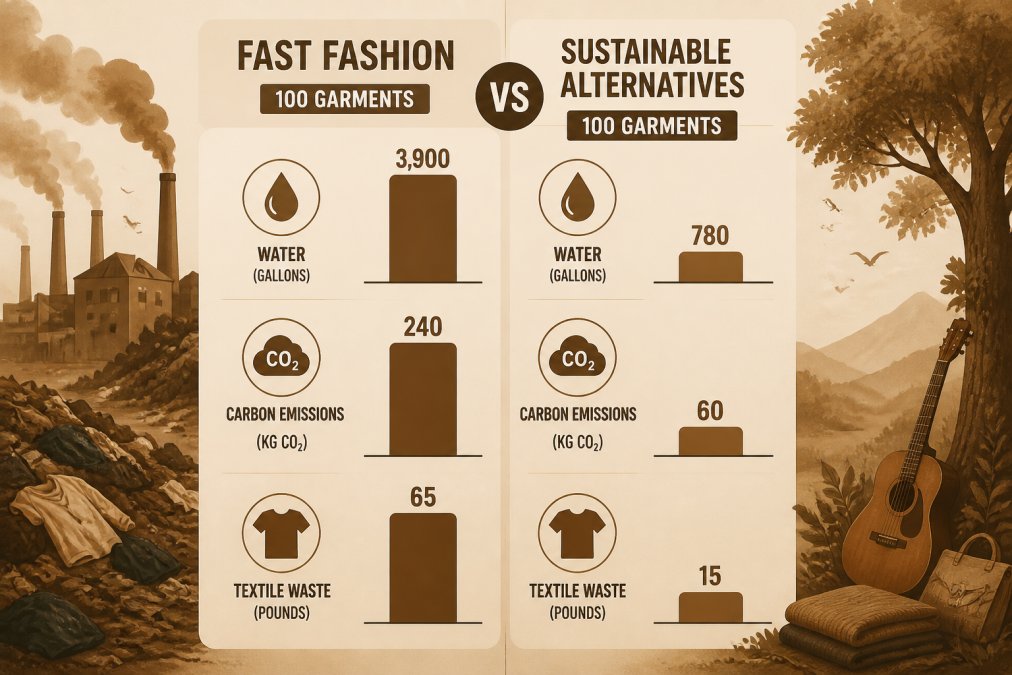
Fast fashion's environmental consequences span water consumption, carbon emissions, chemical pollution, and waste across the full production cycle, from raw material sourcing through disposal.
Water consumption and textile dyeing
Textile production is extraordinarily water-intensive: growing cotton, dyeing, and finishing all require massive quantities of water, and a single cotton t-shirt can require thousands of gallons.
Dyeing and finishing are particularly problematic: mills discharge contaminated water into rivers and groundwater, while heavy metals, azo dyes, and other toxic compounds persist in waterways and accumulate in soil.
Fast fashion accelerates this by increasing production volume: more garments mean more water consumed, dyes discharged, and chemicals released. Low prices leave little room for cleaner production technologies.
Carbon emissions and synthetic materials
Polyester and other synthetics dominate fast fashion because they're cheap and durable enough for short-term wear.
Cotton contributes its own carbon impact through pesticides, fertilizer, and machinery, and even organic cotton requires substantial resources.
Rapid turnover multiplies these impacts: a garment worn ten times generates more emissions per wear than one worn a hundred times, even if the latter consumed more resources in production.
Textile waste and landfill impact
Fast fashion accelerates discarding by making garments cheaper and more disposable. Clothing ends up in landfills where synthetics take decades to decompose, while natural fibers break down but release methane in anaerobic conditions.
Synthetics in landfills shed microfibers that leach into groundwater and persist for centuries; when incinerated, they release carbon and toxic compounds.
Fast Fashion Labor Practices and Worker Conditions
The speed and cost pressures of fast fashion create difficult conditions for garment workers, but the cause is structural rather than a few bad factories.
How the sourcing structure pushes risk downward
Most fast fashion brands don't own the factories sewing their clothes. They order from vendors who subcontract to smaller workshops, which may subcontract again to home-based sewers during peak season.
The brand controls price and deadlines but not working conditions, and the smallest subcontractor carries the most risk with the least capital. That's why a brand can pass an audit at its named factory while undisclosed subcontractors operate under very different conditions; traceability, not just auditing, is the missing piece.
What the pressure looks like on the floor
Common patterns documented across garment-producing regions include:
- Piece-rate pay that ties earnings to output, so a worker's income depends on speed rather than hours, and slow periods mean low pay.
- Excessive overtime during peak order cycles, sometimes mandatory, with workers sleeping near machines to meet deadlines.
- Chemical exposure in dyeing, finishing, and printing areas without adequate ventilation or protective equipment.
- Building and fire safety gaps, including locked exits, blocked stairwells, and overloaded electrical systems.
Women make up most of the garment workforce in producing regions and often face additional pressures around pregnancy, caregiving, and harassment that standard audits rarely capture.
Why transparency is the real test
A brand's labor claims are only as good as what it can trace. Meaningful disclosure typically includes:
- A published supplier list naming factories, not just countries.
- Subcontractor disclosure, since most labor violations occur below the first tier.
- Audit results that are public, including findings and remediation timelines, not just pass/fail summaries.
- Wage data showing whether workers earn a living wage, not merely the legal minimum.
- Grievance channels workers can use without retaliation.
Certifications like Fair Trade and SA8000 require independent verification but cover a small share of production. A brand publishing its factory list and remediation reports gives readers something checkable; one that only says it "cares about workers" does not.
The trade-off readers should weigh
Lower prices are not free. The gap between what a garment costs to make under safe, fairly paid conditions and its fast fashion retail price is closed somewhere, usually in labor. Not every inexpensive garment is made abusively, but price alone is not evidence of ethical production, and a very low price with no transparency is a signal worth noticing.
Quality, Durability, and the True Cost of Cheap Clothing
Fast fashion garments are engineered for short-term wear: the model depends on frequent replacement, so durability is not a priority in materials or construction. Knowing the mechanisms helps you judge a garment before buying.
What actually makes a garment wear out
Durability comes down to fiber, fabric construction, and sewing quality, and fast fashion cuts corners on all three:
- Fiber choice. Short-staple cotton and low-grade polyester blends pill, shed, and lose shape faster than long-staple cotton or higher-denier synthetics. Blends are often used to hit a price point rather than to improve performance.
- Fabric weight and knit density. Thinner knits and looser weaves tear and stretch out sooner. A lightweight jersey tee will not hold its shape the way a heavier one will.
- Seam construction. Single-stitched seams, minimal seam allowance, and low stitch density fail under stress. Overlocked or flat-felled seams with adequate allowance last longer.
- Dye fixation. Poorly fixed dyes fade and bleed, which is why some garments look worn after a few washes even when the fabric itself is intact.
None of this is visible in a product photo, which is why fast fashion marketing emphasizes trend and price over construction.
Cost per wear, done honestly
Cost per wear only works if you count the real number of wears a garment gets before it fails or stops being worn.
- A $15 shirt worn 12 times before the seams go costs about $1.25 per wear.
- A $50 shirt worn 100 times costs about $0.50 per wear.
- A $5 secondhand shirt worn 40 times costs about $0.13 per wear, and its production impact was already spent.
Cost per wear isn't purely financial: a garment worn 100 times spreads its production emissions and water use across more uses, lowering impact per wear, while one worn 12 times spreads the same impact across far fewer.
How to evaluate a garment before you buy
A few checks take seconds and reveal a lot:
- Read the fiber content tag. High percentages of a single quality fiber usually outperform vague blends.
- Hold it to the light. Very thin fabric will not last.
- Stretch a seam gently. If stitches gap or the seam puckers, it will fail.
- Check the hem and inside seams. Clean finishing signals care; loose threads and raw edges do not.
- Test the hardware. Zip it, button it, and check that elastic snaps back.
- Ask how many wears you realistically expect. If the answer is under ten, the price is not the bargain it looks like.
Care extends lifespan more than price does
Washing less often, using cold water, air-drying, and mending small failures early can meaningfully extend a garment's life. A cheap garment cared for well can outlast an expensive one treated carelessly, so consumers have more control over lifespan than the price tag suggests.
How to Identify Fast Fashion Brands
Marketing emphasizes newness and trend participation over quality or longevity, using social media and influencers to create urgency and FOMO.
Store layouts and online interfaces are built for browsing and impulse buying, with new arrivals prominent and recommendations pushing larger orders.
Brand positioning emphasizes affordability and accessibility over craftsmanship, focusing on trends and seasonal collections rather than quality, durability, or ethical production.
Sustainable Fashion Alternatives That Actually Work
Moving away from fast fashion doesn't require abandoning affordability or style. Practical alternatives exist at various price points and levels of commitment.
Shopping secondhand and vintage
Thrift stores, online resale platforms, and vintage shops offer quality garments at a fraction of original retail prices.
Quality varies, but many items are gently worn or unworn, vintage clothing often features superior construction, and secondhand shopping offers unique pieces unavailable in mass-market retail.
Online resale platforms have made secondhand shopping more accessible by authenticating items, handling shipping, and providing buyer protection, removing barriers that once made it inconvenient.
Slow fashion and ethical brands
Slow fashion brands prioritize quality, durability, and ethical production, producing smaller quantities with higher-quality materials and fair labor practices.
Ethical brands are transparent about sourcing, manufacturing locations, and labor practices, and certifications like Fair Trade, B Corp, and GOTS verify claims.
Many ethical brands share detailed information about materials, construction methods, and the workers behind each piece, and that transparency builds trust and justifies higher prices.
Building a capsule wardrobe
A capsule wardrobe consists of versatile, high-quality basics that mix and match across seasons, relying on classic neutral pieces instead of frequent trend-driven purchases.
Capsule wardrobes reduce decision fatigue and impulse purchases, and with fewer, higher-quality items each piece gets worn more often, increasing value per wear and extending garment lifespan.
Building one requires intentional selection and patience: buying fewer items, investing in quality, and focusing on personal style rather than seasonal trends.
Is Fast Fashion Really That Bad? The Honest Answer
So is fast fashion really that bad? Yes, it creates genuine environmental and social harms.
The picture is more nuanced than "fast fashion is simply bad," though.
The honest answer is that fast fashion's model, rapid production, low prices, constant new collections, disposable quality, creates systemic problems.
The choice to move away from fast fashion doesn't require abandoning style or budget consciousness.
Frequently Asked Questions
Is fast fashion really harmful to the environment?
Yes, fast fashion significantly harms the environment. The garment industry consumes enormous amounts of water for textile production and dyeing, generates greenhouse gas emissions from manufacturing and shipping, and creates massive textile waste that ends up in landfills. However, the impact varies by garment type, material, and how many times you wear it. A synthetic shirt worn 50 times has less impact per wear than a high-quality piece worn 200 times. The real issue is overproduction and overconsumption, buying more clothes than you need, regardless of the brand.
How can I tell whether a clothing brand is fast fashion?
Fast fashion brands typically release new collections weekly or monthly, offer extremely low prices, use synthetic materials, and have minimal transparency about their supply chain. Look for brands that lack certifications, don't disclose where or how garments are made, and prioritize trend-chasing over quality. Check if they publish sustainability reports or provide worker wage information. Brands that are upfront about sourcing, offer repair services, and focus on timeless designs rather than seasonal trends are usually moving away from fast fashion models.
What are the best alternatives to fast fashion?
Alternatives include buying secondhand or vintage clothing, which extends garment lifespans and reduces overproduction. Slow fashion brands prioritize quality, ethical labor practices, and transparent supply chains. Building a capsule wardrobe with fewer, versatile pieces you actually wear reduces waste. Repairing clothes instead of discarding them, swapping with friends, and choosing natural or recycled materials also help. The most sustainable option is wearing what you already own longer, buying less overall matters more than buying 'ethical' fast fashion.
Can fast fashion ever be sustainable?
True fast fashion cannot be sustainable because the business model depends on overproduction and overconsumption. However, some brands are shifting away from fast fashion practices by slowing production cycles, improving labor conditions, and using better materials. The issue is that 'sustainable fast fashion' is often greenwashing, marketing language without real change. Real sustainability requires fundamentally different practices: fewer collections per year, higher prices, smaller production volumes, and transparent supply chains. Brands making these changes are no longer fast fashion.