 blog
Which Reggae Rasta Brand Fits Your Vibe Better?
Last Updated: October 24, 2026
Quick Summary
Reggae Rasta Hawaii emphasizes handcrafted, small-batch original artwork with detailed cultural education and artist partnerships, while Rasta Empire offers a broader product catalog with licensed designs and higher-volume production. Choose the reggae rasta brand that aligns with your priorities: authentic craftsmanship and cultural depth versus convenience and variety.
- Reggae Rasta Hawaii features handcrafted pieces with original artwork and detailed product descriptions explaining Rastafari symbolism and history.
- Rasta Empire stocks a broader catalog with licensed and in-house designs, offering standard sizing and free shipping thresholds.
- Both retailers carry apparel, art, and accessories celebrating Bob Marley and island vibes, but differ in sourcing practices and cultural engagement.
- Reggae Rasta Hawaii offers 30-day returns with condition requirements, while Rasta Empire provides 14- to 30-day windows depending on items.
- Cultural authenticity matters: choose retailers that educate customers about Rastafari spirituality and reggae history rather than treating them as aesthetic trends.
Table of Contents
- What Sets These Reggae Rasta Retailers Apart
- Understanding Rastafari vs. Reggae in Retail
- Jawaiian Reggae History and Island Influence
- Handcrafted Reggae Art and Apparel Quality
- Reggae-Inspired Home Decor and Accessories
- Cultural Authenticity and Community Values
- Finding Your Perfect Reggae Rasta Shop
- Frequently Asked Questions
What Sets These Reggae Rasta Retailers Apart
When shopping for reggae rasta brand merchandise, retailers celebrate Jamaican culture, Rastafari spirituality, and island-inspired aesthetics through apparel, art, and accessories. Explore alternatives to one of the brands being compared to understand the broader market. They differ significantly in their approach to product selection, design philosophy, and community values.
The real question isn't which retailer exists, it's which reggae rasta brand aligns with your personal values and shopping priorities. Understanding these distinctions helps you choose the retailer that genuinely fits your vibe.
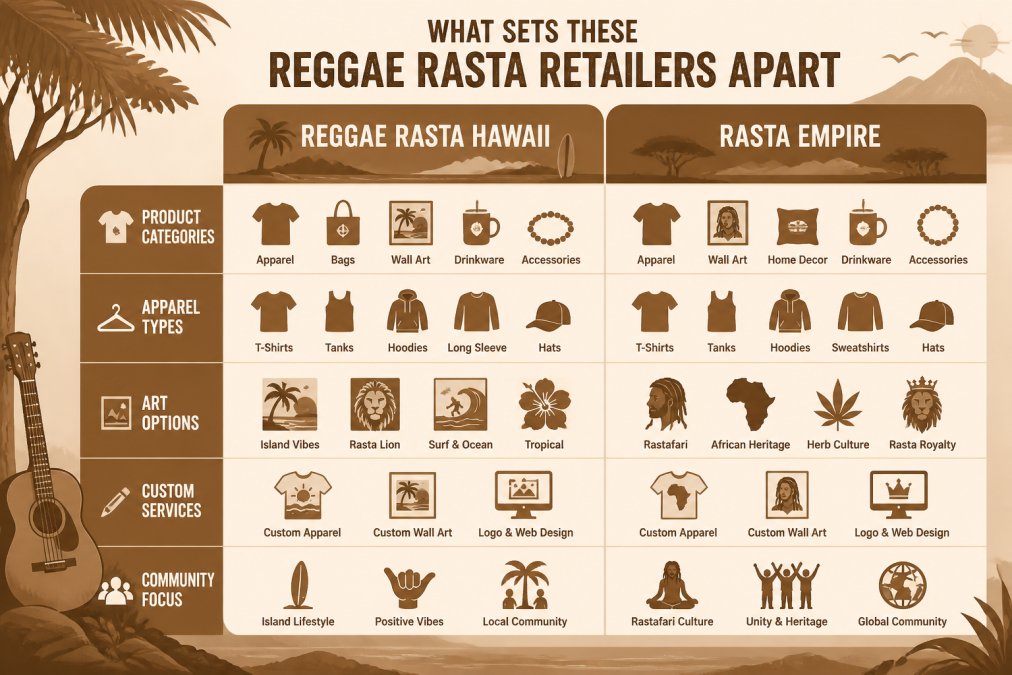
Both retailers stock T-shirts, dresses, and casual wear featuring reggae and Rastafari imagery. Both carry posters and wall art celebrating Bob Marley, island vibes, and positive vibrations. The difference lies in execution: sourcing practices, fabric quality, design originality, and how deeply each brand engages with the cultural roots they represent.
| Factor | Reggae Rasta Hawaii | Rasta Empire |
|---|---|---|
| Product range | Apparel, art prints, accessories, custom pieces | Apparel, posters, accessories, broader catalog |
| Design origin | Handcrafted, small-batch, original artwork | Licensed and in-house designs, higher volume |
| Sizing guidance | Detailed measurements per item; limited size chart | Standard size chart; fit reviews vary by product |
| Shipping policy | Flat-rate and expedited options; processing times listed | Free shipping thresholds; carrier options at checkout |
| Returns | 30-day window with condition requirements | 14- to 30-day window depending on item |
| Customer support | Email and contact form; response times not published | Email and chat; FAQ covers common issues |
| Cultural education | Product descriptions explain symbolism and history | Minimal cultural context on product pages |
| Community engagement | Artist highlights, charitable partnerships | Promotional focus, occasional giveaways |
Policies can change, so verify current terms before ordering. The key takeaway: match the retailer to your priorities.
Both retailers stock T-shirts, dresses, and casual wear featuring reggae and Rastafari imagery. Both carry posters and wall art celebrating Bob Marley, island vibes, and positive vibrations. The difference lies in execution: sourcing practices, fabric quality, design originality, and how deeply each brand engages with the cultural roots they represent.
Understanding Rastafari vs. Reggae in Retail
Rastafari and reggae are related but distinct concepts, and this matters when evaluating a reggae rasta brand. Rastafari is a spiritual movement rooted in African heritage, emphasizing unity, peace, and connection to nature. Reggae is the musical genre that emerged from Jamaica and became the voice of Rastafari philosophy.
In retail, many brands blur these boundaries. A true reggae rasta brand honors both the spiritual depth of Rastafari and the cultural authenticity of reggae music.
Some retailers treat reggae and Rastafari as aesthetic trends, cool imagery to slap on merchandise. Others approach them as living cultural expressions worthy of respect and accurate representation. When comparing retailers, ask yourself: Does this brand educate about the culture, or just sell the look? Does the design feel authentic, or does it feel appropriative?
According to cultural studies research on reggae's global influence, reggae music has shaped how Rastafari spirituality is understood worldwide. A reggae rasta brand that understands this connection will reflect it in their product descriptions, design choices, and community engagement.
Jawaiian Reggae History and Island Influence
Jawaiian reggae history represents a unique fusion: reggae music meeting Hawaiian island culture. This blend emerged in the 1980s when reggae rhythms encountered Hawaiian instrumentation and island sensibilities. The result is a distinct sound and aesthetic that celebrates both Jamaican roots and Pacific island identity.
For retailers like those in the reggae rasta brand space, Jawaiian influence matters because it expands beyond pure Jamaican imagery. It acknowledges that reggae and Rastafari have traveled globally and taken root in new places while maintaining their core values of peace, unity, and spiritual connection.
Jawaiian reggae history also reflects an important truth: cultural exchange works best when it's respectful and reciprocal. Brands that celebrate Jawaiian reggae history typically understand that reggae isn't owned by Jamaica, it's a global language. Yet they also respect its origins and don't strip away the spiritual and historical context.
When evaluating merchandise, notice whether designs acknowledge this history or simply borrow aesthetics. A retailer that features Jawaiian reggae history in their collections demonstrates deeper cultural literacy. They're not just selling island vibes; they're honoring how those vibes developed and what they mean.
Handcrafted Reggae Art and Apparel Quality
Quality separates casual retailers from serious ones. Handcrafted reggae art and apparel quality determines whether your purchase feels like a meaningful investment or a throwaway trend piece.
Handcrafted reggae art typically involves original design work, screen printing or hand-painting techniques, and attention to detail that mass production can't replicate.
Many fast-fashion retailers claim handcrafted status without delivering the quality. They use thin cotton, cheap inks, and mass-production methods while marketing items as artisanal. A genuine handcrafted reggae art and apparel quality standard includes:
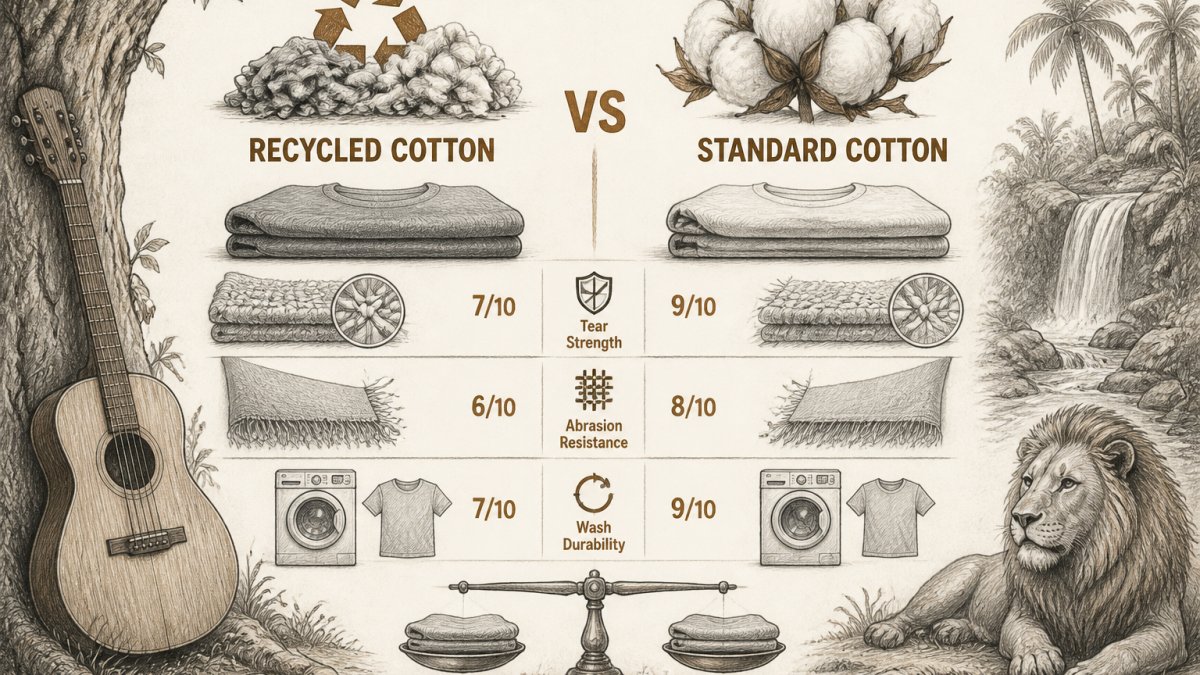
- Durable, breathable fabric (typically organic or sustainably sourced cotton)
- Printing techniques that withstand repeated washing
- Design originality rather than stock imagery
- Reasonable production runs that maintain exclusivity
- Fair wages for artists and manufacturers
sustainable apparel manufacturing standards outline best practices for quality and environmental responsibility. Retailers that meet these standards typically communicate their processes transparently.
Materials and construction: Look for 100% cotton or cotton-poly blends with a fabric weight of at least 5.5 oz (often listed as "heavyweight" or "midweight").
Sizing and fit: Sizing varies widely between retailers. Always consult the individual product's size chart, not the general brand chart, and read reviews that mention fit.
Durability checks: Examine product photos for stitching quality at seams and hems. Double-needle stitching lasts longer. Check customer reviews for mentions of fading, shrinking, or print peeling after washing.
You can evaluate handcrafted reggae art and apparel quality by examining product photos closely, reading material descriptions, and checking customer reviews for durability feedback.
Explore authentic rasta clothing online shops that prioritize quality and craftsmanship to understand what genuine handcrafted merchandise looks like.
Reggae-Inspired Home Decor and Accessories
Beyond apparel, reggae-inspired home decor and accessories complete the aesthetic for people serious about expressing their values. Posters, wall art, throw pillows, and decorative pieces allow you to extend reggae and Rastafari culture throughout your living space.
Reggae-inspired home decor ranges from Bob Marley portraits to abstract designs featuring Rastafari symbolism, island landscapes, and positive affirmations. Quality varies dramatically. Some pieces are mass-produced prints on cheap paper. Others are handcrafted prints, canvas art, or mixed-media pieces that serve as genuine artwork.
When shopping for reggae-inspired home decor and accessories, consider:
- Material quality: Canvas vs. paper, frame durability, ink permanence
- Design authenticity: Original artwork vs. licensed celebrity imagery
- Size and scale: Does it fit your space, or does it feel overwhelming?
- Cultural respect: Does the design celebrate or stereotype?
- Artist credit: Can you identify who created the work?
Many retailers offer customization options. This transforms reggae-inspired home decor and accessories from decoration into meaningful personal expression.
Discover handcrafted reggae inspired wall art options that bring authentic designs into your home.
Cultural Authenticity and Community Values
This is where reggae rasta brand choice becomes personal. Cultural authenticity and community values determine whether you're shopping with a retailer that genuinely cares about the culture or simply profits from it.
Authentic reggae rasta brands demonstrate their values through action:
- Transparent sourcing and manufacturing practices
- Education about Rastafari history and reggae music
- Charitable giving to causes aligned with reggae values (ocean conservation, social justice, community development)
- Diverse product range that celebrates multiple aspects of the culture
- Respectful representation without stereotyping or appropriation
Many retailers claim cultural authenticity without backing it up. They'll use Rastafari imagery liberally but never mention the spiritual movement's actual beliefs or history. They'll sell reggae merchandise without acknowledging reggae's role in social movements or its connection to Black liberation.
A retailer's community values show in how they engage with customers. Do they foster community discussion? Do they highlight artists and creators from the culture? Do they donate to causes that matter? Do they educate customers about what they're buying?
Learn more about Rasta Hippies' mission and values regarding reggae rasta and hippie culture, where you'll find how this brand unifies these traditions through art, music, and community.
Finding Your Perfect Reggae Rasta Shop
Choosing a retailer comes down to matching your priorities with their strengths. The best choice depends on what matters most to you.
Consider these decision points:
If you prioritize handcrafted quality and originality: Look for retailers that emphasize artisan partnerships, limited production runs, and design exclusivity. Check material descriptions carefully and read reviews specifically mentioning durability and print quality.
If you value cultural education: Choose retailers that explain the significance of imagery, acknowledge reggae and Rastafari history, and demonstrate respect for the culture beyond selling merchandise.
If community impact matters: Research each retailer's charitable partnerships and environmental commitments. Some donate to ocean conservation, social justice causes, or community development. Verify these claims through their website or social media.
If you want customization: Some retailers offer custom design services, allowing you to commission pieces that reflect your personal spiritual practice or artistic vision.
If you're budget-conscious: Compare product ranges, shipping costs, and return policies. Quality handcrafted pieces typically cost more than mass-produced alternatives, that's intentional and reflects the value you're receiving.
Shop The Collection to experience Rasta Hippies' reggae rasta merchandise firsthand, including apparel, art prints, and accessories celebrating the unity of reggae rasta and hippie culture.
Choosing a reggae rasta brand is more than a shopping decision, it's a statement about which values you support. The right choice aligns your purchases with your beliefs about cultural respect, quality, and community impact.
Frequently Asked Questions
What is the difference between reggae and Rastafari?
Reggae is a music genre and cultural movement born in Jamaica, characterized by its rhythm, lyrics celebrating peace and social justice, and connection to spiritual themes. Rastafari is a spiritual and cultural movement rooted in African heritage, emphasizing natural living, consciousness, and reverence for nature. While reggae music often expresses Rastafari values, they are distinct: reggae is art form, Rastafari is a way of life. Many reggae rasta brands blend both, using music-inspired designs to express deeper spiritual and cultural values.
How did reggae music become popular in Hawaii?
Reggae reached Hawaii through cultural exchange and the island's openness to global music and spiritual movements. The genre resonated with Hawaii's existing values of aloha, community, and connection to nature. This fusion created Jawaiian reggae, a unique blend of reggae rhythm with Hawaiian language, ukulele, and island instrumentation. Today, many reggae rasta retailers draw inspiration from this island-reggae heritage, creating apparel and art that celebrate both Jamaican roots and Hawaiian island culture, appealing to consumers who embrace both traditions.
How can I tell whether a reggae brand reflects Rastafari culture respectfully?
Respectful reggae rasta brands go beyond surface-level imagery. Look for retailers that educate customers about Rastafari history and values, donate to causes aligned with peace and environmental conservation, use authentic Rasta colors and symbolism with intention, and feature handcrafted or ethically sourced merchandise rather than mass-produced knockoffs. Authentic brands often highlight their community ties, support charitable foundations, and celebrate reggae history and Jamaican cultural roots. Ask yourself: does this brand honor the culture, or just sell the aesthetic?
What should I compare when choosing reggae-inspired art or merchandise?
Focus on material quality, design authenticity, artist credit and fair compensation, shipping and return policies, sizing and fit consistency, cultural accuracy, and the retailer's commitment to causes like ocean conservation or community support. Check whether apparel uses natural or recycled fabrics, whether art is handcrafted or mass-produced, and whether the retailer provides transparent information about their supply chain. Also consider customer reviews about durability and how items hold up after washing or extended use. The best choice aligns your values with the brand's mission and delivers quality that lasts.