 blog
Recycled Cotton vs Standard Cotton Durability
Table of Contents
- What Makes Recycled Cotton Different From Standard Cotton
- Recycled Cotton Durability: What the Fiber Loss Means
- Cotton Fabric Pilling and Shrinkage: Recycled vs Standard
- Durable Eco-Friendly T-Shirts for Everyday Wear
- Environmental Benefits and the Durability Trade-Off
- Making Your Choice: Which Cotton Works Best for You
- Frequently Asked Questions
Last Updated: October 13, 2026
What Makes Recycled Cotton Different From Standard Cotton
Recycled cotton and standard cotton look similar on the shelf, but their origins and performance characteristics diverge significantly, and understanding recycled cotton vs standard cotton durability is essential for making informed choices. Understanding these differences is essential for anyone making a durability-focused purchase decision.
Standard cotton comes from cotton plants grown in fields, harvested, and processed into virgin fiber for the first time. Recycled cotton, by contrast, starts as post-consumer waste, used garments, textile scraps, or pre-consumer manufacturing waste, that gets collected and reprocessed into new fiber.
This distinction matters because the recycling process fundamentally changes the fiber structure. When textiles are mechanically recycled, the existing cotton fibers are broken down and shortened. This is where the durability conversation begins.
How Recycled Cotton Is Made
The journey from worn-out garment to new fabric involves several steps. Most recycled cotton undergoes mechanical recycling, where used textiles are shredded and the fibers are separated. The machinery breaks down the existing cotton fiber into shorter lengths, a necessary consequence of the recycling process itself.
After shredding, the shorter fibers are cleaned, carded, and spun into new yarn. Some manufacturers blend these shorter fibers with virgin cotton or other materials to restore strength and workability. The blend ratio directly influences the final fabric's performance characteristics.
Chemical recycling exists as an alternative approach, though it's less common in the mainstream market. This method dissolves cotton fibers and regenerates them as new fiber, theoretically preserving more length. However, mechanical recycling remains the dominant process for most recycled cotton products available today.
Fiber Length and Strength: The Core Difference
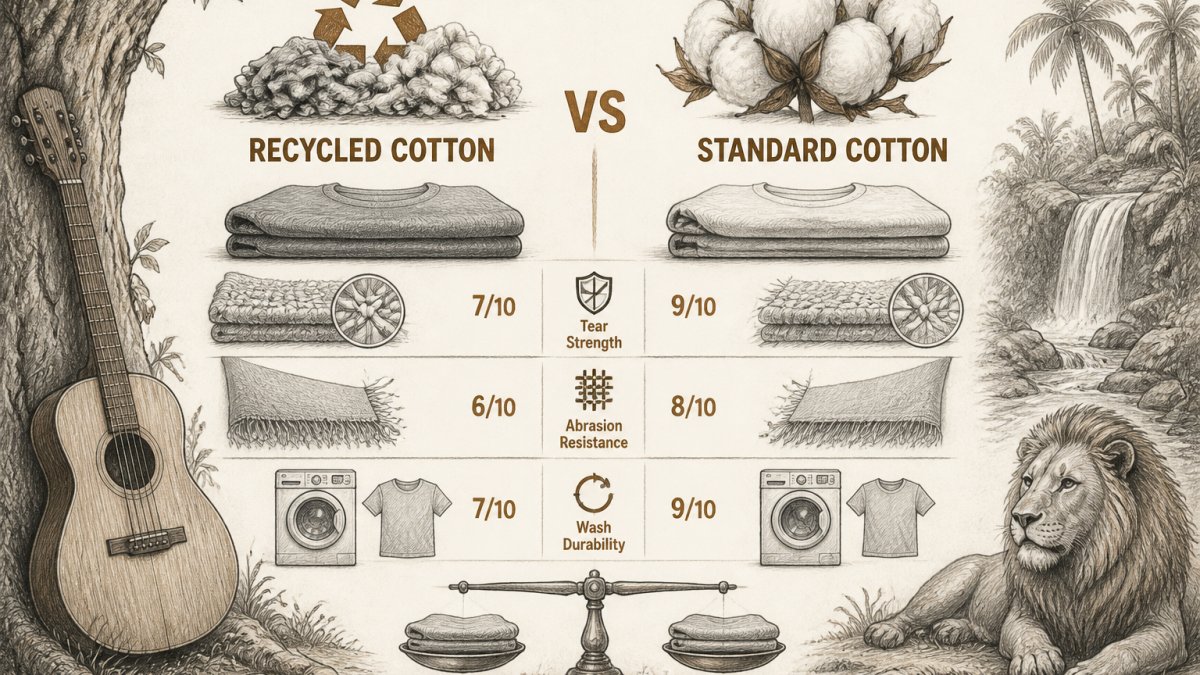
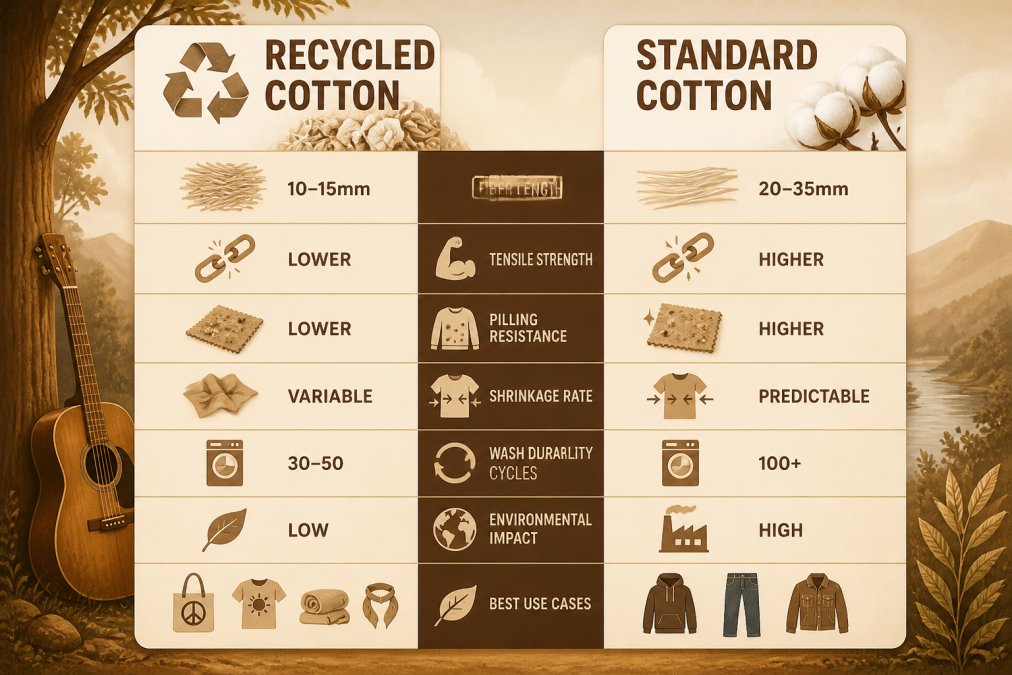
Fiber length is the primary physical difference between recycled and standard cotton. Virgin cotton fibers typically measure 20-35 millimeters in length. Recycled cotton fibers, after mechanical processing, generally measure 10-15 millimeters, roughly half the original length.
Shorter fibers create weaker yarn because there's less surface area for fibers to grip one another during spinning, which is why recycled cotton vs standard cotton durability shows measurable differences in tensile strength. This reduced fiber-to-fiber contact translates directly into lower tensile strength in the finished yarn and fabric. The relationship is straightforward: shorter fibers equal weaker yarn, which equals fabric that's more prone to tearing and breaking during use and washing.
This is not a minor detail, it's the foundational reason recycled cotton fabrics behave differently under stress than standard cotton alternatives.
Recycled Cotton Durability: What the Fiber Loss Means
The shorter fiber length in recycled cotton creates measurable durability challenges. Fabrics made from recycled cotton fibers typically show wear faster than comparable standard cotton garments when subjected to identical use and care conditions.
This doesn't mean recycled cotton is unusable or inherently poor quality. It means the durability profile is different, and consumers should understand what that difference entails before purchasing.
Mechanical Recycling and Fiber Shortening
Mechanical recycling is the process that shortens fibers, and it's worth understanding in detail because it explains why recycled cotton performs as it does.
When used garments or textile waste enter the recycling facility, they're fed into industrial shredders that tear the fabric apart. The machinery doesn't distinguish between fibers, it simply breaks apart the textile structure. Individual fibers get broken into shorter segments in the process. A fiber that was 25 millimeters long might emerge as three or four shorter pieces.
The shredding process is efficient and economical, which is why it dominates the recycled cotton industry. The trade-off is inevitable: shorter fibers. Once fibers are shortened, they cannot be lengthened again. This is a permanent characteristic of mechanically recycled cotton.
Some manufacturers attempt to compensate by adding virgin cotton or synthetic fibers to the blend, which we'll explore next.
How Blend Ratios Affect Durability
A 100% recycled cotton fabric will show durability limitations more noticeably than a blended alternative. Manufacturers often mix recycled fibers with virgin cotton or other materials to improve performance.
A 50/50 blend of recycled and virgin cotton offers a middle ground. The virgin fibers contribute longer fiber length and strength, while the recycled portion reduces environmental impact. The resulting fabric performs better than 100% recycled but typically not as well as 100% virgin cotton under identical conditions.
Higher virgin cotton percentages (70/30 or 80/20 blends) show durability characteristics much closer to standard cotton. The recycled content provides environmental benefits, while the virgin fibers maintain structural integrity.
Some manufacturers add synthetic fibers like polyester to recycled cotton blends. Polyester fibers are inherently strong and don't degrade the way natural fibers do.
Cotton Fabric Pilling and Shrinkage: Recycled vs Standard
Pilling occurs when loose fiber ends on the fabric surface ball up during wear and washing. This is a visible durability concern that affects appearance and perceived quality, even if the fabric remains structurally sound.
Recycled cotton is more prone to pilling than standard cotton because shorter fibers have less structural integrity. They're more likely to work loose from the yarn during normal wear and friction. The shorter the fiber, the more easily it can escape the yarn structure and form pills.
Why Recycled Cotton Pills More Easily
The mechanism is direct: shorter fibers grip less firmly within the yarn. During washing, tumbling, and everyday wear, especially in high-friction areas like underarms, inner thighs, and areas that rub against other garments, these loosened fibers ball up on the surface.
Standard cotton, with its longer fibers, maintains better structural cohesion. The fibers are more tightly bound within the yarn, so fewer escape to form pills. A garment made from virgin cotton typically remains pill-free for significantly longer than a comparable recycled cotton garment.
This is one of the most visible durability differences consumers notice. A pilled garment looks worn and tired, even if the fabric hasn't actually torn or lost strength. For many buyers, pilling is the first sign that a garment is degrading.
Shrinkage and Wash Durability Compared
Shrinkage patterns differ between recycled and standard cotton. Both types can shrink during washing, particularly in hot water, but the mechanism and extent vary.
Standard cotton shrinks due to the relaxation of tensions introduced during manufacturing. Proper pre-shrinking (sanforizing) during production can minimize this. Recycled cotton, because it's already been processed once, may have different shrinkage characteristics. Some recycled cotton fabrics show more unpredictable shrinkage because the fiber history is variable, different garments with different processing histories are mixed together.
Wash durability, how well a fabric holds up through repeated washing cycles, also favors standard cotton. The longer fibers maintain their integrity through more wash cycles before showing significant wear, fading, or loss of shape. Recycled cotton fabrics typically show visible wear after fewer washing cycles.
Durable Eco-Friendly T-Shirts for Everyday Wear
Choosing a durable eco-friendly t-shirt requires understanding what trade-offs exist. A truly durable garment made from recycled materials typically incorporates blending strategies and construction techniques that address the inherent fiber-length limitations.
What to Look for in Recycled Cotton Blends
When evaluating recycled cotton apparel, examine the fiber composition first. A blend with at least 50% virgin cotton or other high-integrity fibers will perform noticeably better than 100% recycled alternatives.
Weight matters as well. Heavier-weight recycled cotton fabrics (typically 200+ grams per square meter) perform better than lightweight versions because the denser structure provides more inherent strength. A heavier fabric can compensate partially for the shorter fiber length by offering more total material in the weave.
Construction technique also influences durability. Tightly woven fabrics resist pilling better than loosely woven ones. Ring-spun yarn (where fibers are twisted tightly around a core) creates stronger yarn than open-end spun yarn, even when the fibers are shorter. Look for garments that specify these construction details.
Brands that prioritize durability in recycled cotton products often use reinforced seams, double-stitching in high-stress areas, and quality finishing processes that seal the fiber ends and reduce pilling potential.
Care Practices That Extend Fabric Life
How a garment is cared for dramatically influences its lifespan, regardless of fiber type. For recycled cotton specifically, certain practices extend durability meaningfully.
Wash in cool water rather than hot. Heat accelerates fiber degradation and increases shrinkage risk. Cold-water washing reduces stress on shorter recycled fibers while still cleaning effectively.
Use gentle wash cycles. Aggressive agitation stresses fibers and accelerates pilling. A delicate or hand-wash cycle is gentler on recycled cotton than standard cycles.
Avoid high-heat drying. Air-drying or low-heat machine drying preserves fiber integrity. High heat can weaken already-compromised shorter fibers and increase shrinkage.
Wash garments inside-out to minimize surface friction that causes pilling. This simple practice significantly extends the pill-free lifespan of recycled cotton garments.
Reduce wash frequency when possible. Every wash cycle stresses fibers. Spot-cleaning and airing garments between wears extends their usable life.
Environmental Benefits and the Durability Trade-Off
Recycled cotton delivers genuine environmental advantages. Using post-consumer textile waste diverts material from landfills and reduces the demand for virgin cotton farming, which requires significant water, pesticide use, and land resources.
The environmental case for recycled cotton is compelling: it conserves water, reduces agricultural chemical inputs, and gives existing fibers a second life rather than generating new ones from scratch.
However, this environmental benefit exists in tension with durability. A garment that pills after 20 wears and is discarded has a shorter useful life than a standard cotton garment worn for 100 wears.
The most environmentally responsible choice isn't necessarily the most recycled product. It's the most durable product that will be worn longest before disposal. A blended recycled-and-virgin cotton garment that lasts significantly longer than 100% recycled alternative may represent a better environmental outcome overall.
Making Your Choice: Which Cotton Works Best for You
The decision between recycled and standard cotton depends on priorities and intended use. Neither option is universally superior, they're suited to different situations.
Standard cotton delivers maximum durability. If longevity is the primary concern, if the garment will see heavy wear or frequent washing, or if the purchase price justifies expecting years of use, standard cotton is the logical choice.
Recycled cotton makes sense when environmental impact is a priority, when the garment will see light-to-moderate use, or when cost considerations favor it.
Consider the garment's intended purpose. A work shirt or athletic wear that will endure heavy stress is better served by standard cotton or a high-virgin-content blend.
Budget also factors in.
The durability difference between recycled and standard cotton is real and measurable, but it's not a reason to dismiss recycled cotton entirely.
For those seeking apparel that aligns with environmental values without sacrificing durability, blended recycled cotton offers a practical solution.
Frequently Asked Questions
Does recycled cotton last as long as standard cotton?
Recycled cotton typically has shorter fiber length due to the mechanical recycling process, which can affect durability compared to standard cotton. However, durability depends heavily on blend ratio, recycled cotton blended with virgin cotton or other fibers can perform nearly as well as standard cotton for everyday wear. Fabric quality, care practices, and intended use matter as much as fiber type. A 50/50 recycled-virgin blend often balances durability with environmental impact.
What affects the durability of recycled cotton fabric?
Several factors influence recycled cotton durability: fiber length (shorter fibers weaken yarn), blend ratio (higher recycled percentages reduce strength), yarn quality, fabric weave type, and care practices. Woven fabrics generally resist pilling better than knits. Recycled cotton blended with polyester or other synthetic fibers can improve tensile strength and wear resistance. Washing in cold water, avoiding high heat drying, and limiting agitation extends fabric lifespan for any cotton product.
Does recycled cotton shrink or pill more easily than standard cotton?
Recycled cotton can be more prone to pilling than standard cotton because shorter fibers are less stable in the yarn structure. Shrinkage depends on fabric construction and finishing, both recycled and standard cotton shrink similarly if not preshrunk. High-quality recycled cotton blends with adequate fiber length and proper finishing resist both pilling and excessive shrinkage. Knitted recycled cotton is more susceptible to pilling than woven recycled cotton. Gentle washing and low-heat drying minimize both issues.
Can recycled cotton be used for durable everyday T-shirts?
Yes, recycled cotton works well for everyday T-shirts when blended with virgin cotton or synthetic fibers. A blend of 50% recycled cotton and 50% virgin cotton, or recycled cotton mixed with polyester, delivers better durability and shape retention than 100% recycled cotton. Look for fabric weight, yarn quality, and construction details, heavier knits with tighter weaves perform better. Proper care, including cold-water washing and air drying, extends the life of recycled cotton T-shirts significantly.