 ultimate-guide
What Makes Clothing Truly Sustainable: 2026 Guide
Table of Contents
- The Core Pillars of Truly Sustainable Clothing
- How to Identify Greenwashing in Fashion
- Why Sustainable Fashion Costs More
- How to Build a Sustainable Capsule Wardrobe
- The Role of Durability and Garment Longevity
- End-of-Life: Disposal and Circular Economy
- Frequently Asked Questions
Last Updated: September 17, 2026
The Core Pillars of Truly Sustainable Clothing
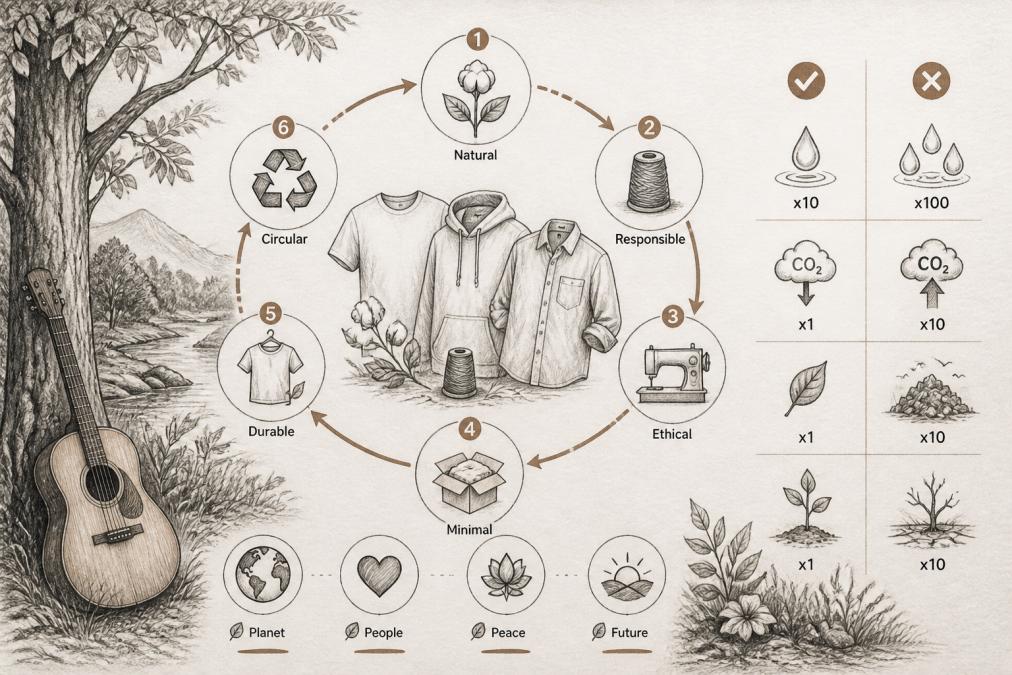
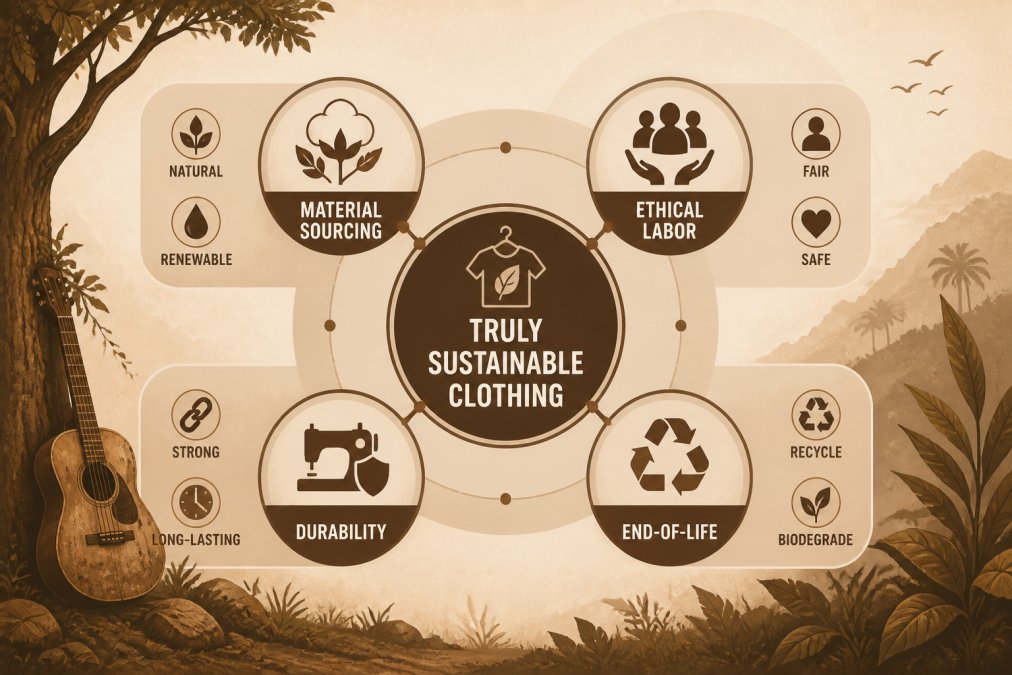
Truly sustainable clothing is apparel designed, produced, and managed so its environmental and human impact stays as low as possible across its entire lifecycle. This guide from Rasta Hippies breaks down what makes clothing truly sustainable, from fiber choice to final disposal. Four pillars hold the whole thing up: material sourcing, ethical labor, durability, and end-of-life planning. Miss one and the garment is only partly sustainable, no matter what the label claims.
Material Sourcing and Natural Fibers
Fiber choice is the first filter. Organic cotton, hemp, linen, and kapok grow with far less water and fewer chemical inputs than conventional cotton, while recycled polyester keeps plastic out of landfills. Low-impact dyes and non-toxic processes matter too, since dyeing is one of the most chemically intensive steps in garment production. Deadstock fabrics, the surplus rolls mills already produced, give designers a way to work without demanding new raw material. A common mistake is assuming "natural" automatically means sustainable. Conventionally grown cotton is a natural fiber with a heavy pesticide footprint, so the growing method counts as much as the plant itself.
Ethical Labor and Fair Wages
A garment is not sustainable if the people who made it were exploited. Ethical labor practices mean fair wages, safe working conditions, and verified factory audits, not just a promise on a hangtag. Fair trade certification gives shoppers a third-party signal that workers were paid and treated according to an independent standard. Supply chain transparency is the mechanism that makes this checkable: brands that publish their factory lists let customers confirm who actually made the clothing. Without that visibility, ethical claims stay unverifiable.
How to Identify Greenwashing in Fashion
Greenwashing is marketing that makes a brand look environmentally responsible without the practices to back it up. The FTC Green Guides set the legal baseline: environmental claims must be specific, substantiated, and not misleading. A brand that says "eco-friendly" without defining what that means is already on shaky ground.
A practical screening checklist:
- Does the brand name a specific certification, or just use words like "natural" and "conscious"?
- Can the brand show where its materials come from?
- Is there any information about factory conditions or wages?
- Does the sustainability claim cover the whole garment, or just one small part?
- Is there a care or repair program, or does the brand push constant new purchases?
Beyond the checklist, know the certifications that actually mean something. USDA Organic certifies cotton grown without synthetic pesticides. GOTS (Global Organic Textile Standard) covers the entire supply chain from harvest to finished garment, including social criteria. Fair Trade Certified verifies wages and working conditions. Bluesign focuses on chemical safety in textile production. A brand that names one of these is giving you something checkable. A brand that invents its own in-house "green standard" is not.
Watch for these specific greenwashing patterns:
- The single-attribute distraction. A shirt labeled "made with organic cotton" where the cotton is 5% of the fabric blend. The claim is technically true but functionally meaningless.
- The future promise. "By 2030, all our packaging will be recyclable." That is a goal, not a current practice.
- The nature imagery swap. Leafy forests and ocean waves in the marketing, zero documentation in the supply chain.
- The offset reliance. Carbon offsets can be part of a strategy, but they do not make a garment sustainable if the underlying production is unchanged.
The FTC Green Guides require claims to be specific and substantiated rather than broad and unqualified. When a brand leans on imagery of nature instead of documentation, that is the signal to slow down.
A useful habit: before buying, spend two minutes on the brand's website looking for a sustainability page that links to third-party verification. If the page exists but only contains aspirational language and no certificates, you have your answer.
Why Sustainable Fashion Costs More
Sustainable fashion costs more because the savings in fast fashion come from somewhere: underpaid labor, cheap synthetic fibers, and volume that assumes the garment will be worn briefly and thrown away. Paying fair wages, sourcing certified organic or recycled materials, and running smaller production batches all raise the real cost per item.
The economics are straightforward once you break them down. A conventional t-shirt might retail for $8 because the cotton was grown with subsidized pesticides, the worker who sewed it earned a fraction of a living wage, and the factory externalized water pollution and carbon emissions onto the public. A sustainable version of that same shirt might cost $35 because the organic cotton was grown without synthetic inputs, the worker was paid a verifiable wage, and the dyeing process used non-toxic methods that cost more to run. The $27 difference is not a premium for a label. It is the cost that was always there, just hidden.
Cost-per-wear makes this concrete. Divide the purchase price by the number of times you wear the item. A $35 shirt worn 100 times costs $0.35 per wear. An $8 shirt worn 15 times before it pills, fades, or loses shape costs $0.53 per wear. The cheaper shirt is more expensive per use. This math holds across categories: a $200 pair of well-made boots resoled twice over ten years beats four $60 pairs that each last two years.
There is no way around the trade-off, and that is the honest answer to the question every conscious shopper asks. Fast fashion keeps prices low by externalizing environmental and human costs onto workers, waterways, and landfills. Sustainable brands price those costs back in. Synthetic fibers made from crude oil derivatives are cheap to produce, which is exactly why they dominate low-cost apparel, and why a garment built from organic cotton or hemp will always carry a higher sticker price.
Tariffs and trade policy also play a role. Imported apparel often enters the country under trade agreements that reduce duties, which keeps fast fashion prices artificially low. Domestic or ethically certified production may not benefit from the same breaks, adding to the retail price. That is a policy choice, not a quality difference.
The practical takeaway: compare cost per wear, not sticker price. A higher upfront cost on a durable, ethically made garment is usually the cheaper choice over time, and it is the only choice that does not push the true cost onto someone else.
How to Build a Sustainable Capsule Wardrobe
A sustainable capsule wardrobe is a small, curated set of versatile pieces that mix and match, chosen for durability and worn for years rather than seasons. The goal is fewer, better garments that earn their place.
Building one follows a simple sequence:
- Audit what you already own and note what you actually wear.
- Identify the gaps, the pieces that would unlock the most outfit combinations.
- Choose natural or recycled fibers and check the brand's transparency.
- Buy for fit and durability, not trend.
- Commit to care and repair so each piece lasts.
Slow fashion is the philosophy behind this: buying less, choosing well, and keeping garments in use.
The Role of Durability and Garment Longevity
Durability is where sustainability and cost savings meet. A garment worn for years spreads its environmental cost across far more wears than one discarded after a season. Garment longevity is one of the strongest levers a shopper controls, and it depends on both construction quality and how the item is cared for.
End-of-Life: Disposal and Circular Economy
The final pillar is what happens when a garment is finally worn out. Textile waste is one of the largest streams in municipal landfills, and the circular economy aims to close that loop through recycling, resale, and upcycling. Biodegradable materials like untreated hemp and linen break down more readily, while recycled polyester keeps existing plastic in use rather than adding new crude oil derivatives to the system.
Frequently Asked Questions
What are the core pillars of sustainable fashion?
Truly sustainable clothing rests on four pillars: material sourcing (using organic or recycled fibers), ethical labor (fair wages and safe conditions), durability (designing garments to last), and end-of-life planning (biodegradability or recycling). A brand that addresses only one pillar, like using organic cotton but paying unfair wages, is not fully sustainable. Look for transparency across all four areas.
How can I tell if a clothing brand is actually sustainable?
Check for third-party certifications like Fair Trade, GOTS (Global Organic Textile Standard), or B Corp. Look for specific supply chain transparency, not vague claims like 'eco-friendly.' A truly sustainable brand publishes its factory list, explains its materials, and acknowledges trade-offs. If a brand cannot answer basic questions about where its fabric comes from, that is a red flag for greenwashing.
Why is material sourcing critical for sustainable clothing?
Material sourcing determines a garment's environmental footprint before it is even made. Conventional cotton uses large amounts of water and pesticides, while synthetic fibers like polyester are made from crude oil derivatives and shed microplastics. Choosing organic cotton, hemp, linen, or recycled polyester reduces water usage, avoids toxic chemicals, and keeps textile waste out of landfills. The fiber choice is the single biggest factor in a garment's impact.
How does garment longevity impact environmental footprint?
The longer you wear a garment, the lower its cost-per-wear and the smaller its environmental impact. A shirt worn 100 times has one-tenth the footprint per wear of the same shirt worn 10 times. Durability comes from quality construction, proper care, and choosing timeless designs over fast fashion trends. Washing less often, air drying, and repairing small damages all extend garment life and reduce resource consumption.
What is the difference between ethical and sustainable fashion?
Ethical fashion focuses on people: fair wages, safe working conditions, and no child labor. Sustainable fashion focuses on the planet: reducing water usage, avoiding toxic dyes, and minimizing waste. The two overlap heavily. A garment made in a sweatshop from organic cotton is ethical failure but partial sustainability. Truly sustainable clothing must be both ethical and environmental, addressing labor practices and ecological impact together.