 listicle
Authentic Rasta Art: Where to Find Real Pieces
Table of Contents
- Where to Find Authentic Rasta Art Online
- Authentic Rasta Art Prints: What Sets Them Apart
- Handmade Rasta Tapestry: Understanding Textile Art
- Rastafarian Wall Art: Forms and Cultural Significance
- How to Choose Rasta Art: An Authenticity Checklist
- Supporting Rasta Artists: Fair Compensation and Direct Purchase
- Comparing Buying Channels: Marketplace vs. Direct
- Frequently Asked Questions
Last Updated: October 6, 2026
Where to Find Authentic Rasta Art Online
Finding authentic rasta art requires knowing where to look and what to verify. The marketplace for rasta-inspired pieces spans from independent artist platforms to curated galleries, each offering different guarantees of authenticity and cultural respect.
Rasta Hippies, an e-commerce and retail brand that unifies Reggae Rasta and Hippie cultures through original art, handcrafted merchandise, and custom design services, understands the importance of finding pieces that honor the heritage they represent. Whether you're seeking original paintings, handmade tapestries, or wood carvings, the platforms and strategies below help you navigate the landscape with confidence.
Etsy: Direct Access to Independent Artists
Etsy remains one of the most accessible platforms for discovering handmade rasta art and original artwork from independent creators.
What makes Etsy valuable for authentic rasta art is the direct connection to makers. Many sellers provide detailed artist backgrounds, showing their creative process and cultural context. You can filter by "handmade" and "custom" options, which narrows results to one-of-a-kind pieces rather than mass-produced prints.
The platform's review system and seller ratings offer transparency. Read buyer feedback carefully, particularly comments about print quality, material durability, and shipping care. Many independent artists on Etsy also offer personalized commissions, allowing you to request specific themes, color palettes, or cultural elements that resonate with your values.
Fine Art America: Multiple Format Options
Fine Art America curates rasta artwork from artists, offering paintings in styles including abstract, vintage, and watercolor.
This structure appeals to buyers hesitant about ordering original art online without seeing it in person first. The variety of styles, from contemporary digital art to traditional painted works, means you can find pieces matching different aesthetic preferences.
Fine Art America's collection structure lets you browse by artist, making it easier to discover and follow creators whose work aligns with your taste. If you find an artist you love, you can explore their full catalog and support their work across multiple purchases.
ElephantStock: Curated Collections by Style
ElephantStock maintains a dedicated rasta wall art collection organized by artistic style and layout type. The platform offers photography, painting, drawing, digital art, watercolor, and graffiti styles, plus layout options including multi-panel, canvas, posters, and framed prints.
This curation helps buyers navigate by preference rather than scrolling through thousands of generic results. If you prefer photographic realism over abstract interpretation, or if you want a specific format like a triptych rather than a single canvas, ElephantStock's filtering system simplifies the search. The variety of mediums, from traditional painting to contemporary digital creation, reflects the range of artistic expression within rasta culture.
Authentic Rasta Art Prints: What Sets Them Apart
An authentic rasta art print differs from mass-produced merchandise in several key ways. Original prints are typically produced in limited editions, numbered and signed by the artist.
Handmade prints, whether screen-printed, hand-painted, or created using mixed media techniques, carry visible evidence of the artist's touch. Brushstrokes, color variations, and texture irregularities signal authenticity.
Look for prints that include artist provenance information: the creator's name, origin, and background.
Print medium matters too. High-quality art prints use archival-grade paper or canvas that resists fading and deterioration. Inferior prints may yellow or crack within months. Certificates of authenticity should specify the print edition number, total run size, and artist signature or thumbprint.
Handmade Rasta Tapestry: Understanding Textile Art
Handmade rasta tapestries represent textile art rooted in African weaving traditions and Caribbean craftsmanship. These pieces differ fundamentally from mass-produced wall hangings printed with rasta designs.
True handmade tapestries are woven on looms or hand-stitched, a labor-intensive process that takes weeks or months per piece.
Authentic rasta tapestries often feature traditional patterns inspired by African textile art, combined with Caribbean and reggae cultural imagery. Colors tend toward earth tones, rust, ochre, deep greens, and browns, reflecting natural dyes used in traditional weaving.
When evaluating a tapestry, check the weave density and fiber quality. Loose weaves feel flimsy and deteriorate quickly. Tight, even weaves signal skilled craftsmanship.
Rastafarian Wall Art: Forms and Cultural Significance
Rastafarian wall art encompasses multiple forms, each carrying cultural weight. Understanding these categories helps you select pieces that genuinely represent the culture rather than appropriating its symbols.
Wood Carvings and Sculptures
Wood carvings are among the most culturally rooted forms of rasta art, connecting to African sculptural traditions and Caribbean folk craftsmanship. Hand-carved pieces feature the natural grain of wood, mahogany, teak, or local hardwoods, with the artist's tool marks visible on the surface.
Authentic wood carvings depict figures like Haile Selassie, the Lion of Judah, Rastafarian elders, or abstract representations of spiritual concepts. The carving process requires significant skill; intricate details and smooth finishes indicate experienced artisans.
When purchasing wood carvings, verify the wood species and origin. Sustainable sourcing matters for environmental integrity. Ask whether the artist hand-carved the piece or used power tools. Hand carving takes longer and commands higher value.
Paintings and Mixed Media
Original paintings, whether acrylic, oil, or watercolor, offer direct expression of the artist's vision. Rasta paintings often depict reggae musicians, spiritual figures, African landscapes, or abstract representations of cultural themes.
Mixed media pieces combine painting with collage, found objects, sea glass, or natural materials. This approach reflects Caribbean and African artistic traditions that incorporate available materials. A piece might layer acrylic paint with fabric scraps, beads, or reclaimed wood, creating texture and depth.
Authentic paintings come with artist information: name, origin, artistic background, and sometimes a statement about the piece's meaning or inspiration. Original paintings are irreplaceable; reproductions or prints are fundamentally different products, even if high-quality.
How to Choose Rasta Art: An Authenticity Checklist
Selecting authentic rasta art requires evaluating multiple factors beyond aesthetics. This checklist helps you verify cultural respect, artist integrity, and fair compensation.
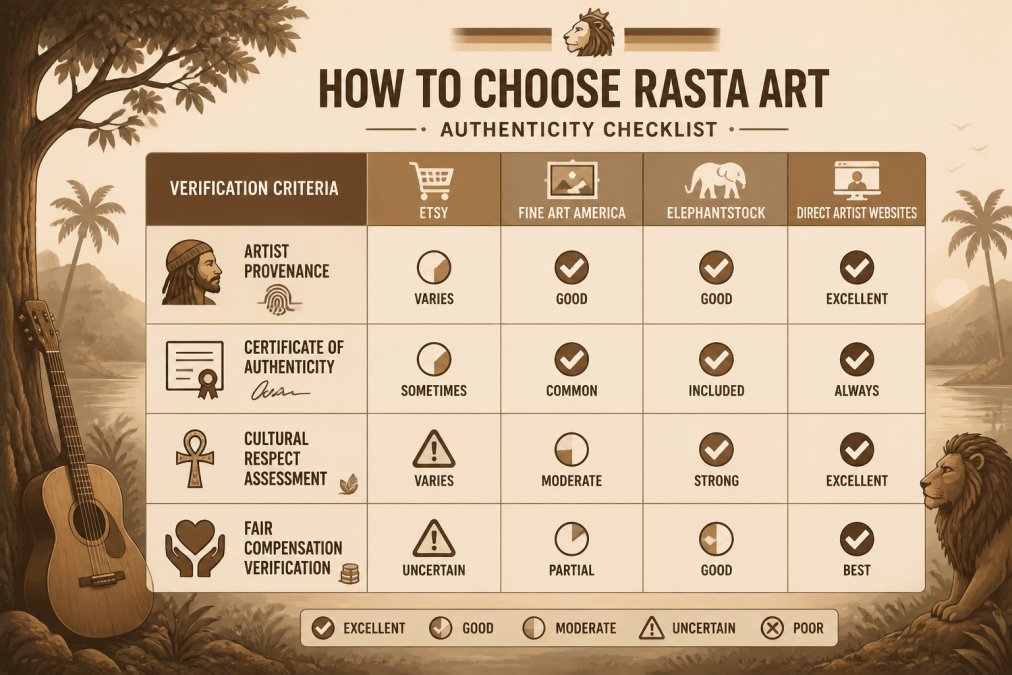
Verify Artist Provenance and Background
Research the artist's background before purchasing. Authentic rasta art typically comes from artists with roots in Rastafarian culture, Caribbean heritage, or deep engagement with reggae and African traditions. Look for biographical information: Where is the artist from? What is their creative background?
Artists from Jamaica, Ethiopia, or other Caribbean and African nations often bring lived cultural knowledge to their work. Non-Caribbean artists can create respectful rasta art, but their approach should demonstrate genuine understanding rather than cultural tourism.
Check the artist's body of work. Do they consistently create rasta-themed pieces, or is this a one-off product line? Long-term commitment to the aesthetic suggests authentic engagement. Browse their portfolio or social media to see their artistic evolution and commitment to cultural representation.
Check for Certificates of Authenticity
Certificates of authenticity serve as proof of originality for paintings, limited-edition prints, and sculptures. A legitimate certificate includes:
- Artist name and signature
- Piece title and creation date
- Edition number (if applicable) and total run size
- Materials used
- Dimensions
- Unique identifier or artist thumbprint
The certificate should be printed on quality paper and include contact information for the artist or gallery. Reputable sellers provide certificates without extra charge for original artwork. If a seller refuses to provide one or charges significantly for it, that's a red flag.
For handmade items like tapestries and wood carvings, certificates may be less common, but sellers should provide detailed descriptions of materials, techniques, and artist background in writing.
Assess Cultural Respect and Representation
Examine how the piece represents Rastafarian and Caribbean culture. Does it honor symbols like the Lion of Judah, African imagery, and reggae heritage with reverence? Or does it reduce these elements to generic "exotic" decoration?
Respectful representation includes context. The artist should be able to explain the cultural significance of imagery used. Pieces that commodify sacred symbols without understanding their meaning represent cultural appropriation rather than authentic art.
Look at the artist's stated values. Do they acknowledge the cultural roots of their work? Do they support causes aligned with Rastafarian principles, social justice, environmental conservation, community uplift? Artists genuinely connected to the culture often align their business practices with these values.
Supporting Rasta Artists: Fair Compensation and Direct Purchase
Buying directly from artists ensures they receive full compensation for their work. When you purchase through marketplaces like Etsy, the platform takes a commission, typically 6.5% of the sale price.
Many rasta artists maintain personal websites or social media pages where they sell original work and take commissions. Search for the artist's name plus "shop" or "studio" to find direct sales channels.
Supporting rasta artists means valuing their labor and cultural knowledge. Handmade pieces require significant time investment. A handwoven tapestry might take 100+ hours; a detailed wood carving months of work.
Some artists donate portions of sales to cultural organizations, educational initiatives, or environmental causes aligned with Rastafarian values. Choosing these artists amplifies positive impact beyond the artwork itself.
Comparing Buying Channels: Marketplace vs. Direct
Each buying channel offers different advantages and trade-offs.
Etsy provides access to thousands of independent artists with built-in buyer protection. The review system offers transparency, and you can communicate directly with sellers.
Fine Art America offers curated collections, fast shipping, and a money-back guarantee, reducing purchase risk.
ElephantStock excels at style-based curation, making it easier to find pieces matching specific aesthetic preferences. The organized layout saves browsing time.
Direct artist websites and studios ensure full artist compensation and direct communication. You can discuss custom work, materials, and cultural context in depth.
Amazon offers vast selection and fast shipping, but quality control is minimal. Many listings are mass-produced rather than handmade.
| Channel | Artist Compensation | Quality Control | Shipping Speed | Custom Options | Price Range |
|---|---|---|---|---|---|
| Etsy | Full minus 6.5% fee | Seller-dependent | 1-3 weeks | Widely available | Varies widely |
| Fine Art America | Platform-dependent | Curated | 48 hours | Limited | Moderate |
| ElephantStock | Platform-dependent | Curated | 1-2 weeks | Limited | Moderate |
| Direct Artist | Full | Artist-dependent | Varies | Extensive | Moderate to high |
| Amazon | Minimal | Low | 1-2 days | None | Budget-friendly |
Finding authentic rasta art means prioritizing artist integrity, cultural respect, and fair compensation.
Frequently Asked Questions
Where can I buy authentic Rasta art directly from artists?
Etsy hosts independent artists who sell original Rasta paintings, tapestries, and wood carvings with full artist backgrounds visible. Look for sellers with artist-signed work and verified reviews. Many list their Jamaican or Caribbean heritage and cultural connection. Fine Art America also features work from Rasta artists across painting styles. Direct artist websites and social platforms sometimes offer the most transparent provenance, though marketplace platforms provide buyer protection and easier browsing of multiple creators.
How can I tell if Rasta art is authentic and culturally respectful?
Authentic Rasta art reflects genuine Rastafarian symbolism: Lion of Judah imagery, natural colors (red, green, gold, black), and references to African heritage and reggae culture. Check the artist's background and whether they explain the cultural meaning of their work. Look for certificates of authenticity and artist statements about their connection to Rastafarian culture. Avoid mass-produced items that treat Rasta imagery as decoration without respect. Handmade pieces often show unique variations and natural materials like wood grain or hand-painted details that reproductions lack.
What's the difference between authentic Rasta art prints and reproductions?
Authentic Rasta art prints are limited-edition or signed reproductions of original artwork, often numbered and accompanied by a certificate of authenticity. They come from established artists or galleries with documented provenance. Mass-market reproductions are unlimited copies without artist connection or cultural context. Original paintings and handmade pieces like tapestries and wood carvings carry higher value because they're one-of-a-kind or limited runs. Check product descriptions for terms like 'hand-stretched canvas,' 'artist-signed,' 'limited edition,' or 'handmade' to distinguish authentic work from generic merchandise.
What should I look for when buying handmade Rasta tapestry?
Handmade Rasta tapestries should show visible weaving patterns, natural fiber variations, and hand-dyed colors that may have slight irregularities. Ask sellers about materials: authentic tapestries use cotton, wool, or silk blends rather than synthetic fabrics. Request close-up photos of the weave and edges. Check the artist's process description and cultural background. Handmade pieces take weeks to create, so pricing reflects that labor. Look for sellers who explain their dyeing methods and material sourcing. Certificates or artist statements about the tapestry's symbolism add authenticity and help verify fair compensation went to the creator.
How can I support Rasta artists when buying art?
Buy directly from artist websites or Etsy shops where artists retain more profit than marketplace commissions take. Ask sellers about their donation practices or community involvement. Support artists who are transparent about their heritage and explain how their work honors Rastafarian culture. Choose handmade and original work over mass-produced prints. Leave detailed reviews that mention the artist's cultural authenticity and craftsmanship, which helps other buyers make informed choices. Follow artists on social media to learn their story and stay updated on new work. Consider custom commissions that allow direct negotiation of fair pricing.