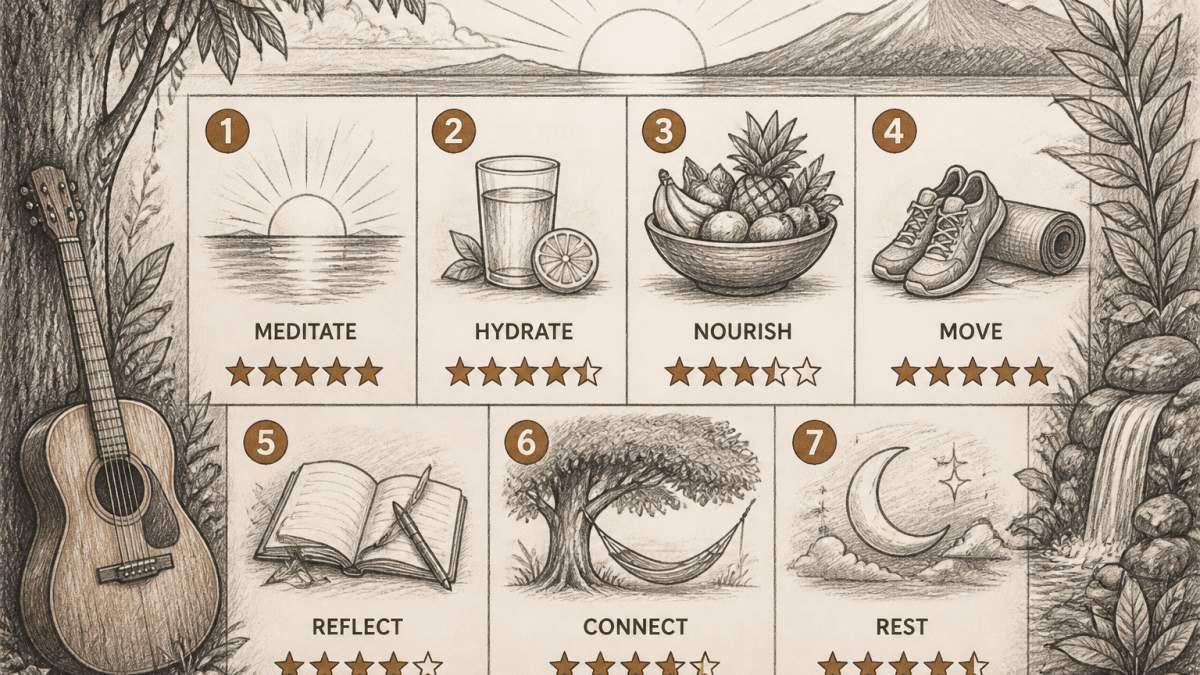
 listicle
High Frequency Living Daily Habits: 7 Practices
Table of Contents
- What High Frequency Living Daily Habits Actually Mean
- 1. Start With a Morning Routine for Mindfulness
- 2. Practice Mindful Daily Habits Throughout Your Day
- 3. Build a Daily Gratitude Practice Into Your Routine
- 4. Create a Wind-Down Evening Routine
- 5. Use Habit-Building Tips to Stay Consistent
- Frequently Asked Questions
Last Updated: October 7, 2026
What High Frequency Living Daily Habits Actually Mean
High frequency living daily habits are intentional practices that elevate your energy, mindset, and well-being each day.
At RastaHippies.com, we celebrate this philosophy as central to authentic self-expression and personal freedom. High frequency living isn't about perfection or rigid routines, but small, consistent practices that keep you grounded, intentional, and connected to what matters.
The practices that follow fit into real life, no extreme overhauls required. Each habit builds on the others, creating a foundation for sustained energy and clarity.
1. Start With a Morning Routine for Mindfulness
A morning routine for mindfulness sets the tone for everything that follows. The first hour after waking is when your mind is clearest, your window to establish intention before external pressures take over.
Effective morning routines don't require hours. Even 15-20 minutes of focused practice creates measurable shifts in how you approach the day.
Common elements include meditation, journaling, stretching, or sitting with a warm drink while reflecting on what matters most. Some prefer breathwork or movement; others stillness and silence.
2. Practice Mindful Daily Habits Throughout Your Day
Mindful daily habits transform ordinary moments into opportunities for presence. Rather than moving on autopilot, mindfulness invites you to notice your breath, surroundings, and emotional state, and respond consciously instead of reacting automatically.
Intentional Movement and Breath
Movement and breath anchor you to the present moment. This doesn't mean intense exercise. A 5-minute walk, gentle stretching, or deliberate breathing between meetings creates pockets of calm and clarity throughout your day.
Breath is powerful because it's always available. When stress rises or focus wavers, three slow, deep breaths reset your nervous system, signaling safety, lowering cortisol, and increasing mental clarity.
Hydration and Whole-Food Nutrition
What you consume directly affects your frequency. Hydration supports cognitive function, emotional regulation, and physical energy; simply drinking water consistently throughout the day improves focus and mood.
Whole-food nutrition, fruits, vegetables, whole grains, lean proteins, and healthy fats, provides sustained energy without the crashes of processed foods and added sugars. When your body feels nourished, your mind operates at a higher frequency.
3. Build a Daily Gratitude Practice Into Your Routine
Gratitude is one of the fastest ways to shift your internal state.
A gratitude practice can be as simple as naming three specific things each morning or evening, not generic blessings, but concrete details.
Some write in a journal, others speak gratitude aloud or share it with someone they trust.
Over time, gratitude becomes a reflex. You naturally notice more positive details because you're actively looking for them. This shift in attention alone changes how you experience each day.
4. Create a Wind-Down Evening Routine
An evening routine signals your body that rest is coming. Without this transition, your nervous system stays activated, making sleep difficult and leaving you depleted the next morning.
A wind-down routine typically includes reducing blue light an hour before bed, creating a calm environment, and relaxing activities like aromatherapy, soft music, gentle stretching, or reading.
Consistency matters here too: your body learns to recognize the routine as a cue for sleep. A regular schedule, going to bed and waking at the same time daily, further supports this biological rhythm.
5. Use Habit-Building Tips to Stay Consistent
Most habit advice fails because it treats consistency as a willpower problem. It isn't. Consistency is a design problem with four moving parts: cue, routine, reward, and identity. Miss one and the habit quietly dies within two to three weeks.
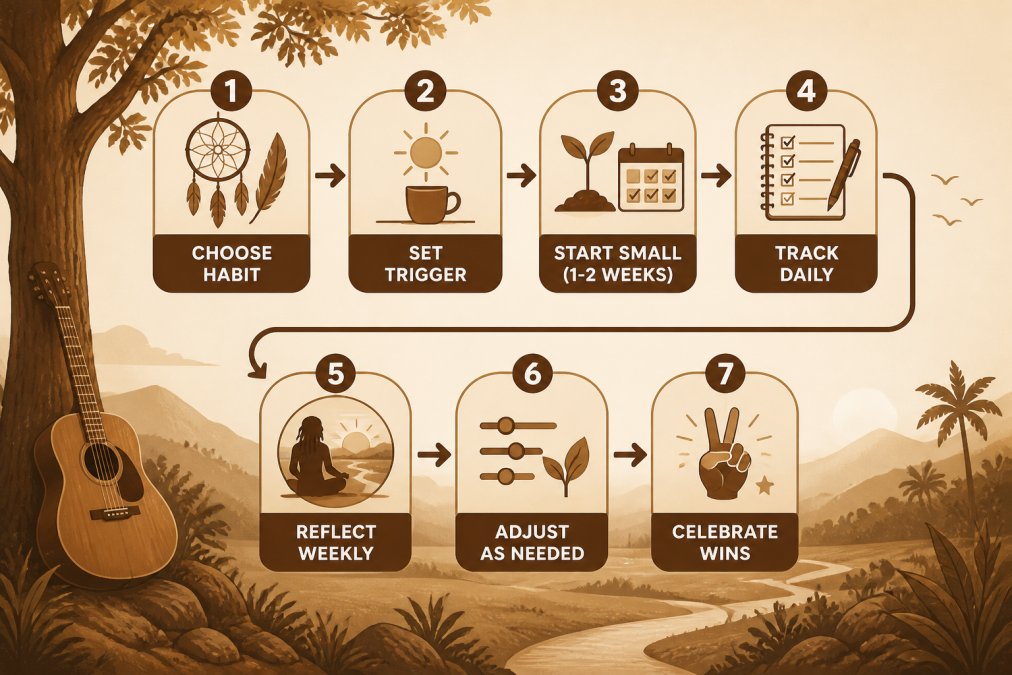
The Four-Part Habit Loop, Applied
A cue is the trigger that starts the behavior, anchored to something you already do without thinking, pouring coffee, brushing your teeth, sitting at your desk.
A routine is the behavior itself. Keep it under two minutes for the first two weeks. A 60-second breath practice beats a 20-minute meditation you skip.
A reward is what your brain registers immediately after.
Identity is the slowest but most durable layer. Every repetition casts a small vote for the kind of person you're becoming.
Track Progress With Metrics That Actually Mean Something
"I feel better" is not a metric. If you want to know whether your high frequency living daily habits are working, track inputs and outputs separately.
Input metrics are the behaviors you control:
- Days per week you completed each practice (target: 5 of 7, not 7 of 7, leave room for life)
- Average minutes of intentional breathwork or meditation per day
- Bedtime consistency, measured as the standard deviation of your sleep start time across the week
- Servings of whole foods versus processed foods, tracked simply as a daily tally
Output metrics are the signals you're watching for:
- Subjective energy on a 1-10 scale, rated at the same time each day
- Time to fall asleep (a common pattern is a drop from 30+ minutes to under 15 within three to four weeks of a consistent wind-down)
- Number of reactive versus intentional responses you notice in a day, a rough count is fine
- Mood stability across the week, not day to day
A simple paper tracker works better than an app for most people, because the act of writing is itself a reward. Review weekly, not daily. Daily review creates anxiety; weekly review creates pattern recognition.
The 2-Day Rule and the 80% Threshold
Two rules keep most people from quitting:
- Never miss twice. Missing one day is noise. Missing two in a row is the start of a new (unwanted) habit. If you skip Monday, Tuesday is non-negotiable.
- Aim for 80%, not 100%. Perfectionism is the most common reason high frequency living daily habits collapse. Hitting your practice 5 or 6 days out of 7 for a year beats hitting it 7 days out of 7 for three weeks and then burning out.
Connect Your Habits to Your Values
Habits stick when they connect to something you genuinely care about. If you value peace, meditation becomes non-negotiable; if you value vitality, movement becomes a priority. This transforms habits from discipline into alignment.
Ask yourself: What do I want my life to reflect? What kind of person do I want to be? Your daily habits are the answer.
(https://blog.rastahippies.net/best-ways-to-support-ocean-conservation).Frequently Asked Questions
What does high frequency living mean?
High frequency living refers to cultivating daily habits and mindset practices that elevate your energy, awareness, and alignment with your values. It combines intentional routines, gratitude, movement, and presence to create a lifestyle rooted in positive vibration. This approach emphasizes spiritual strength, freedom, and connection to nature, allowing you to express your authentic self while contributing to communities and causes that matter to you.
How can I create a mindful morning routine for mindfulness?
Start by waking at a consistent time and spending 10-15 minutes on intention-setting before checking your phone. Include breath work, meditation, or journaling to center yourself. Follow this with hydration, light movement or stretching, and a nourishing breakfast. The key is consistency and presence rather than perfection. Even small, deliberate actions at the start of your day shift your energy and prepare you to stay grounded throughout.
How can I make gratitude part of my daily gratitude practice?
Anchor gratitude to an existing daily action, morning coffee, lunch break, or evening wind-down. Write down three specific things you're grateful for, or simply pause and acknowledge them mentally. Be concrete: instead of 'good health,' notice 'my body moved without pain today.' Many people find that consistent gratitude practice reduces stress and shifts their perspective toward abundance, making it easier to maintain high-frequency energy throughout the day.
What habit-building tips actually work for staying consistent?
Start with one small habit, not five. Attach it to an existing routine (called habit stacking). Track it visually, a calendar, app, or journal. Expect 2-4 weeks before it feels automatic. Connect each habit to your deeper values so it feels meaningful, not forced. When you slip, return without judgment. Research shows that consistency matters far more than intensity; a 5-minute daily practice beats sporadic 30-minute efforts. Celebrate small wins to reinforce the behavior.
How long does it take to build a daily habit?
Most habits take 3-8 weeks to feel automatic, though the timeline varies by person and habit complexity. Simple routines like a morning stretch may solidify in 3-4 weeks, while deeper practices like daily meditation often need 6-8 weeks. The key is consistent repetition without long gaps. Missing one or two days rarely derails progress, but extended breaks reset the timer. Focus on showing up regularly rather than waiting for perfection before you start.