 how-to
How to Verify Ocean Charity Donations: A Step-by-Step Guide
Table of Contents
- Why Verifying Ocean Charity Donations Matters
- How to Check if a Charity is Legitimate
- Understanding Ocean Charity Donation Transparency
- Analyzing Charity Financial Reports for Impact
- Spotting Charity Donation Scam Warning Signs
- Verifying Restricted Gifts and Project Claims
- Confirming Your Donation and Getting Documentation
- Frequently Asked Questions
Last Updated: October 17, 2026
Why Verifying Ocean Charity Donations Matters
Donating to ocean conservation feels good, but good intentions don't guarantee your money reaches the ocean, which is why you should verify ocean charity donations before giving.
Verifying ocean charity donations protects both your wallet and the cause. When donors verify organizations before giving, they fund legitimate work and push charities to operate transparently.
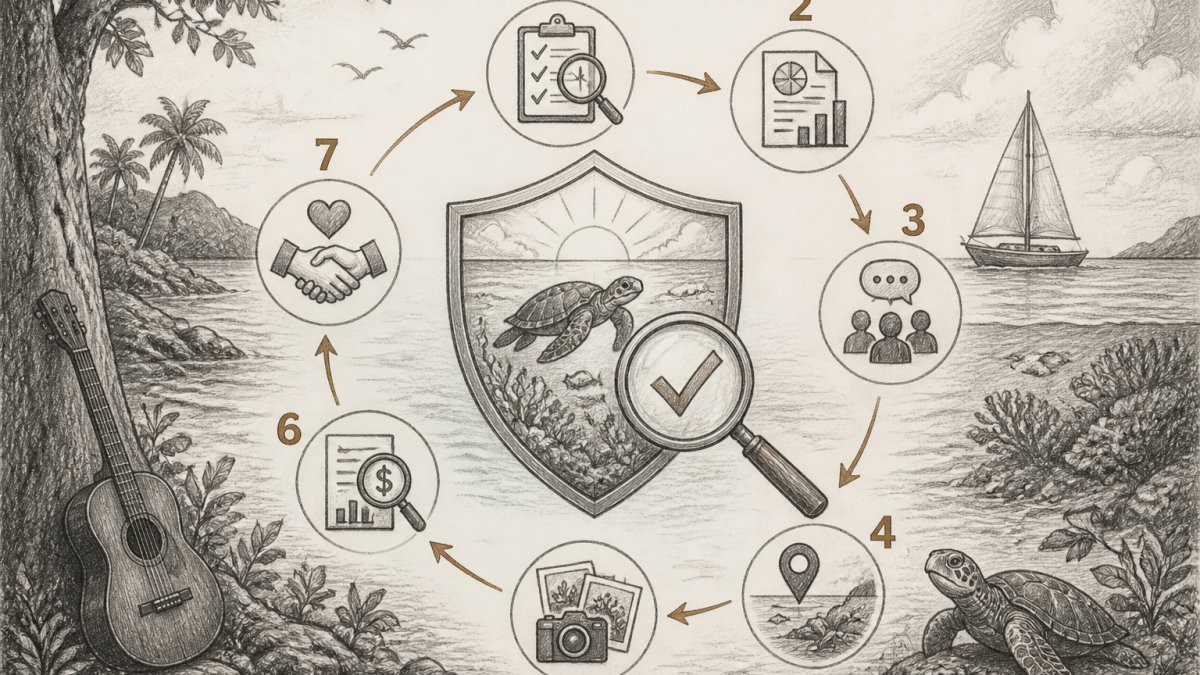
The process to verify ocean charity donations is straightforward: check a few key sources and ask direct questions.
How to Check if a Charity is Legitimate
A legitimate charity is registered with the government and maintains tax-exempt status. Confirm both before donating.
Step 1: Confirm Nonprofit Registration
Every legitimate nonprofit must register with state authorities, and this registration is public record.
Look for the full legal name, registration date, and status.
Compare the registered address to the one on their website and donation forms. Legitimate charities keep consistent contact information; mismatched addresses are a red flag.
Step 2: Review Tax-Exempt Status
Tax-exempt status means the federal government recognizes the organization as a qualifying nonprofit. It allows donors to claim tax deductions and requires strict financial reporting.
Search the IRS tax-exempt organization search tool, a free, regularly updated database.
The search should show the legal name, EIN, address, and tax-exempt classification.
Step 3: Search Independent Charity Databases
Independent charity evaluation databases provide third-party analysis, rating charities on financial transparency, program spending, and impact evidence. Using multiple databases gives a complete picture of credibility.
Popular charity databases include:
- Charity Navigator, rates organizations on financial health and transparency
- GiveWell, evaluates charities based on evidence of impact and cost-effectiveness
- GuideStar (now Candid), aggregates financial data and organizational information
Search each database for the ocean charity you're considering and read the ratings and analysis. Consistent positive ratings across multiple databases are a strong credibility signal.
Understanding Ocean Charity Donation Transparency
Transparent organizations openly share how they operate and where money goes, publishing detailed financial reports, explaining conservation strategies, and reporting measurable outcomes.
What Transparent Organizations Disclose
Transparent organizations also disclose board members, executive leadership, and major funding sources, helping donors understand who controls the organization.
Look for organizations that publish impact metrics, acres of coral reef restored, tons of plastic removed, or endangered species protected. Specific numbers demonstrate real work, not vague promises.
Red Flags in Charity Communications
Vague language like "supporting the ocean" or "helping marine life" is a warning sign.
Pressure to donate quickly is another red flag.
Requests for cash or wire transfers should raise suspicion. Legitimate charities offer secure payment methods, credit cards, bank transfers, checks, online platforms, and keep records of all donations.
Analyzing Charity Financial Reports for Impact
Financial reports reveal how organizations spend donor money and tell the real story of their priorities and effectiveness.
Where to Find Annual Reports and 990 Forms
Legitimate charities file Form 990 with the IRS, detailing revenue, expenses, and program spending. It is public record and available through multiple sources.
Search Form 990 using the IRS tool or Candid's database.
Many organizations also publish annual reports on their websites with more context than the 990. Read both for complete understanding.
Evaluating Program Spending vs. Overhead
The most important metric is the percentage of donations spent on actual conservation programs.
Calculate program spending by dividing program expenses by total revenue.
Be cautious of claims of 100% program spending. All organizations require administrative costs, and those claiming zero overhead may be hiding expenses or misrepresenting finances.
Spotting Charity Donation Scam Warning Signs
Charity scams exploit donor goodwill, and ocean causes are especially vulnerable because the mission is emotional and outcomes are hard to observe. The defense is a short, repeatable set of checks before any payment leaves your account.
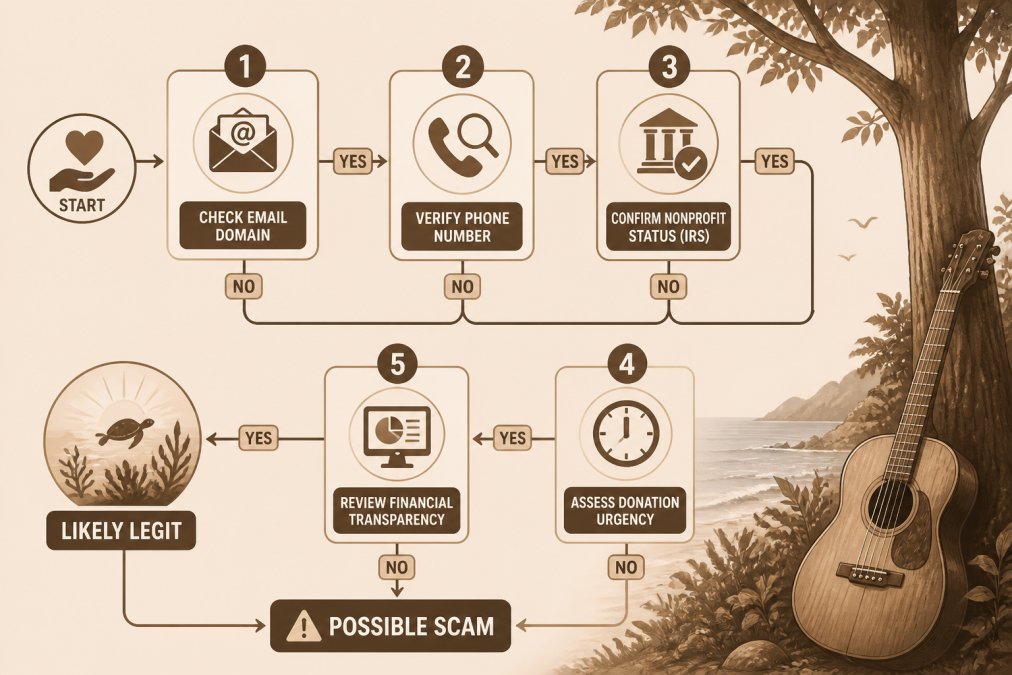
The Five-Minute Impersonation Check
Impersonation is the most common ocean-charity scam because a familiar name and logo do most of the work. Run these checks in order:
- Type the URL yourself. Don't click links in emails, texts, or social posts. Type the organization's name in a new tab and confirm the domain matches its IRS filing and printed materials. Lookalike domains swap letters (rn for m), add hyphens, or use different extensions.
- Cross-check the EIN. Every legitimate 501(c)(3) has an Employer Identification Number. Confirm the EIN on the website matches the IRS record. A mismatch is a hard stop.
- Verify the phone number independently. Call the number on the IRS record or state registration, not the one in the solicitation, and ask the organization to confirm the campaign by name.
- Check the email domain. A Gmail, Yahoo, or Outlook address claiming to be from an ocean charity is a red flag. Legitimate solicitations come from the organization's own domain, matching the website you verified in step 1.
- Confirm the fundraiser is authorized. For peer-to-peer campaigns (Facebook, GoFundMe, workplace giving), confirm the platform lists the charity as a verified beneficiary. If a personal fundraiser claims to benefit an ocean charity, contact the charity directly to confirm.
Payment Red Flags
Legitimate charities offer traceable payment methods: credit card, ACH bank transfer, check, and established online platforms. Treat these as warning signs:
- Requests for cash, gift cards, cryptocurrency, or wire transfers to a personal account. These are difficult to reverse and are the preferred methods of fraud.
- Payment pages that do not show the organization's legal name. The checkout page should name the charity, not a generic processor or an individual.
- Pressure to pay immediately by phone. Legitimate charities will hold a pledge while you verify.
Pressure Tactics and Unrealistic Claims
Scammers use emotional manipulation to rush donations. Phrases like "Donate now or it's too late" are designed to bypass verification.
Unrealistic promises are another warning sign. Claims that a small donation will restore all ocean pollution or save a specific number of animals oversimplify complex work.
Social-Media and Crowdfunding Appeals
Social platforms spread impersonation fastest. Before donating through a social post:
- Open the organization's official website in a separate tab and look for the campaign there.
- Check the organization's verified social accounts (look for the platform's verification badge and confirm the handle matches the website).
- For crowdfunding, read the platform's beneficiary-verification policy and confirm the charity is listed as a verified recipient.
When to Report
If you suspect a scam, report it to the FTC at ReportFraud.ftc.gov and your state attorney general's consumer protection office. If a real charity is being impersonated, notify it directly so it can warn donors.
Verifying Restricted Gifts and Project Claims
Restricted gifts let donors designate how their donation is used.
Ask the charity directly about the project's location, timeline, budget, and expected outcomes.
Request proof of past project completion, photos, reports, or third-party documentation.
Confirm the organization has committed to using your donation for the specified project, and get written confirmation of the restriction.
Confirming Your Donation and Getting Documentation
Verification doesn't end when you hit "donate." Confirm the gift was processed correctly, secure documentation for tax purposes, and know what to do if something goes wrong, this is where donors lose money to errors and fraud.
What a Proper Donation Receipt Must Contain
For a gift of $250 or more, the IRS requires a written acknowledgment from the charity before you can claim a deduction. The acknowledgment must include:
- The organization's legal name and EIN
- The donation amount and date
- A statement of whether the donor received any goods or services in return, and a good-faith estimate of their value if so
For gifts under $250, a canceled check, bank statement, or written receipt is generally sufficient, but a written acknowledgment is cleanest. Legitimate charities send receipts automatically; persistent failure to provide one is a red flag.
Confirming the Charge and the Payee
After donating, open your bank or credit card statement and confirm three things:
- The payee name matches the charity's legal name (or a known processor acting on its behalf). A charge from an unfamiliar entity is a red flag.
- The amount matches what you intended. Recurring gifts are a common source of surprise charges; confirm whether you opted into a monthly gift and what the renewal date is.
- The charge is not duplicated. Duplicate charges happen with slow checkout pages and double-clicks.
If any of these is wrong, contact the charity first, most correct duplicate or miskeyed charges quickly. If they don't respond, dispute the charge with your card issuer or bank. For ACH transfers, ask about the dispute window, which is shorter than for credit cards.
Correcting Errors and Canceling Recurring Gifts
Recurring gifts and memberships are common in ocean conservation and easy to forget. To cancel or change one:
- Use the charity's donor portal if one exists, and save a screenshot of the confirmation.
- If there is no portal, email the organization's donor services address and request written confirmation of the cancellation.
- If a charge posts after you canceled, dispute it with your card issuer and provide the cancellation confirmation.
For address changes, name changes, or a receipt missing required information, request a corrected acknowledgment in writing.
Requesting Proof of Restricted-Gift Use
If you made a restricted gift (for reef restoration or a specific cleanup), ask for written confirmation that the restriction was recorded and a follow-up report on how funds were used. Legitimate organizations provide project-level reporting.
When to Escalate
If a charity fails to provide a receipt, misuses a restricted gift, or charges you incorrectly and does not resolve it:
- Payment provider: Dispute the charge with your card issuer or bank within the applicable window.
- State charity regulator: File a complaint with your state attorney general's charities division or the state office that oversees charitable solicitations.
- IRS: Report suspected tax-exempt status abuse using Form 13909, Tax-Exempt Organization Complaint (Referral).
- FTC: Report fraud at ReportFraud.ftc.gov.
Keep a written timeline of your communications. Regulators and payment providers act faster when you can show dates, amounts, and the charity's responses.
Frequently Asked Questions
How do I verify ocean charity donations are legitimate before giving?
Start by confirming the charity's nonprofit status using the IRS Tax Exempt Organization Search tool. Check their registration with your state's nonprofit regulator. Review their annual financial reports (Form 990) to see how they spend donations. Visit independent charity evaluators like Charity Navigator or GiveWell to read third-party assessments. Always verify the charity's website URL directly rather than clicking links in unsolicited emails, and look for clear information about their ocean conservation goals and past impact.
What should I look for in ocean charity donation transparency?
Legitimate ocean charities clearly explain how they use donations, publish annual reports showing program spending versus administrative costs, and provide specific examples of conservation outcomes. They disclose board member names, financial statements, and contact information on their website. Look for charities that explain their marine wildlife protection methods, coral reef restoration projects, or plastic pollution reduction initiatives in concrete terms. Transparent organizations welcome donor questions and provide detailed receipts and tax documentation for all gifts.
What are common charity donation scam warning signs I should avoid?
Be cautious of unsolicited phone calls or emails demanding immediate donations, charities that won't provide written documentation, and requests for cash or wire transfers. Scammers often impersonate well-known ocean conservation organizations or use similar names. Avoid charities that make unrealistic claims about their impact, refuse to share financial information, or pressure you to donate without time to verify. Check that the charity's website URL matches official communications, and never donate through links in emails, always visit the organization's official website directly.
How can I assess whether a charity uses my donations effectively?
Review the charity's Form 990 (available through the IRS or Charity Navigator) to see what percentage of donations fund programs versus overhead and fundraising costs. Effective charities typically spend 75% or more on their stated mission. Look for audited financial statements and annual impact reports that detail specific conservation projects completed. Check independent evaluators' ratings and read donor reviews. Contact the charity directly with questions about how restricted gifts are used and request evidence of outcomes like acres protected, animals helped, or pollution reduced.