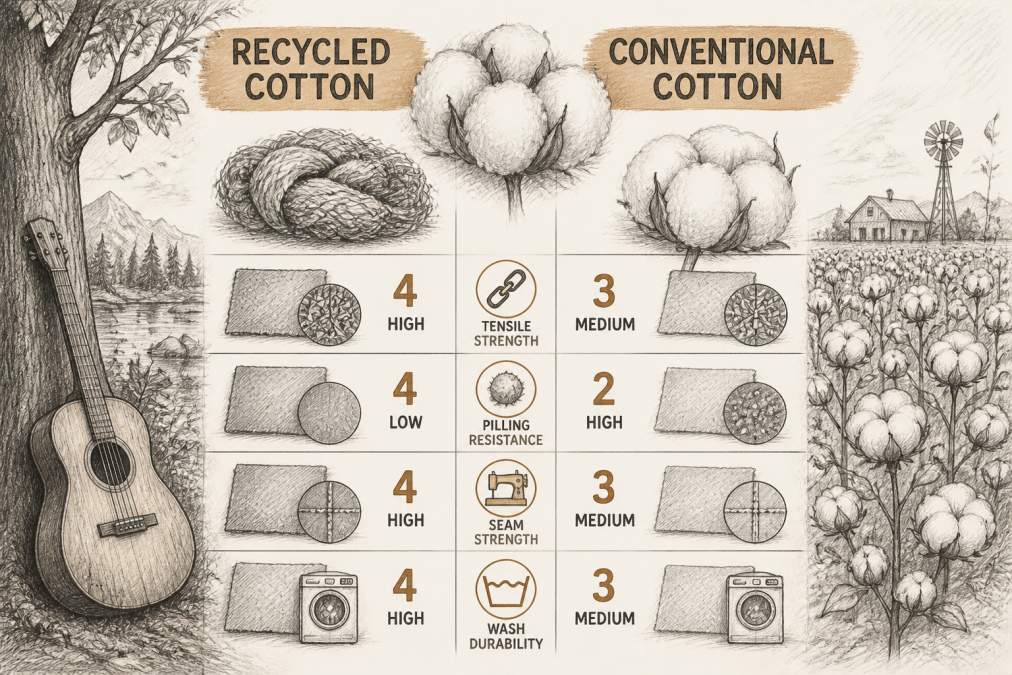
 comparison
Recycled Cotton vs Conventional Cotton: Durability Guide
Table of Contents
- Recycled Cotton vs Conventional Cotton Durability: Quick Comparison
- What Is Recycled Cotton Fiber Strength and How Does It Compare?
- How Recycled Cotton Durability Stacks Up Against Virgin Cotton
- Benefits of Recycled Cotton Clothing Beyond Durability
- How to Care for Recycled Cotton Garments to Extend Their Life
- Chemical vs Mechanical Recycling: Durability Outcomes
- Frequently Asked Questions
Last Updated: September 19, 2026
Recycled Cotton vs Conventional Cotton Durability: Quick Comparison
Recycled cotton vs conventional cotton durability comes down to one measurable difference: fiber length. Conventional cotton is spun from long, unbroken fibers that resist stress, while recycled cotton is spun from fibers shortened during mechanical shredding. That single fact shapes how each fabric wears, pills, and holds its shape over years of washing.
This guide from RastaHippies.com breaks down where each material wins, where it falls short, and how to make recycled cotton last longer than most people expect. Below, we cover fiber strength, blending techniques, care routines, and the trade-offs nobody mentions in the marketing copy.
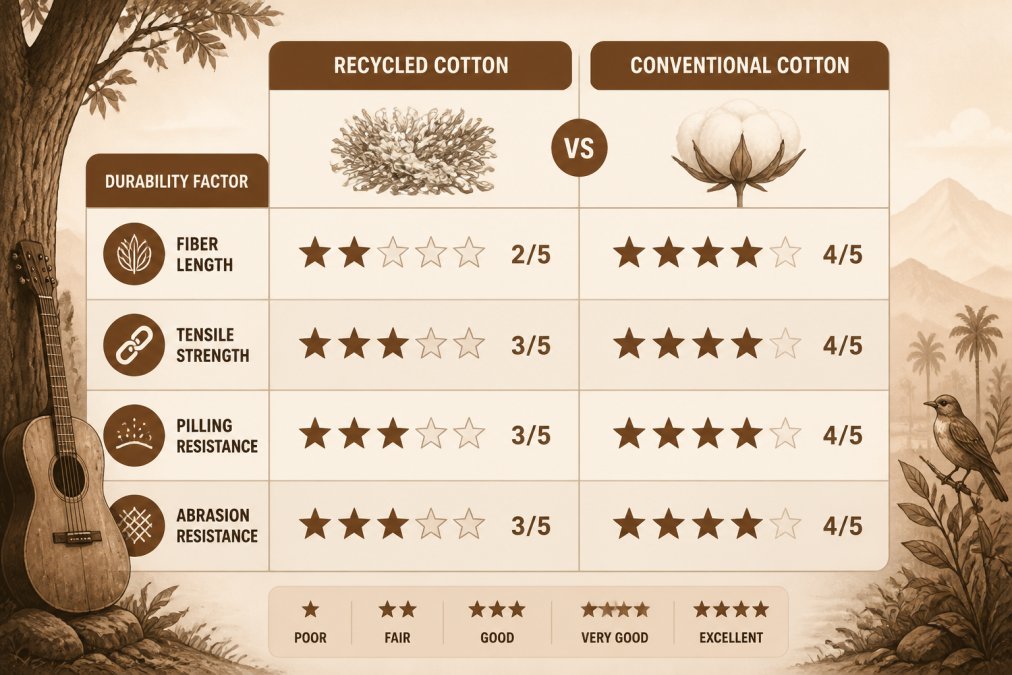
Comparison Table: Durability Metrics at a Glance
| Durability Factor | Conventional Cotton | Recycled Cotton | Edge |
|---|---|---|---|
| Fiber length | Long-staple, intact | Short-staple, shortened | Conventional |
| Tensile strength | Higher, resists tearing | Lower, needs blending | Conventional |
| Pilling resistance | Strong | Moderate to weak | Conventional |
| Abrasion resistance | High | Moderate | Conventional |
| Environmental footprint | High water, pesticide use | Lower water, less waste | Recycled |
| Cost | Lower upfront | Varies by blend | Conventional |
What Is Recycled Cotton Fiber Strength and How Does It Compare?
Recycled cotton fiber strength is the ability of reclaimed cotton fibers to resist breaking under tension, and it is consistently lower than virgin cotton because mechanical shredding shortens each fiber. The spinning process then struggles to bind those short-staple fibers into a strong yarn.
Mechanical Recycling's Impact on Fiber Length and Tensile Strength
Mechanical recycling tears fabric back into loose fiber. Every pass through the shredder breaks fibers further, reducing fiber length and, in turn, tensile strength. Shorter fibers create more weak points in the yarn, which is why 100% recycled cotton fabric tends to wear faster at stress areas like elbows, knees, and seams.
Many manufacturers counter this by blending recycled cotton with virgin cotton, polyester, or other fibers. A common approach is a 70/30 mix, where the virgin fiber carries the structural load while the recycled content reduces raw material demand and textile waste.
How Recycled Cotton Durability Stacks Up Against Virgin Cotton
Recycled cotton durability trails virgin cotton in tensile strength and abrasion resistance, but the gap narrows sharply once recycled fiber is blended with stronger partners and the garment is engineered around the fiber's limits. In practice, a well-blended recycled cotton tee can hold up for years of regular wear, while a poorly constructed 100% recycled knit may show thinning at the shoulders within a single season.
Blending with Synthetic Fibers to Improve Durability
Polyester and other synthetic blends restore much of the strength lost during recycling. The synthetic fiber acts as a scaffold, holding short recycled fibers in place and slowing fiber degradation. A common pattern is a 60/40 or 70/30 recycled-to-virgin or recycled-to-polyester ratio, where the longer fiber carries the structural load. The trade-off is that synthetic content reduces biodegradability and can increase microfiber shedding during washing, so the durability gain comes with an environmental cost that shoppers should weigh honestly.
Performance by Garment Type
Durability needs differ by garment, and recycled cotton does not perform the same across all of them:
- T-shirts and lightweight knits: The most forgiving category. A recycled-cotton blend tee with a tight knit and reinforced shoulder seams can match a conventional cotton tee for everyday wear, though it may pill faster under backpack straps or at the underarms.
- Denim and heavy wovens: The hardest test. Traditional denim relies on long-staple cotton for abrasion resistance at the knees, seat, and pocket corners. Recycled cotton denim typically needs a higher virgin or elastane content to survive the same wear cycle, and 100% recycled denim is rare for good reason.
- Home textiles: Towels, sheets, and blankets tolerate recycled content well because they face less mechanical stress than apparel. A recycled-cotton throw or bath mat can last as long as a conventional one when it is not subjected to daily friction.
Construction Matters as Much as Fiber
Garment longevity also depends on construction. Dense knitting, reinforced seams, higher yarn count, and double-stitched stress points all extend the life of recycled cotton clothing, sometimes past a cheaply made virgin cotton equivalent. A thin, loosely knit virgin tee will often fail before a tightly constructed recycled blend. When comparing two garments, look at the fabric weight, the seam finish, and the blend ratio before assuming the conventional option will outlast the recycled one.
Recycled cotton durability is not a single number. It is a function of blend ratio, garment type, and construction quality. A well-made recycled blend can match conventional cotton in low-stress applications and trail it in high-abrasion ones like denim.
Benefits of Recycled Cotton Clothing Beyond Durability
The benefits of recycled cotton clothing extend well beyond fiber performance. Recycling keeps textile waste out of landfills and cuts the water consumption and pesticide load tied to growing new cotton.
- Lower environmental footprint than virgin cotton cultivation
- Reduced landfill waste from pre- and post-consumer textiles
- Support for a circular economy and closed-loop system
- Often paired with eco-friendly dyes and ethical supply chains
For shoppers who care about sustainability, the environmental gain frequently outweighs the modest durability trade-off, especially when the garment is well made and properly cared for.
How to Care for Recycled Cotton Garments to Extend Their Life
Caring for recycled cotton garments is mostly about reducing mechanical stress. Short-staple fibers are more sensitive to heat, friction, and harsh detergents, so a gentler routine pays off. Most articles stop at 'wash cold, air dry.' The practical guide below explains why each step matters and how to build a routine that actually extends garment life.
Why Recycled Cotton Degrades Faster
Mechanical recycling shortens fibers, and shorter fibers have more exposed ends per inch of yarn. Those exposed ends are what cause pilling, and they are also the first points to break under friction. Heat and tumbling accelerate this because they cause fibers to migrate and abrade against each other. Understanding this mechanism explains every care recommendation that follows.
A Step-by-Step Care Routine
- Wash in cold water. Heat causes fibers to swell and contract, which stresses the yarn structure and speeds shrinkage. Cold water limits fiber breakage and helps the garment keep its shape.
- Turn garments inside out before washing. This reduces surface abrasion on the face of the fabric, where pilling is most visible.
- Use a mesh laundry bag for thin or loosely knit pieces. The bag prevents the garment from rubbing against zippers, buttons, and heavier items in the load.
- Skip the dryer. Air dry flat or on a line. Heat and tumbling are the two biggest causes of fiber degradation in recycled blends.
- Use mild detergent and avoid fabric softeners. Softeners coat fibers and can trap soil, and they do nothing to strengthen short-staple yarn.
- Wash less often and spot-clean when possible. Every wash cycle is a friction event. Wearing a garment two or three times between washes when it is not soiled meaningfully extends its life.
- Store folded, not hung, for knits. Hanging stretches shoulders and can distort the neckline over time.
What to Avoid
- Chlorine bleach, which weakens cellulose fibers
- High-heat ironing directly on the fabric
- Overloading the washing machine, which increases friction between garments
- Dryer sheets, which leave a residue that can mask but not fix pilling
Recycled cotton loses more strength in the dryer than in the wash. Air drying alone can noticeably extend garment longevity, since heat and tumbling are the two biggest causes of fiber degradation in recycled blends. If you must use a dryer, choose the lowest heat setting and remove the garment while it is still slightly damp.
Repair Before You Replace
Small repairs go a long way with recycled cotton. Darning a thin spot at the elbow or reinforcing a seam before it fails can add months or years to a garment's life. Because recycled cotton is already a second-life material, repairing it aligns with the same circularity principle that produced it. Keep a basic sewing kit and treat minor damage as a maintenance task rather than a reason to replace.
Chemical vs Mechanical Recycling: Durability Outcomes
Chemical recycling preserves fiber length far better than mechanical shredding. Instead of tearing fabric apart, chemical processes dissolve cotton back to its raw material and re-spin it into new fibers with tensile properties close to virgin cotton.
Frequently Asked Questions
Does recycled cotton wear out faster than virgin cotton?
Yes, recycled cotton generally wears out faster than virgin cotton because mechanical recycling shortens fiber length, reducing tensile strength. However, modern blending techniques with synthetic fibers or long-staple virgin cotton can significantly improve durability, making recycled cotton garments suitable for everyday wear when properly constructed.
Can recycled cotton be blended with other fibers to improve durability?
Absolutely. Blending recycled cotton with synthetic fibers like polyester or with virgin cotton enhances tensile strength and abrasion resistance.
How is recycled cotton fiber length affected by the recycling process?
Mechanical recycling tears fabrics into shorter fibers, often reducing staple length by 20-30% compared to virgin cotton. This shortening directly lowers tensile strength and yarn quality. Chemical recycling can preserve fiber length better but is less common and more expensive.
What are the main environmental benefits of choosing recycled cotton?
Recycled cotton reduces textile waste in landfills, cuts water consumption by up to 80% compared to growing virgin cotton, and lowers carbon footprint. It supports a circular economy by repurposing pre- and post-consumer waste, making it a more sustainable choice for eco-conscious consumers.
How should I care for recycled cotton garments to make them last longer?
Wash recycled cotton garments inside out in cold water on a gentle cycle, and tumble dry on low or air dry. Avoid bleach and fabric softeners, which degrade fibers. Turn garments inside out before washing to reduce pilling and abrasion, and store folded rather than hung to prevent stretching.