 listicle
Handcrafted Rasta Art Prints Online: A 2026 Guide
Table of Contents
- What Makes Handcrafted Rasta Art Prints Special
- Rastafarian Symbols and Meanings in Art
- Top Online Sources for Handcrafted Rasta Art Prints
- Rasta Wall Art: Canvas, Posters, and Framed Options
- Handcrafted Reggae Art: Identifying Authentic Pieces
- Rasta Canvas Art: Quality, Materials, and Print Techniques
- Choosing Size, Placement, and Ethical Purchasing
- Conclusion
- Frequently Asked Questions
Last Updated: October 18, 2026
What Makes Handcrafted Rasta Art Prints Special
Handcrafted rasta art prints are expressions of cultural identity and spiritual connection, not just decoration. Unlike mass-produced alternatives, they carry the artist's intention, technique, and understanding of Rastafarian symbolism into your home.
The difference shows in intentional brushwork, varied textures, and subtle color shifts digital printing cannot replicate, each print a conversation between creator and viewer.
Rasta Hippies curates handcrafted pieces honoring both reggae and hippie traditions, connecting artists with audiences who value genuine craftsmanship.
Rastafarian Symbols and Meanings in Art
Understanding Rastafarian symbolism transforms how you experience these artworks. The lion, often the Lion of Judah, represents strength, courage, and divine power tied to Ethiopian heritage. Red symbolizes the blood of African ancestors and the struggle for liberation, gold the richness of African culture, and green the land, nature, and hope for the future.
Dreadlocks signify spiritual devotion, natural strength, and rejection of Eurocentric beauty standards. The Ethiopian cross combines Christian symbolism with African identity, while marijuana leaves represent spiritual consciousness and healing in some contexts.
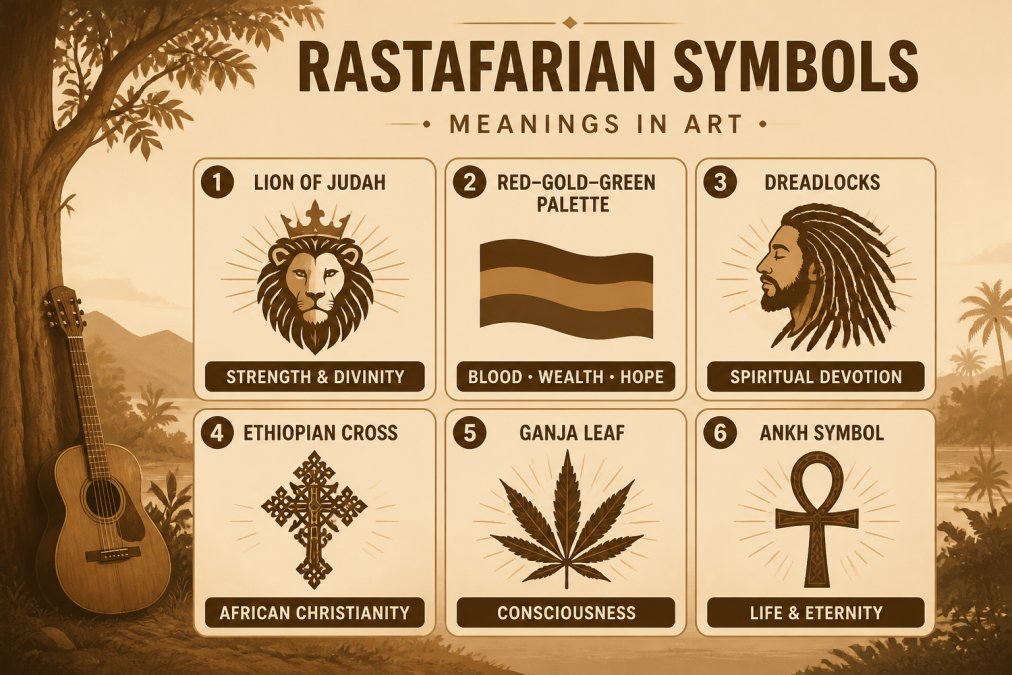
Artists layer these symbols with reggae imagery, musical instruments, and cultural portraits to create visual narratives that resonate with your values.
Top Online Sources for Handcrafted Rasta Art Prints
The real work is separating genuinely handcrafted, artist-made prints from print-on-demand designs that merely borrow Rastafarian imagery.
Independent Artist Marketplaces
Society6 uses a print-on-demand model centered on independent creators. Designs are artist-submitted, but the platform prints them, so you receive a reproduction rather than a one-of-a-kind handmade object.
Print-on-Demand and Custom Services
Art.com offers a large catalog of art images with custom wall-art options and describes its craftsmanship as museum-grade. The catalog is dominated by reproductions, so if authenticity matters more than convenience, use these services for framing or reproducing a piece you already know is artist-made.
How to Verify Handcrafted Provenance
A few concrete checks separate handcrafted prints from digital reproductions. Look for an artist signature and a statement naming the medium and process. Examine color variation and imperfection: handcrafted pieces show natural inconsistencies in brushwork and ink layering, while mass-produced prints display uniform perfection. Check the artist's background and cultural connection, since many independent artists creating Rasta-inspired work have personal ties to Jamaican heritage, African diaspora communities, or Rastafarian spirituality. Compare pricing against the time and materials involved; suspiciously low prices usually signal digital creation or manufacturing shortcuts.
Rasta Wall Art: Canvas, Posters, and Framed Options
Canvas Prints and Metal Options
Canvas remains the dominant format for rasta wall art because it handles bold colors and high-contrast imagery beautifully, and its texture adds depth flat posters cannot match.
Metal prints offer a contemporary alternative for modern or minimalist rasta designs, with a luminous quality and better fade resistance than canvas.
Framed and Unframed Formats
Unframed prints give you flexibility in framing choices, ideal for collectors who already have frame styles in mind or prefer to frame locally.
Pre-framed handcrafted rasta art prints arrive ready to hang, which matters if you lack framing expertise or want guaranteed quality control. Wood frames complement warm earth tones, while metal frames suit contemporary spaces.
Glass provides superior clarity but adds weight and fragility; acrylic offers lightweight durability, though it can yellow slightly over time.
Handcrafted Reggae Art: Identifying Authentic Pieces
Distinguishing genuine handcrafted reggae art from digitally-created designs requires attention to specific details. Look for artist signatures and statements explaining their medium, oils, acrylics, watercolors, or mixed media.
Examine color variation and imperfection. Handcrafted pieces show natural brushwork inconsistencies, slight color shifts, and textural variation that digital printing cannot replicate. Mass-produced prints display uniform perfection that, paradoxically, signals inauthenticity.
Check the artist's background and cultural connection. Many independent artists creating handcrafted reggae art have personal ties to Jamaican heritage, African diaspora communities, or Rastafarian spirituality.
Pricing offers another clue. Genuinely handcrafted work commands higher prices because of the time, skill, and materials involved; suspiciously low prices suggest digital creation or manufacturing shortcuts.
Request high-resolution images showing detail and texture. Authentic handcrafted rasta art prints reveal brushwork, layering, and surface qualities that compressed images cannot convey.
Rasta Canvas Art: Quality, Materials, and Print Techniques
Print quality is the difference between a piece that lasts decades and one that fades within a few years. Rasta art leans on saturated reds, golds, and greens, exactly the colors most vulnerable to UV damage and poor ink. Understanding the materials and techniques below lets you compare options on substance rather than marketing language.
Print Techniques Compared
Giclée printing is the gold standard for fine-art reproduction. It uses archival pigment inks and premium paper or canvas to produce museum-quality results with smooth tonal transitions and sharp detail.
Screen printing produces bold, flat colors and works well for graphic or poster-style Rasta designs. It is often used for limited editions, and the ink layering gives a tactile quality digital printing lacks.
Digital printing offers quick turnaround and lower cost, but quality varies widely by provider. Entry-level digital prints may fade within a decade, while higher-end digital presses using pigment inks perform much better. Ask which ink type is used before assuming a digital print is short-lived.
Traditional painting is one-of-a-kind and carries the highest quality and the highest cost. If you want an original rather than a reproduction, this is the category to shop; the artist's signature and statement are your proof of provenance.
Canvas, Paper, Metal, and Wood
Canvas handles bold colors and high-contrast imagery beautifully, and the weave adds depth flat posters cannot match. Canvas weight and weave affect durability: tighter weaves and heavier fabric resist sagging, while budget canvas feels thin and stretches easily.
Paper prints offer sharper detail than canvas and work well for intricate linework or typography-heavy designs. Fine-art paper is typically heavier and more textured than poster paper, and it creases more easily than canvas.
Metal prints create a luminous, contemporary look and resist fading well, suiting modern or minimalist Rasta designs and gallery-style displays, though the glossy surface can show glare depending on lighting.
Wood-mounted prints combine rustic appeal with durability and pair naturally with pieces emphasizing natural materials and environmental consciousness. The trade-off is weight: wood-mounted pieces are heavier and require sturdier hanging hardware.
Inks, Finishes, and Longevity
Ink quality determines how long the colors survive. Pigment-based inks resist fading far better than dye-based alternatives, which matters most for the vibrant reds, golds, and greens common in Rasta art. Archival pigment inks can maintain color intensity for decades indoors, while dye-based prints may shift noticeably within a few years in direct sun.
Finishes change both appearance and protection. Matte finishes reduce glare and suit textured surfaces, while gloss finishes deepen contrast and color saturation. A UV-protective coating or glazing adds defense against sunlight, worth asking about for any piece hung near a window.
Canvas preparation matters as well. Pre-primed canvas prevents ink from bleeding and ensures even color distribution, while untreated canvas absorbs ink unevenly and can produce muddy results.
Framing and Protection
Framed options eliminate guesswork and arrive ready to hang, which matters if you lack framing expertise or want guaranteed quality control. Wood frames complement the warm earth tones common in Rasta imagery, while metal frames suit contemporary spaces. Glass provides superior clarity but adds weight and fragility; acrylic offers lightweight durability but can yellow slightly over time.
Unframed prints give you flexibility, letting your personal aesthetic guide the final presentation, ideal for collectors who already have frame styles in mind or prefer to frame locally. Whichever route you choose, use acid-free matting and backing to prevent yellowing over time.
Care, Installation, and Placement
Hang prints out of direct sunlight to slow fading, and keep them away from humid areas such as bathrooms and kitchens unless properly sealed. Dust with a soft, dry cloth rather than sprays or solvents, and avoid pressing on the surface of canvas or paper prints. For heavy pieces, use wall anchors rated for the weight, and hang at eye level or arrange gallery-style groupings with consistent spacing.
Choosing Size, Placement, and Ethical Purchasing
Size selection depends on wall dimensions and viewing distance. Small prints (8x10 or 11x14 inches) work in intimate spaces or grouped gallery walls. Medium prints (16x20 or 18x24 inches) serve as focal points in living rooms or bedrooms. Large prints (24x36 inches or bigger) command attention and require adequate wall space.
Placement strategy maximizes visual impact. Position rasta art at eye level when hanging solo, or arrange gallery-style groupings with consistent spacing. Natural light enhances color vibrancy, while artificial light can shift warm tones toward yellow.
Ethical purchasing means supporting artists fairly.
Research production practices. Handcrafted rasta art prints created with sustainable materials and ethical labor practices align with reggae and hippie values emphasizing environmental consciousness and social justice. Ask sellers about their sourcing and production methods.
Support artists who give back to communities. Many independent rasta artists donate portions of sales to cultural organizations, environmental causes, or social justice initiatives. Rasta Hippies exemplifies this commitment by supporting charitable foundations dedicated to ocean and environmental conservation.
Conclusion
Finding authentic handcrafted rasta art prints online requires understanding the difference between genuine artistry and mass production. The platforms and techniques covered here, from independent artist marketplaces to giclée printing, provide pathways to pieces that honor Rastafarian culture while supporting individual creators.
Your choice matters. When you select handcrafted rasta art prints that celebrate cultural authenticity and ethical production, you're making a statement about what you value. Visit RastaHippies.com to explore handcrafted pieces that unify reggae and hippie cultures through original art rooted in positive energy and spiritual connection.
Frequently Asked Questions
Where can I buy handcrafted Rasta art prints online?
Always check seller reviews and artist portfolios to verify handcrafted quality and authenticity.
What symbols are commonly featured in Rastafarian art?
The lion (representing strength and African pride), the red-gold-and-green color palette (symbolizing the blood of martyrs, wealth, and hope), dreadlocks, and the Ethiopian cross appear frequently. Many pieces also feature reggae musicians, historical figures, and heart imagery celebrating Jamaican culture and African roots. Understanding these symbols helps you choose art that resonates with Rastafarian values and your personal connection to the culture.
How can I tell whether an art print is truly handcrafted?
Look for artist statements, process photos, and seller transparency about production methods. Handcrafted pieces often have slight variations, visible brushwork, or limited-edition numbering. Independent artist platforms typically allow direct communication with creators. Request information about materials, printing techniques (like giclée), and whether the artist personally oversees production. Ethical makers are usually happy to share their story and sourcing practices.
What's the difference between Rasta canvas art and poster prints?
Canvas art typically offers durability, texture, and a gallery-quality appearance, often created through giclée printing on premium canvas. Posters are lighter, more affordable, and ideal for renters or those wanting flexibility in display. Canvas works better for permanent installations and higher-traffic spaces, while posters suit temporary displays or smaller budgets. Both formats are available framed or unframed depending on your space and aesthetic preference.