 ultimate-guide
Why Ethical Apparel Costs More: A Real Breakdown
Table of Contents
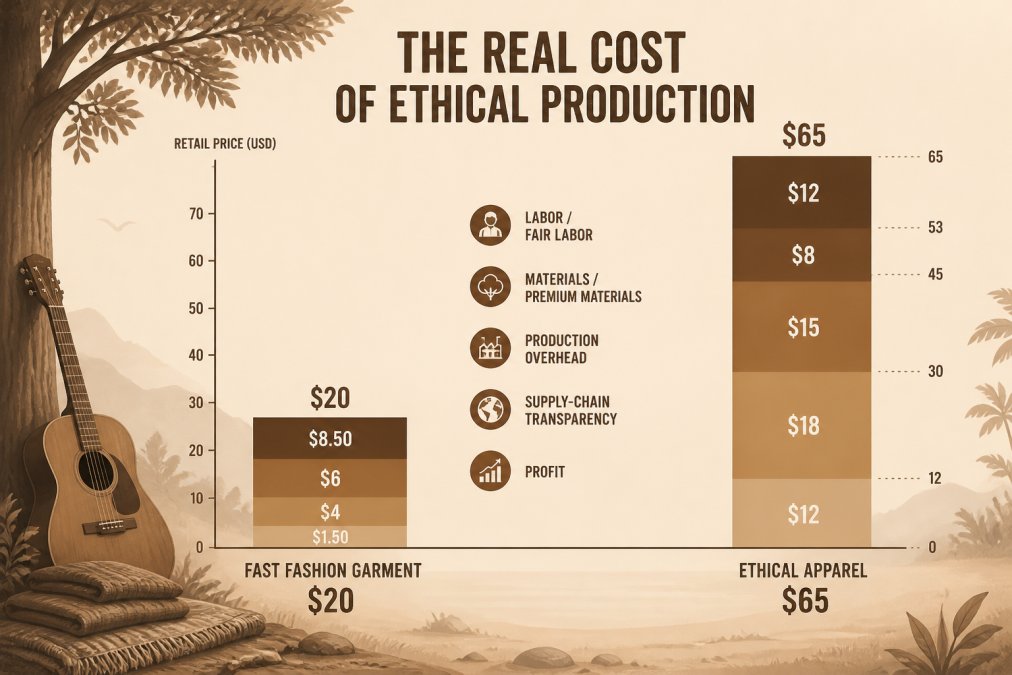
- The Real Cost of Ethical Production
- Fair Wages and Safe Working Conditions
- Material Quality and Sourcing
- Ethical Fashion vs Fast Fashion: Understanding the Difference
- Small-Batch Production and Economies of Scale
- Cost Per Wear Clothing: The Long-Term Value Perspective
- How to Identify Ethical Clothing Brands and Verify Claims
- Finding Affordable Ethical Clothing Brands
- Frequently Asked Questions
Last Updated: October 9, 2026
The Real Cost of Ethical Production
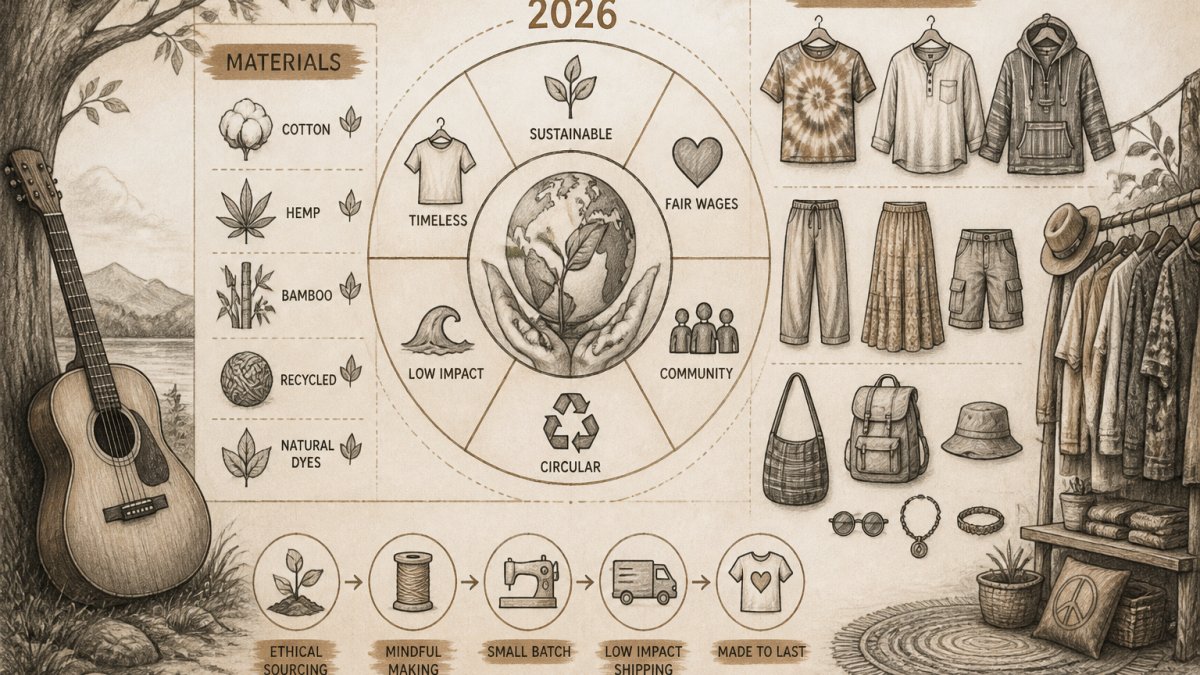
Ethical apparel costs more because it's built on a fundamentally different production model than fast fashion. Where fast fashion prioritizes speed and volume, ethical production prioritizes people and materials. This isn't marketing speak, it's the direct result of how garments are made, who makes them, and what happens to the planet along the way.
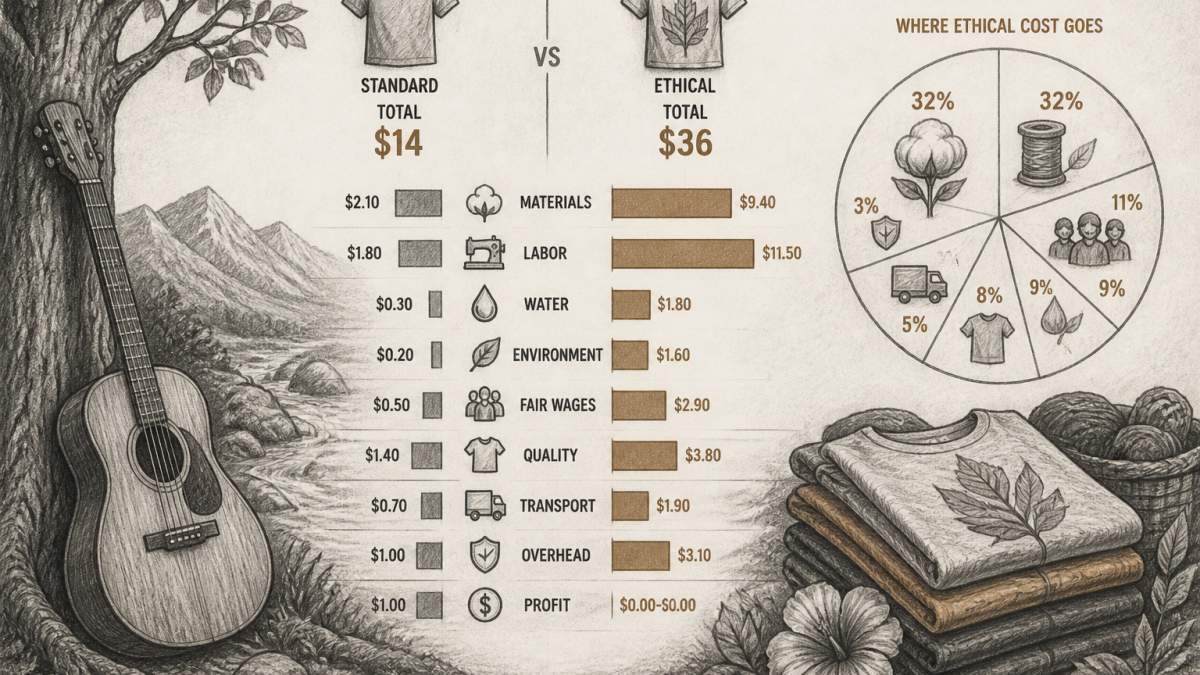
The price difference starts before fabric ever touches a loom. Fair wages and safe working conditions cost money. Higher-quality materials cost money. Smaller production runs cost money. Transparency costs money. When brands commit to ethical production, every step of the supply chain reflects that commitment, and that commitment shows up in the final price tag.
Understanding why ethical apparel costs more isn't about justifying expense, it's about recognizing where your money actually goes. RastaHippies.com and other ethical brands that prioritize craftsmanship and values-aligned production demonstrate that price reflects real choices about labor, materials, and impact.
Fair Wages and Safe Working Conditions
Garment workers in fast fashion facilities often earn less than a living wage. Ethical brands commit to paying workers enough to actually live on, not just survive. That difference compounds across every garment produced.
A living wage varies by location, but the principle is consistent: workers deserve compensation that covers housing, food, healthcare, and basic needs without requiring multiple jobs. Ethical apparel brands either manufacture in countries with stronger labor protections or pay wages that exceed local minimums to ensure dignity. This costs significantly more than the pennies-per-hour model that fast fashion relies on.
Safe working conditions mean proper ventilation, reasonable hours, access to healthcare, and protection from hazardous materials. These aren't luxuries, they're basic requirements that prevent injury, illness, and death. Implementing and maintaining these conditions requires investment in infrastructure, training, and oversight. Fast fashion cuts these corners. Ethical brands don't.
The gap between fair-wage labor and exploitative labor is substantial. When a brand commits to ethical labor practices, that commitment is visible in the price. The garment worker who made your shirt was paid fairly. They worked in a safe environment. That matters, and it costs.
Material Quality and Sourcing
Cheap fabrics fall apart. They pill, fade, stretch out of shape, and shed fibers. Ethical apparel uses higher-quality materials because durability is part of the value proposition.
Take organic cotton. It's grown without synthetic pesticides or fertilizers, which reduces chemical runoff and protects farmworkers. But organic cotton yields are often lower than conventional cotton, and the certification process (like GOTS) requires separate supply chains, audits, and traceability. Those costs are passed along.
Recycled polyester offers another example. It diverts plastic bottles from landfills and uses less energy than virgin polyester production. But recycling infrastructure is limited, and the quality of recycled fibers can vary.
Natural fibers like hemp and linen have their own trade-offs. Hemp grows quickly with little water and few pesticides, but processing it into soft fabric is more labor-intensive than processing cotton. Linen is durable and breathable, but it wrinkles easily and requires specific care.
Wool is another case. Ethically sourced wool from humanely treated sheep costs more because farmers invest in animal welfare, pasture management, and traceability. But wool also requires careful washing and storage to avoid moths and shrinkage. A cheap acrylic sweater might pill, but it's easy to wash and dry.
The key takeaway is that no fiber is universally better. Ethical sourcing means weighing lifecycle impacts, durability, care requirements, and sourcing caveats.
Ethical Fashion vs Fast Fashion: Understanding the Difference
The distinction between ethical fashion and fast fashion isn't just about price, it's about fundamentally different business models.
Fast fashion is built on rapid production cycles, high volume, and low margins per unit. Brands release new styles constantly, manufacture in bulk, and rely on volume sales to be profitable. This model requires cutting costs everywhere: labor, materials, quality control, and environmental responsibility.
Ethical fashion operates on a different principle. Brands produce smaller batches, invest in quality, and build relationships with suppliers and manufacturers. They may release fewer styles but invest more in each one. The goal is longevity, not turnover.
The environmental impact differs dramatically. Fast fashion encourages overconsumption, buy cheap, wear briefly, discard. Ethical apparel encourages the opposite: buy less, wear longer, repair when needed. This shift in mindset is reflected in the product itself. An ethically made garment is designed to last because the brand expects the wearer to keep it.
Understanding this difference explains the price gap. Ethical fashion costs more because it's solving a different problem. Fast fashion solves "how do I get cheap clothes now?" Ethical fashion solves "how do I dress in a way that aligns with my values and lasts?"
Small-Batch Production and Economies of Scale
Volume changes everything in manufacturing. A factory producing 100,000 identical shirts can spread fixed costs across many units, driving the per-unit cost down. A factory producing 5,000 shirts of varied designs spreads those same costs across fewer units, raising the per-unit cost.
Ethical brands often produce in smaller batches for several reasons. They may work with multiple suppliers to ensure fair practices rather than consolidating production at one mega-factory. They may offer more design variety, which prevents the massive runs that enable economies of scale. They may intentionally limit production to avoid overstock and waste.
This small-batch approach has real consequences for cost. Setup costs, quality control, and overhead remain relatively fixed regardless of production volume. When those costs are divided among fewer units, the per-unit cost rises. This is simple math, not a choice, it's a structural feature of ethical production.
Some ethical brands are large enough to achieve economies of scale while maintaining ethical standards. But many deliberately choose smaller production to maintain quality, control, and values alignment. That choice shows up in pricing.
Cost Per Wear Clothing: The Long-Term Value Perspective
A common mistake is comparing the sticker price of an ethical garment to a fast fashion equivalent without considering durability. Cost per wear is the more honest metric.
A $20 fast fashion shirt that lasts 15 wears costs $1.33 per wear. A $65 ethical shirt that lasts 200 wears costs $0.33 per wear. Over time, the expensive shirt is dramatically cheaper.
This calculation shifts the entire conversation about ethical apparel pricing. The question isn't "why does this cost so much?" but "how many times will I actually wear this?" Ethical apparel is designed for people who intend to wear their clothes repeatedly, care for them, and keep them for years.
The durability difference is real. Better materials hold up to washing and wearing. Better construction means seams don't unravel and hems don't come loose. Better fit means the garment remains wearable as bodies change slightly. These qualities extend the lifespan significantly.
When clothing lasts longer, the environmental impact per wear decreases. A garment worn 200 times has a lower per-wear carbon footprint than one worn 15 times, even if the ethical version required more resources to produce. This is the long-term value perspective that justifies the higher upfront cost.
How to Identify Ethical Clothing Brands and Verify Claims
Not every brand that claims to be ethical actually is. Greenwashing, making false or exaggerated sustainability claims, is common. Knowing how to verify claims separates genuine ethical brands from marketing.
Start with certifications, but understand their limits. Fair Trade Certified verifies fair labor practices and community development premiums, but it doesn't cover environmental impact. GOTS (Global Organic Textile Standard) certifies organic fiber content and processing standards, but it doesn't guarantee fair wages.
Certifications are a starting point, not a finish line. They require audits, but audits are periodic and may not catch every issue. They also cost money, which can be a barrier for smaller brands that operate ethically but can't afford certification.
Supply-chain transparency is another signal. Ethical brands often publish information about where garments are made, who makes them, and under what conditions. Some share factory names, worker wages, and material sourcing details. The more specific the information, the more confidence you can have.
Look for concrete evidence of donations and impact. If a brand claims to support charitable causes, ask for proof. Annual reports, impact statements, and verifiable donation records demonstrate genuine commitment.
Ask questions directly. Reach out to brands and ask about their labor practices, material sourcing, and environmental impact. Legitimate ethical brands are transparent and happy to answer. Brands that deflect, provide vague answers, or avoid specifics are worth questioning. But also be prepared for imperfect answers.
Finally, be wary of vague terms like "eco-friendly," "green," or "natural." These words have no standardized definition and can mean anything.
Finding Affordable Ethical Clothing Brands
Ethical apparel doesn't require unlimited budget. Several strategies make ethical fashion accessible at different price points.
Start by buying less but choosing better. Instead of purchasing ten cheap shirts, buy two or three ethical ones. The total spending may be similar, but the wardrobe quality is dramatically higher.
Look for sales and second-hand options. Ethical brands sometimes discount older inventory. Second-hand marketplaces offer ethical apparel at reduced prices because the garment has already been produced.
Seek out emerging ethical brands. Established ethical brands often command premium prices because they've built reputation and demand. Newer brands building their customer base may offer comparable quality at lower prices.
Consider capsule wardrobes, small collections of versatile pieces that work together. This approach requires fewer total garments and encourages choosing pieces that last and work across multiple outfits. The upfront investment is higher, but the cost per wear drops quickly.
Many ethical brands offer transparency about their pricing. Understanding that a $50 shirt reflects fair labor, quality materials, and sustainable practices makes the price feel less arbitrary. When you know where your money goes, the cost makes sense.
The real question isn't why ethical apparel costs more, it's why fast fashion costs so little. The answer involves paying workers poverty wages, using cheap materials, and externalizing environmental costs. Ethical apparel costs more because those costs are actually paid, not hidden.
This matters for anyone trying to align their purchases with their values. Ethical fashion costs more upfront, but it delivers better quality, lasts longer, and reflects genuine commitment to fair labor and environmental responsibility.
Frequently Asked Questions
Why does ethical apparel cost more than fast fashion?
Ethical apparel costs more because it prioritizes fair wages, safe working conditions, quality materials, and supply-chain transparency. Fast fashion minimizes costs by cutting wages, outsourcing to unregulated factories, using cheaper synthetic materials, and producing massive volumes. When you buy ethical apparel, you're paying for the actual labor, safer factories, better materials, and smaller production runs that require higher per-unit costs.
How can I tell if a clothing brand is genuinely ethical?
Look for third-party certifications like Fair Trade Certified, GOTS (Global Organic Textile Standard), or B Corp status. Check if the brand publishes transparency reports showing factory locations and worker wages. Visit their website for supply-chain information and labor policies. Be skeptical of vague claims like 'ethically sourced' without supporting documentation. Reach out directly, genuine ethical brands respond to questions about their practices and provide verifiable proof of donations or certifications.
Does ethical clothing actually last longer and justify the higher price?
Ethical apparel typically lasts longer because it uses higher-quality materials, better construction, and craftsmanship. You'll notice stronger seams, durable fabrics, and garments that resist pilling or fading. This extends the garment's lifespan significantly, lowering your cost per wear. A $60 ethical t-shirt worn 100 times costs $0.60 per wear; a $15 fast-fashion shirt worn 20 times costs $0.75 per wear. Quality and durability make ethical apparel a better financial investment over time.
Are there affordable ethical clothing brands that don't cost a fortune?
Yes, several brands offer ethical apparel at lower price points by focusing on fewer styles, direct-to-consumer sales, or smaller production runs. Look for brands that partner with nonprofits, use deadstock materials, or operate locally to reduce costs. Shopping secondhand from ethical brands also stretches your budget. Start by checking certifications and transparency reports rather than price alone, some affordable brands maintain genuine ethical standards, while expensive brands sometimes use premium pricing without ethical backing.